Small-portion cook
You mostly prepare one meal at a time and need to decide whether an extra basket would be more useful to you than your current oven.


For a small kitchen, choose an air fryer if its baskets suit your portion sizes and you have a specific need for an additional cooking appliance. A mini oven is a better fit if your dishes, tins or rack-based cooking need a door and an oven cavity. If your existing oven already covers these uses, keeping your current setup means you won’t add another appliance to your worktop. Measure the available space and your dishes, then check the ventilation requirements, opening space, noise and cleaning instructions for the model you’re considering.
You mostly prepare one meal at a time and need to decide whether an extra basket would be more useful to you than your current oven.
You want to finish two dishes for the same meal, without assuming that an appliance’s total capacity is the same as the capacity of each cooking zone.
You use tins, racks or wide dishes and want to choose between a mini oven, a hybrid appliance and your existing oven.
Choose this if: you mostly prepare one portion or want to cook two different dishes in separate zones.
Bear in mind: with a single basket, you may need to cook a second dish in another batch.
Choose this if: your dishes need racks, a door or a cavity large enough to fit them.
Bear in mind: check the internal dimensions and the space needed for accessories.
Choose this if: your oven already meets your needs and you don’t need an additional appliance for regular or separate cooking.
Bear in mind: this option doesn’t give you a second cooking capacity for preparing food at the same time.
In a small kitchen, start by comparing the space you can actually use, then consider the portions and cooking methods behind your purchase.
| Criterion | What to check | Who prioritises it most? |
|---|---|---|
| Space and ventilation | Measure the height, width, depth and opening space; check the ventilation clearances specified in the model’s manual. | If space is limited, I want to be able to position the appliance and open its drawer or door without getting in the way of using the worktop. Around 28% of consumers prioritise available space. |
| Portions and simultaneous cooking | Compare the dimensions of each zone with your portion sizes; check whether there’s a divider and whether cooking times can be synchronised. | When I’m preparing two dishes or want to avoid cooking in successive batches, I check the usable space in each compartment. Around 22% of consumers prioritise portion size or simultaneous cooking. |
| Dishes and cooking methods | Measure the dishes you usually use and check the internal dimensions, supports and stated heating modes. | If my recipes need a tin or rack, I want to make sure they’ll fit in the cavity and that the heating mode is suitable. Around 22% of consumers prioritise their dishes and cooking methods. |
| Noise and cleaning | Look for noise measurements taken using a stated method; identify removable parts and how they should be cleaned. | In an open-plan kitchen, or if I use an appliance often, I prefer to consider the noise and regular cleaning involved. Around 17% of consumers prioritise noise levels or maintenance. |
| Usefulness compared with your oven | List the dishes your current oven genuinely can’t handle and, if comparing energy use, compare equivalent cooking cycles and portions. | If my oven already handles the dishes I usually make, I only want to add an appliance for a distinct, regular use. Around 11% of consumers are primarily looking to avoid a redundant appliance. |
Two zones may share the total capacity, while a wide dish depends on the internal dimensions. So the number of litres alone won’t tell you whether your portions or dishes will fit.
Measure your portions and dishes, then check the dimensions of each zone or the cavity.
UFC-Que Choisir reports variable cooking results among the air fryers it tested; a particular mini oven may also lack a fan-assisted setting.
Check the heating mode and, if a specific dish is the reason for your purchase, look for a test of the model you’re considering.
The drawer or door needs room to open, and you must also follow the clearances specified in the manual.
Plan the space with the appliance open, then check the model’s manual before buying.
Similar-sounding functions alone don’t show that a new appliance will meet an additional need.
Identify the dishes, portion sizes or simultaneous cooking needs that your current oven can’t cover.
An appliance you rarely use takes up worktop space for the long term.
These examples illustrate documented formats; their specifications alone aren’t enough to provide an independent comparison of cooking results.
Documented models include a basket air fryer and a model with a removable divider.
Documented models include a basket air fryer and a multifunction appliance with a door.
The TO 2067 is an example of an electric mini oven; the TO 2077 combines an oven-style format with an air-frying function.
The products featured here are additional-use air fryers with one or more compartments. Compare their format with a mini oven and consider which uses are already covered by your oven.
For a new electrical appliance intended for the French market and subject to the relevant EU rules, check the applicable compliance requirements and the manufacturer’s declaration. The European Commission explains that CE marking isn’t a safety approval issued by an EU authority.
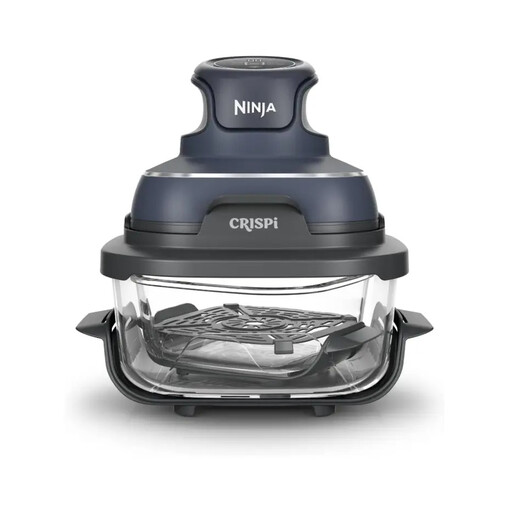 Image unavailable
Worth considering if you alternate between different quantities of food.
Comes with two glass containers, stated as 1.4 L and 3.8 L; Air Fry, Roast, Keep Warm and Recrisp functions are listed.
The containers and tray may be hot during and after cooking: handle them with heat-resistant protection.
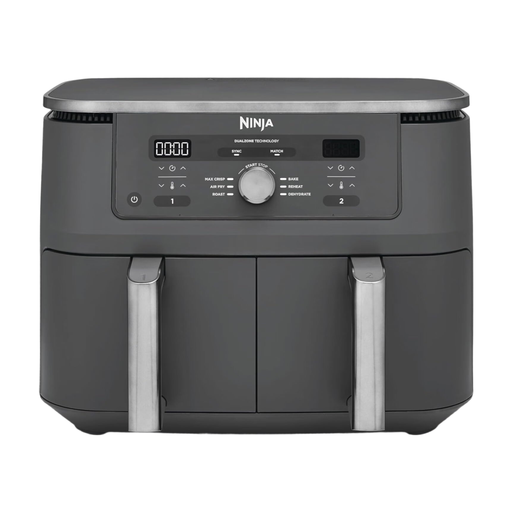 Image unavailable
Worth considering if you want to prepare two dishes with different settings.
Stated total capacity of 9.5 L, split between two 4.75 L drawers; the drawers are described as independent, with separate time and temperature settings.
The manual mentioned in the description calls for adequate ventilation and says not to cover the air inlets or outlets.
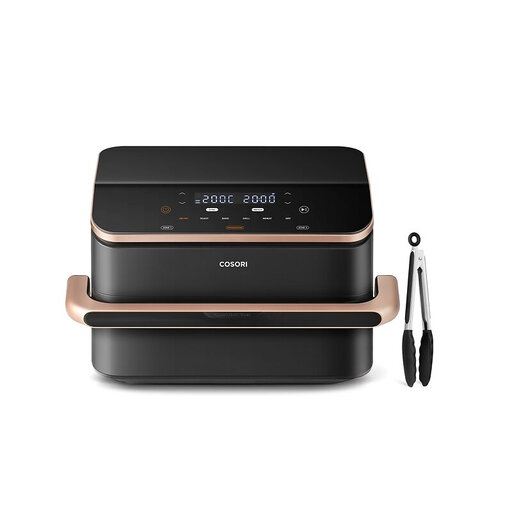 Image unavailable
Worth considering if you want to compare a large cooking zone with a two-zone configuration.
Stated configuration of 10 L or two 5 L zones; stated temperature range of 35 to 240 °C and control via the VeSync app.
The description states that it’s for indoor use only and that adequate ventilation should be allowed around the appliance.
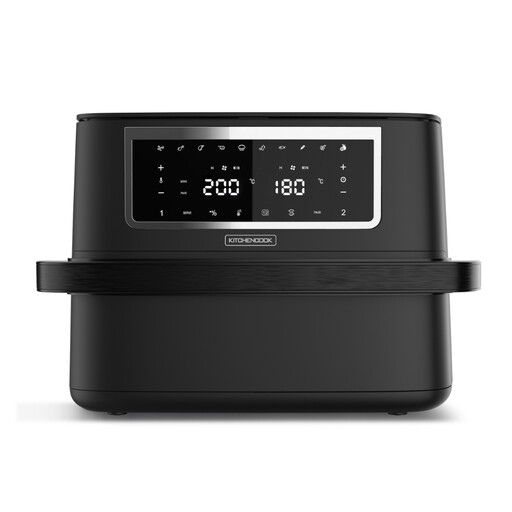 Image unavailable
Worth considering if you want to prepare two dishes with independent settings.
Two removable baskets and ten stated programmes; adjustable temperature from 40 to 200 °C.
The manual described says to keep the air inlets clear and place the appliance on a heat-resistant surface, away from walls and flammable materials.
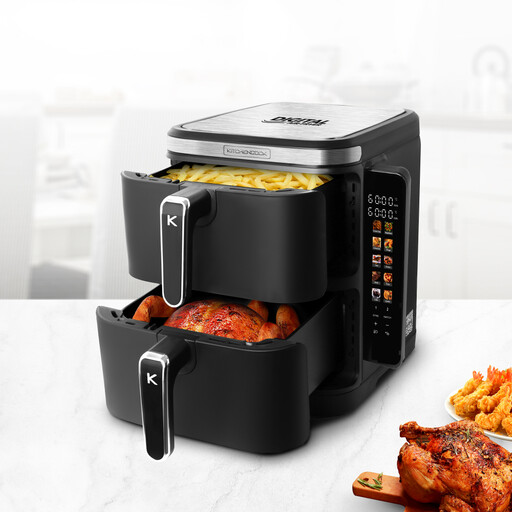 Image unavailable
Worth considering if you’re looking for two independent cooking chambers in a vertical appliance.
Stated capacity of 12 L, two stacked chambers and ten programmes; adjustable temperature from 60 to 200 °C.
The manual described says not to block the air inlets or outlets while the appliance is in use.
No. Capacity alone doesn’t tell you how much usable space there is for your portions. Check the dimensions of the basket or cavity against the food and dishes you use; an appliance with a divider may also state different capacities for one or two zones.
The required clearance depends on the model’s manual. Before placing it under a cupboard or near a wall, check the ventilation instructions and the space needed to open the drawer or door.
Compare noise measurements taken while the appliances are running and from a known distance. UFC-Que Choisir says it measures air fryer noise from 50 cm away; this may be particularly important in an open-plan kitchen.
You should make a claim under the legal guarantee of conformity to the professional seller, subject to the applicable legal conditions. The DGCCRF states that you have two years from delivery of the goods to take action; this legal guarantee is separate from any optional commercial guarantee offered by the manufacturer.
No. For products covered by the rules, CE marking represents the manufacturer’s declaration that the product meets the applicable European requirements. The European Commission explains that it isn’t a safety approval issued by an EU authority.