People who often cook small portions
You prepare one portion or a small side dish and want to avoid heating up the full-size oven. However, the basket must be large enough to arrange the food as your recipe requires.


If you often cook small portions, a single-drawer air fryer is a sensible choice, provided its usable cooking area suits your food and cookware. A dual-drawer model is better suited to cooking two different foods at the same time, while a mini oven or your existing oven is still a good option for dishes and quantities that won’t fit in a basket. According to Que Choisir’s tests, energy use varies depending on the recipe and the appliances being compared, so don’t assume you’ll save the same amount on every meal.
You prepare one portion or a small side dish and want to avoid heating up the full-size oven. However, the basket must be large enough to arrange the food as your recipe requires.
You want to cook two parts of a meal separately and serve them together. Two compartments can make this easier, provided each one can hold the amount you need.
You cook quiches, cakes or dishes where the shape matters just as much as the quantity. Compare the usable dimensions of an air fryer basket with those of a mini oven or your oven.
Consider it: for a small amount of food that fits in one basket.
Bear in mind: the limited cooking space may mean you need to cook in batches.
Consider it: if you often need to cook two different foods at the same time.
Bear in mind: each compartment has its own usable space, and the appliance takes up more room.
Consider it: if your tins or small batches aren’t well suited to an air fryer drawer.
Bear in mind: for some small recipes tested by Que Choisir, the air fryers tested used less electricity than the mini oven tested.
Keep using it: for a large dish, several portions or the occasional small bake.
Bear in mind: its large cavity may not suit your aim of heating less space for a single portion.
To choose between these formats, start with the portions and cookware you actually use, then look at cooking results and energy use for comparable recipes.
| What to consider | What to check before buying | Who it matters to |
|---|---|---|
| Usable capacity and shape | Compare the internal dimensions with those of your portions and tins. With a dual-drawer appliance, check each compartment separately. | If my dish or portion doesn’t fit properly in the basket, I’ll need to change the cookware or cook in batches; around 29% of consumers would put this compatibility first. |
| How it cooks your recipes | Look for tests using foods similar to yours. If you cook two foods together, check the settings for each zone. | I want the result I’m looking for without making meal preparation more complicated; around 29% of consumers would prioritise cooking performance. |
| Electricity use | Compare the energy used for the same recipe and a similar quantity, allowing for any extra batches. | When I often cook small quantities, I want to know how much energy the whole cooking cycle uses; around 24% of consumers would prioritise this factor. |
| Space and cleaning | Check how much room is needed with the drawer open, which parts need cleaning and how the appliance should be stored. | If I use the appliance often in my kitchen, I want to be able to set it up and clean it without too much hassle; this would be the main concern for around 18% of consumers. |
The differences measured by Que Choisir vary depending on the recipes and appliances. A basket that’s too small may also mean you need to run several cooking cycles.
Compare a recipe, quantity and cooking result that are similar to your usual meals, rather than applying a quoted percentage to everything you cook.
The total capacity doesn’t tell you whether you can spread the food out in the basket or fit a tin in the cooking area.
Measure your cookware and look for the internal dimensions. For a dual-drawer model, check the available space in each compartment.
Separate zones are useful for cooking different foods at the same time, but this format takes up more space.
Choose this option if you’ll regularly use both compartments for your meals. Otherwise, compare the usable area of a single drawer.
An appliance you use often should be easy to open, clean and put away without getting in the way of meal preparation.
Check the space in front of the drawer, the removable parts and the cleaning instructions before setting aside a spot for it in your kitchen.
These air fryers suit different ways of cooking small portions: a container for compact preparations, single-basket models in different capacities, and a dual-drawer model for cooking two foods at once. To compare them with a mini oven or your oven, always check the usable space and the results you get with your recipes.
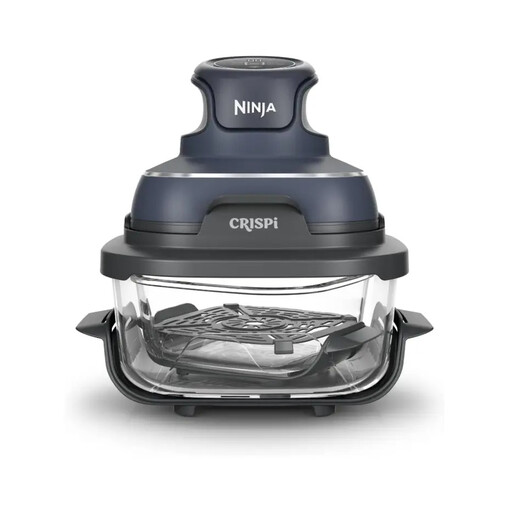 Image unavailable
For small portions, check that the container can hold your food and, if needed, your tin. If cooking results or energy use are important to you, compare tests using recipes similar to your own.
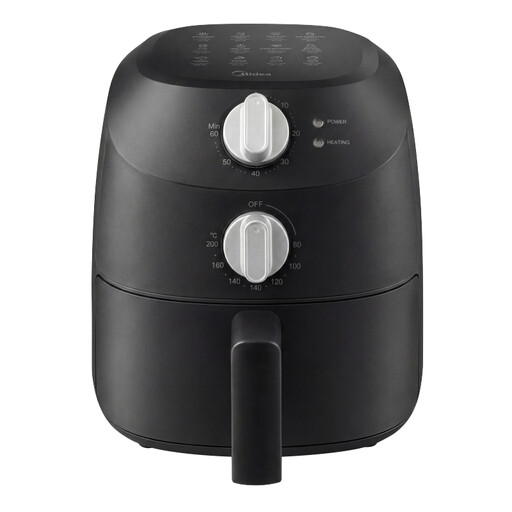 Image unavailable
Worth considering for one or two small portions if the basket shape suits your food. The advertised timer runs for up to 60 minutes; also check the internal dimensions and the space needed to open the drawer. The stated power alone doesn’t tell you how much energy a recipe will use.
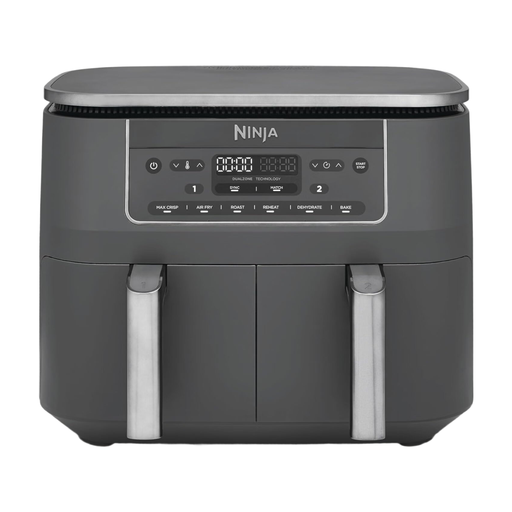 Image unavailable
Consider this model if you regularly cook two foods at once rather than just one small portion. Its advertised total capacity is 7,6 L: check the usable area of each drawer and how much space the appliance will take up before choosing this format.
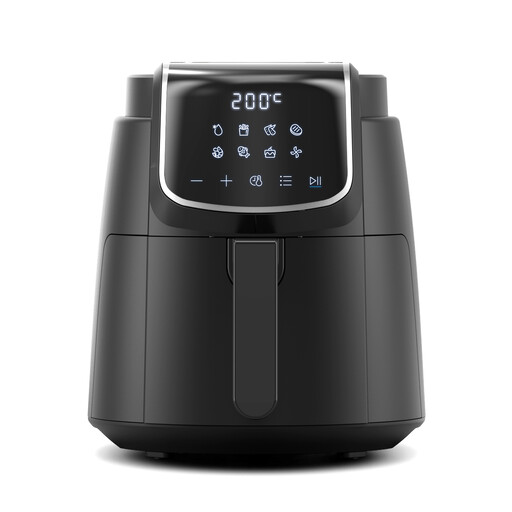 Image unavailable
This single-basket model may be worth considering if you’d like more room than a 2 L model offers, although that doesn’t necessarily mean more usable cooking space. The product name states a temperature range of 35 to 200 °C and a 60-minute timer; compare the internal dimensions with your usual portions.
No. You shouldn’t assume the difference will be the same for every dish. In tests by Que Choisir, the air fryers tested used less energy than the mini oven tested when cooking a small quiche. The best choice for your meals also depends on the quantity, recipe, appliance and number of cooking cycles needed.
Compare its internal dimensions and usable area with your food and cookware, rather than relying on the stated capacity in litres alone. If the appliance has two drawers, check each compartment separately.
Check how much room is needed to open the drawer, which parts need cleaning and the care instructions. If space or noise matters in your kitchen, also look for ergonomic and noise tests for the model you’re considering.