If the smell and handling of a pan of hot oil are your main concerns, an air fryer is worth considering, provided you have room to keep it out and don’t mind the possibility of noise. For the occasional fried meal, a traditional deep-fat fryer that’s compatible with your hob may be enough. An electric deep-fat fryer is a better fit if you want a dedicated appliance, but you’ll still need to manage the oil. If your oven or frying pan already suits the quantities you usually cook, keeping them in the running means you won’t have another appliance to store.
Which option is right for you?
Households bothered by the smell of frying
If the smell of a pan of hot oil puts you off, especially in an open-plan or compact kitchen, consider air frying. Que Choisir says it can reduce unpleasant smells, but also points out that these appliances can take up space and be noisy.
People who want easy cleaning
If cleaning up after cooking is an important part of your decision, check which parts can be removed and which are dishwasher-safe. The guidance published by Philips and SEB applies to specific appliances, so check the instructions for the model you’re considering.
Occasional cooks who already have the essentials
If you rarely cook fried food, weigh up the benefits of another appliance against using your oven, frying pan or a deep-fat frying pan. For the latter, check that it’s compatible with your hob and plan how you’ll deal with the oil after cooking.
Which criteria should you prioritise?
If you’ll only use it occasionally, start with the inconvenience you most want to reduce: smells, cleaning, storage space or handling things after cooking. Each cooking method meets these needs in a different way.
Air fryer
Worth considering: if you want to avoid a pan of hot oil and reduce the smells associated with it.
Bear in mind: Que Choisir notes that these appliances can be bulky and noisy. Check that the capacity is also right for your portions.
Traditional deep-fat fryer
Worth considering: for occasional frying, if you have a compatible hob and don’t want another electric appliance.
Bear in mind: it takes up a hob ring and uses a pan of hot oil, so you’ll need to take care to avoid splashes and deal with the oil after cooking.
Electric deep-fat fryer
Worth considering: if you want a dedicated appliance without using up a cooking zone on your hob.
Bear in mind: you’ll still need to handle the hot oil. Whether the parts can be removed and washed depends on the model.
Oven
Stick with it: if it already suits the quantities you usually cook and storing another appliance would be a nuisance.
Bear in mind: oven cooking isn’t a substitute for deep-frying when that’s specifically the cooking method you want.
Frying pan
Stick with it: for occasional small portions, if you’d rather use a pan you already own.
Bear in mind: using a frying pan won’t remove the need to handle fat or take care to avoid splashes.
| What matters to you |
What to check |
Who this matters to |
| Smells and oil |
Whether the cooking method uses a pan of hot oil; whether you have room for an air fryer. |
In a small kitchen, I mainly want to avoid the smell of frying and handle less oil; around 30% of consumers prioritise this. |
| Cleaning |
Which parts can be removed and which are dishwasher-safe, as stated in the model’s instructions. |
After cooking occasionally, I don’t want to spend too long washing the bowl and accessories. Easy cleaning comes first for around 30% of consumers. |
| Space and compatibility |
How often you’ll use it, the appliance’s dimensions and, if you choose a traditional deep-fat fryer, whether it’s compatible with your hob. |
I’d rather use the equipment I already have if a new appliance would spend almost all year in storage; around 20% of consumers prioritise space and compatibility. |
| Handling |
Stability, handling the basket and instructions on letting the appliance cool before cleaning. |
When I cook with hot oil, I want to be able to handle the basket and clean up afterwards safely. These tasks are the main concern for around 20% of consumers. |
Things to bear in mind
-
Assuming fewer smells means no smells
Que Choisir says air frying can reduce unpleasant smells, not that your kitchen will always be odour-free. You may also need to make room for the appliance and put up with some noise.
If these factors matter to you, check the dimensions and where you plan to put it, as well as any information available about the model’s noise levels.
-
Assuming a removable basket makes cleaning easy
Depending on the model, the bowl, basket, lid and other parts may all need to be cleaned differently. The coating may also require special care.
Check the instructions for the model you’ve chosen to find out which parts can be washed, what to avoid and how long to let the appliance cool before cleaning.
-
Forgetting about your hob and what to do with the oil
If you’re choosing a traditional deep-fat fryer, it’s essential to check that the pan is compatible with an induction hob. Deep-frying also means you’ll need to store or dispose of used oil properly.
Check the material and markings on the pan. In France, ADEME advises against pouring used oil down the sink or toilet, or into the environment. Once it has cooled, put it in a sealed container and follow your local authority’s guidance.
Brands to know
There are no brands to feature in this section.
Air fryers and deep-fat fryers on Joybuy
These appliances represent two of the cooking methods covered here: air frying and electric deep-frying in oil. Before choosing, compare their capacity, care instructions and how much room they’d take up in your home.
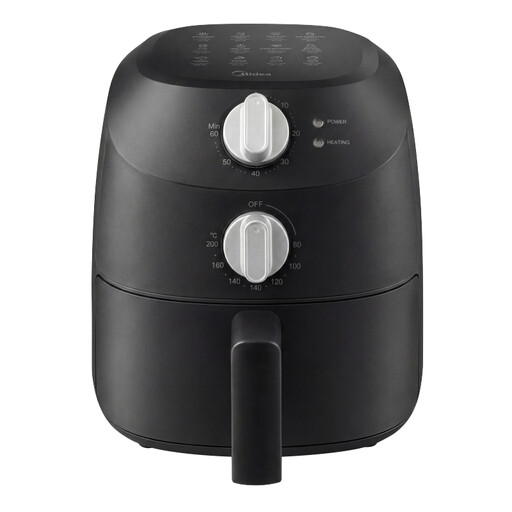 Image unavailable
Midea Air Fryer 2 L, 1 150 W, black
Worth considering if you want to cook with hot air using a 2 L appliance instead of a pan of hot oil.
The product listing mentions a 60-minute timer and a non-stick, dishwasher-safe basket. If space or noise is a deciding factor, check the dimensions and information for this specific model before you buy.
View on Joybuy
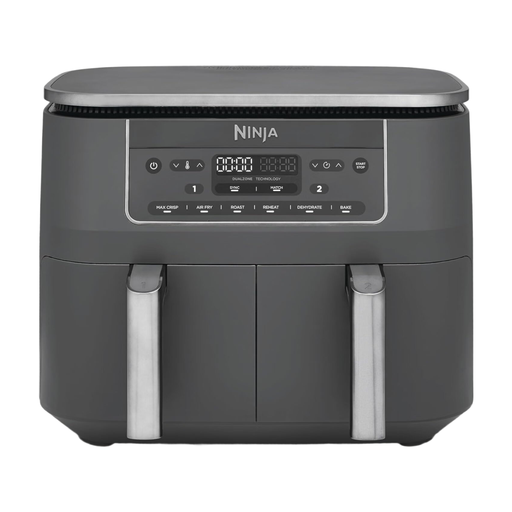 Image unavailable
Ninja Dual Zone Digital DZ300EU, 7,6 L, two drawers
The two drawers may appeal to households that want to cook two separate portions or foods without using a pan of hot oil.
The model name lists six functions and a total capacity of 7,6 L. It measures 31,5 × 38 × 26,5 cm and weighs 8,2 kg, so consider the space you’ll need to position and move it. Check the instructions for how to clean each part.
View on Joybuy
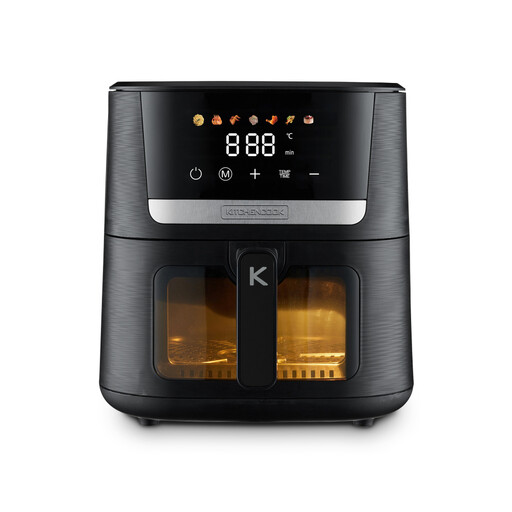 Image unavailable
KITCHENCOOK AIRMED7W, 7 L, with viewing window
The viewing window is handy if you want to keep an eye on your food as it cooks in an air fryer.
The product name lists a 7 L capacity and a digital display. To check how easy it is to clean and how much room you’ll need, consult the instructions for the washable parts and the model’s dimensions.
View on Joybuy
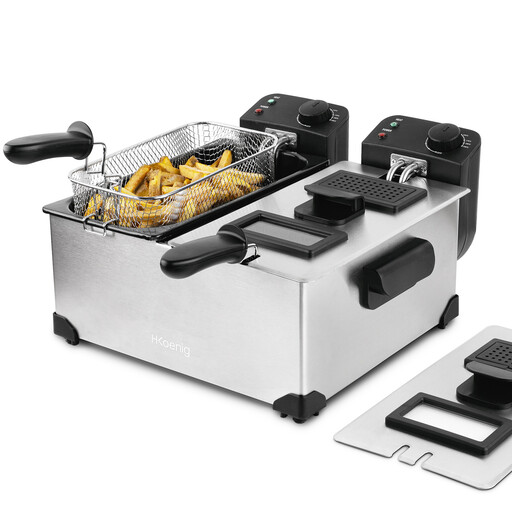 Image unavailable
Hkoenig DFX600, two 3 L baskets, 3 600 W
This deep-fat fryer may suit you if you want a dedicated appliance with two separate baskets.
The product name lists two independent thermostats, removable baskets and odour filters. The filters don’t remove the need to manage the oil or guarantee an odour-free kitchen. Let the appliance cool completely before cleaning, as instructed in the product information.
View on Joybuy
Frequently asked questions
Will a traditional deep-fat fryer work on an induction hob?
Yes, if its pan is compatible with induction. Que Choisir advises against using cast aluminium for this purpose and recommends steel. Check the markings and instructions for the specific pan too.
Can you put an air fryer’s basket and bowl in the dishwasher?
It depends on the model and the individual parts. Philips says the bowl, basket and some accessories for its Airfryer models can go in the dishwasher, and recommends letting the appliance cool for around 30 minutes before cleaning. Check the instructions for the model you’re considering.
What should you do with used cooking oil in France?
Let it cool, put it in a sealed bottle or container, then follow your local authority’s guidance. ADEME advises against pouring it down the sink or toilet, or into the environment.


