For cooking two dishes at once
You regularly prepare a main and a side with different settings, and want to serve them together.


For smaller batches, cooked one after another, a single drawer may be enough. If you want to cook a main and a side separately, consider a model with two zones, with a synchronisation function if you want them to finish cooking at the same time. A flexible zone is useful if you switch between cooking two separate dishes and a larger one, while a hybrid design suits other uses, such as cooking and then storing food in a suitable container. Whatever you choose, check the usable dimensions, care instructions and compliance details for the exact model before buying. UFC-Que Choisir points out that results can vary between zones.
You regularly prepare a main and a side with different settings, and want to serve them together.
Sometimes you need two separate zones; at other times, you need one continuous space for a larger dish. Compare the usable dimensions with the dishes you usually use.
You mainly cook smaller batches and need to balance the appliance’s footprint, portion sizes and the possibility of cooking a second batch.
To choose a format that suits weeknight meals, start by thinking about how you divide up your dishes, then check what each configuration can actually do.
Consider it if: you mainly prepare small quantities and are happy to cook different parts of the meal separately.
Bear in mind: the stated capacity alone won’t tell you whether a particular dish will fit in the basket.
Consider it if: you want to set different cooking programmes for your main and side, then coordinate when they finish.
Bear in mind: each dish needs to fit in its own basket; UFC-Que Choisir notes that results can vary between zones.
Consider it if: you switch between cooking two separate dishes and preparing meals that need one continuous space.
Bear in mind: check the shape and internal dimensions in each configuration, as well as which parts need cleaning.
Consider it if: cooking, serving and then storing food in suitable containers matters more to you than cooking two dishes at once.
Bear in mind: having several containers doesn’t necessarily mean you have two independent cooking zones.
| What matters | What to check | Consumers concerned |
|---|---|---|
| Coordinating a main and a side | Independent settings, synchronisation on the exact model and the space available in each basket. | If I want to serve the main and side together, I prioritise separate settings. Around 30% of consumers prioritise this coordination. |
| Fitting your usual portions | Internal dimensions, recommended quantities and the size of dishes that fit in your chosen configuration. | If my usual dishes need to fit without being crammed in, I check the internal dimensions before the stated capacity. Around 23% of consumers prioritise usable capacity. |
| Keeping worktop space free | Available width, depth and height, drawer clearance and the clearances specified in the instructions. | In a small kitchen, I want to keep worktop space free while choosing a format that suits my portions. Footprint is a priority for around 18% of consumers. |
| Keeping cleaning to a minimum | Removable parts, care instructions for the exact model and how easy it is to reach surfaces that need cleaning. | After a weeknight meal, I want to keep the number of parts to wash to a minimum and know how to care for them. Around 17% of consumers prioritise easy cleaning. |
| Comparing the energy used for a meal | Energy measured for comparable foods and quantities, total cooking time and any additional batches. | To compare the energy used for a complete meal, I take all batches into account rather than looking only at the stated power. Around 12% of consumers prioritise this factor. |
Capacity alone doesn’t tell you the shape of the basket, the size of the dishes that will fit or the quantities it can handle. UFC-Que Choisir recommends comparing usable capacity with the appliance’s actual functions.
Measure your dishes and check the recommended quantities for each configuration.
On models with this function, synchronisation coordinates the finish time, but results can vary between zones, UFC-Que Choisir points out.
Check that each basket suits the portion you plan to cook, and follow the cooking instructions for each dish.
Different foods, quantities or numbers of batches don’t provide a like-for-like basis for comparison. UFC-Que Choisir’s testing protocol records factors including cooking time and energy use per batch.
Compare the same foods and quantities, counting every batch needed for the meal, rather than estimating energy use from the stated power.
For the Ninja CRISPi FN101EUST, SharkNinja France describes glass containers for cooking, serving and storing food. This doesn’t mean they allow two independent dishes to be cooked at the same time.
If cooking two dishes at once is essential, check that the exact model has this function and make sure you have the containers or accessories needed for your planned meal.
Depending on the meal you have in mind, you may need extra accessories.
The ranges featured by Philips France include a compact basket, separate baskets and a flexible configuration.
The models featured by Moulinex France include a dual-drawer format and the Dual Easy Fry Flex, with a divisible cooking space.
SharkNinja France describes the Foodi Flex AF500EU as a flexible format and the CRISPi FN101EUST as an appliance with glass containers.
These Joybuy products are mainly dual-drawer air fryers, with a flexible-zone model also included for preparing weeknight meals.
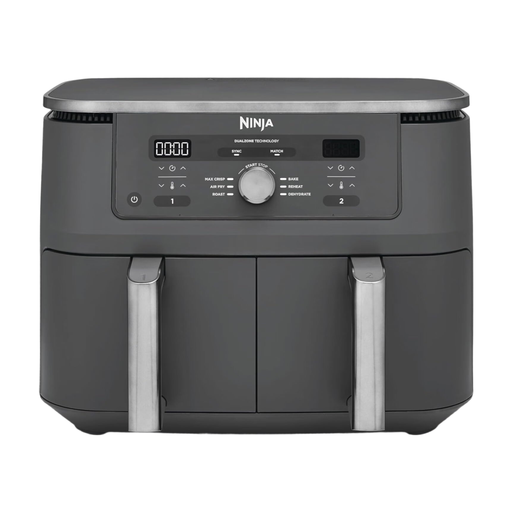 No image available
Worth considering if you want to prepare two parts of a meal separately; check that each portion fits in its drawer.
The product name indicates two drawers and a total capacity of 9.5 L.
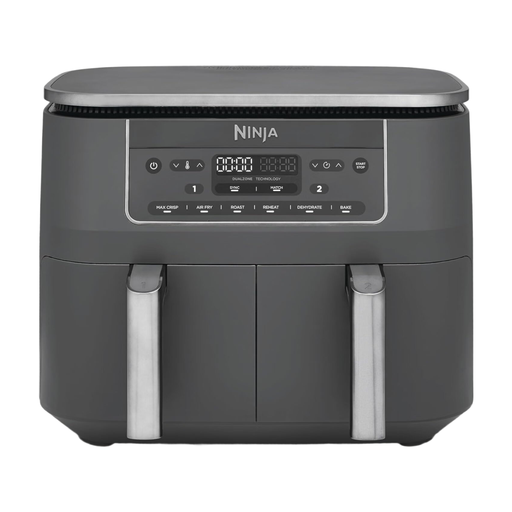 No image available
Consider it if you’re looking for a dual-drawer format to cook different dishes separately; check how much space each one needs.
The product name indicates two drawers and a total capacity of 7.6 L.
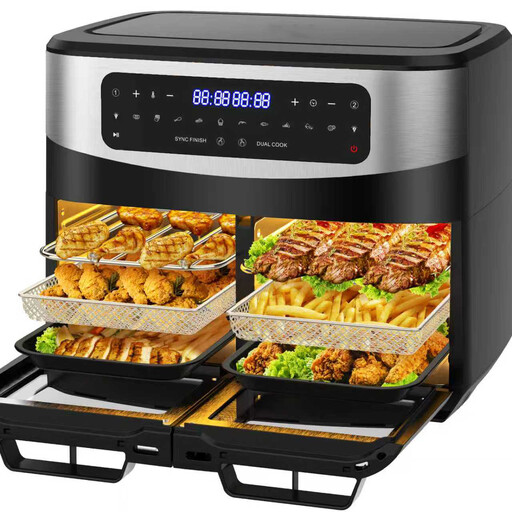 No image available
Worth considering if you want to cook two dishes separately; check the dimensions of each basket and the cooking functions listed for the exact model.
The product name lists two baskets, a capacity of 12 L and a power rating of 2,600 W.
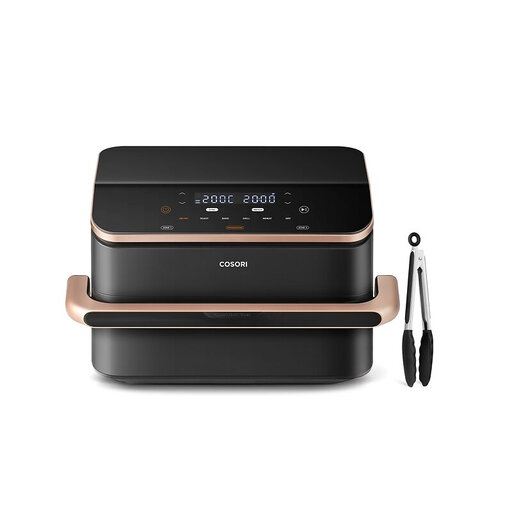 No image available
Its flexible-zone format is worth considering if you switch between cooking a large dish and two separate ones; check the configuration and usable dimensions in the instructions.
The product name indicates a capacity of 10 L.
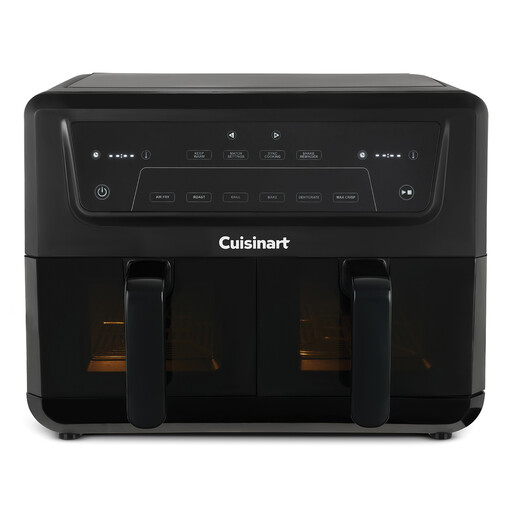 No image available
Worth considering if you prepare a main and a side separately; check how much space each zone offers for your portions.
The model name indicates an XXL format with two zones.
Compare the internal dimensions and recommended quantities in the instructions with your dish and portion sizes. A capacity given in litres isn’t enough to determine usable space.
No. On models with this function, it coordinates the finish time but doesn’t guarantee identical results in each zone. Follow the cooking guidance and check each dish.
Check the instructions for the exact model for clearance requirements, installation, accessories and washing guidance. These details can vary from one model to another.
You can’t draw that conclusion without comparing like-for-like uses. For a comparable meal, take the same foods and quantities into account, along with the cooking time and every batch needed. UFC-Que Choisir’s testing protocol measures factors including cooking time and energy use per batch.
No. The DGCCRF explains that the CE mark isn’t an independent certification. For electrical appliances within the scope of Directive 2014/35/EU, including those designed for a rated voltage of 50 to 1,000 V AC, the applicable electrical safety and CE marking requirements must be met. Check the documentation for the model in question. The consolidated version of the directive cited is dated 30 May 2026.