
Same-day & Next-day Delivery

Quality Guaranteed

Unlock Your Welcome Offers: FREE Delivery | Up to 80% OFF | Free 30-day JoyPlus trial
Download the APP
An air fryer, also known as a hot-air fryer, can make everyday meals much easier. It lets you cook chips, vegetables, fish, meat and frozen foods with very little oil. In many cases, it also takes up less space than a conventional oven.
However, not all models are the same or suited to the same needs. A generous-sounding capacity may prove impractical if the basket is narrow. And a long list of programmes doesn’t necessarily mean an appliance will be enjoyable to use every day.
A 10- or 12-litre appliance may seem ideal for a family. But it’s worth checking how that space is arranged. Two 4.5-litre compartments won’t let you cook the same quantities as a single 10-litre basket. The shape of the basket, the available cooking surface and the ability to spread out the food all have a direct impact on the results.
For one or two people, a compact air fryer with a capacity of 2 to 4 litres helps keep leftovers to a minimum and fits more easily into a small kitchen. For larger households, an air fryer for families with a capacity of 8 to 10 litres, possibly with two baskets, will generally be a better fit.
Manufacturers sometimes claim a 75 to 90% reduction in fat compared with traditional frying. These figures vary depending on the food, the amount of oil used to start with and the comparison method. It’s better to think of cooking without oil as a way to limit added fat, rather than a nutritional guarantee.
How full the basket is also affects the texture. An overcrowded basket stops hot air circulating properly and often leaves food less crispy.
An appliance that’s easy to clean should have removable baskets and a suitable coating. Ideally, its removable parts should also be dishwasher-safe. The motorised base must never be submerged.
Before placing your order, measure the space available on your worktop and check the recommended clearance around the appliance. A large-capacity air fryer can also become a nuisance to move after every use.
“Dual basket” doesn’t necessarily mean that both compartments have the same capacity. Check the volume of each one and the quantity of food recommended by the manufacturer.
Measured in watts, power affects how quickly the appliance heats up and how well it maintains an even temperature. However, it should be considered in relation to the available capacity. A 1,150 W, 2-litre model is designed for a different purpose from a 2,400 W, 9-litre appliance.
A temperature range of around 80 to 200 °C covers most cooking needs. Some appliances go lower for dehydrating or reach higher temperatures to brown food more deeply. A 60-minute timer is enough for most everyday recipes.
Choose removable baskets with a non-stick coating, and look for parts described as dishwasher-safe. Always check the manual to find out which cleaning products are suitable and which accessories to avoid.
For use in France, check for the required regulatory information, instructions in French and a plug that’s compatible with the 220-240 V mains supply. Where required, the CE marking indicates a declaration of conformity with the applicable European requirements. It doesn’t remove the need to follow the instructions for use.
Place the appliance on a stable, heat-resistant surface. Never block the air inlets or outlets, don’t pour in oil as you would with a traditional deep fryer, and let the baskets cool before cleaning them.
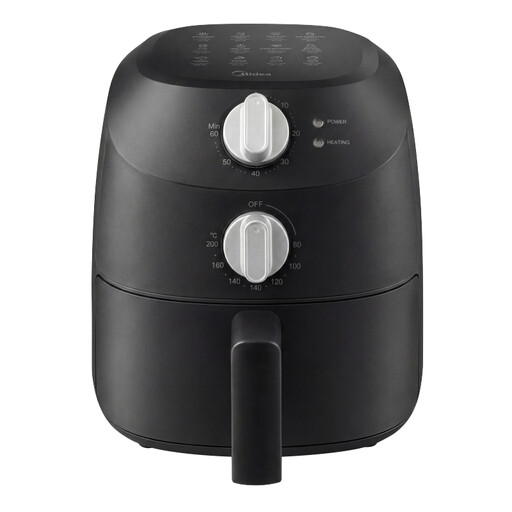
Why it suits this type of user : its compact size is ideal for studio flats, small kitchens and portions for one or two people.
Its limited capacity reduces the risk of choosing an oversized appliance for cooking just for one. The removable parts are described as dishwasher-safe.
2-litre basket, 1,150 W power, 60-minute timer and compact design.
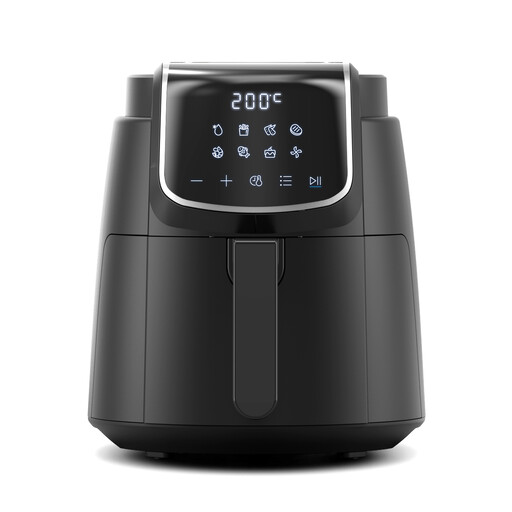
Why it suits this type of user : its mid-sized capacity is well suited to everyday meals, without taking up as much space as a family-sized appliance.
Manual settings let you adjust the temperature and cooking time, so you don’t have to rely solely on automatic programmes.
4 litres, 1,500 W, eight pre-set modes, adjustable temperature from 35 to 200 °C and a reminder to shake the food.
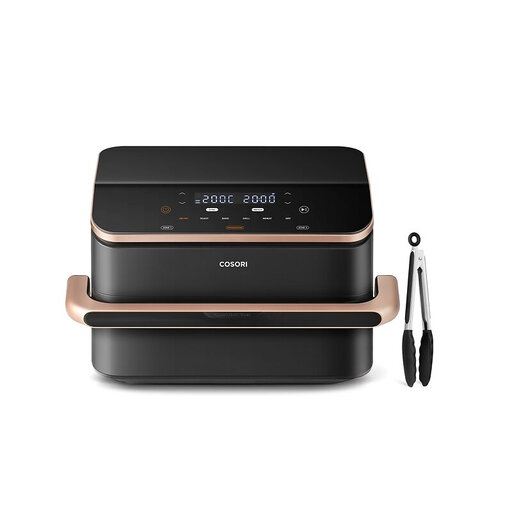
Why it suits this type of user : its convertible design and connectivity are ideal if you want to explore a wider range of cooking methods.
Use the basket as a 10-litre compartment or divide it into two 5-litre zones. This versatility helps you avoid choosing an appliance that’s too specialised.
10-litre capacity, 2,800 W power, four advertised heating elements and the VeSync app with Wi-Fi connectivity.
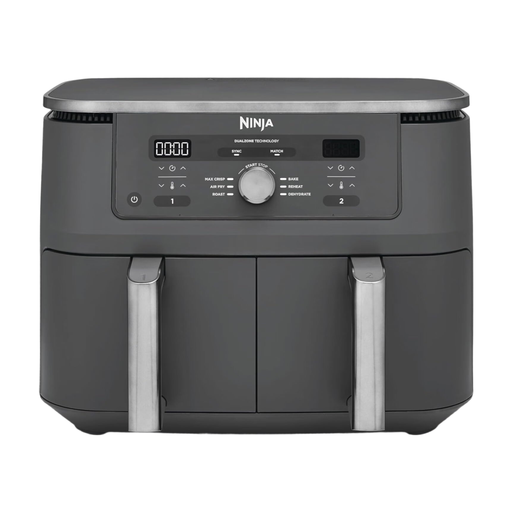
Why it suits this type of user : its two independent drawers let you cook a main course and a side dish at the same time.
Independent settings mean you don’t have to cook two different foods using the same programme. The drawers and crisper plates are described as dishwasher-safe.
9.5 litres split between two 4.75-litre drawers, 2,470 W power and six cooking functions.
We’ve brought together a comprehensive selection, updated in real time, of products that meet these exacting criteria and European safety requirements.
A 7 to 10-litre model could be a good fit, especially if it has two baskets or a large cooking surface. However, check the quantity of food the manufacturer actually recommends. If you want to prepare two different dishes, a dual-basket air fryer makes it much easier to organise the meal.
It depends on the appliance’s power, how long it runs, the amount of food you’re cooking and the cost of electricity. For a small portion, an air fryer can save you from heating a large oven. However, it won’t automatically be cheaper in every situation. Rather than relying on a general claim, compare the wattage and how long you’ll use the appliance.
Its lifespan depends on how often you use it, how well you look after it and the condition of the non-stick coating. Avoid overfilling the basket, don’t use metal utensils and clean each part as directed in the manual. Careful use helps maintain the appliance’s performance and safety.