
Livraison le jour même ou le lendemain

Qualité garantie

Débloquez vos offres de bienvenue: Livraison GRATUITE | Jusqu'à -80 % | 30 jours d'essai gratuits à JoyPlus
Téléchargez l'application
By the Joybuy team, your product experts | Published: August 26, 2026
Condensation on the windows, a persistent musty smell, or the appearance of small mould spots in the corners are all tell-tale signs: humidity has settled into your home. Faced with this problem, an electric air dehumidifier is the most direct solution for restoring a healthy environment. The problem is, the market is flooded with models featuring complex spec sheets, and it's easy to make the wrong choice. To help you avoid buyer's remorse, here are the mistakes to steer clear of and the essential criteria to validate.
Before you even start comparing spec sheets, be aware of these common errors that can turn a good investment into a real headache.
You don't need to be an engineer to make the right choice. Focus on these three points that make all the difference in daily use.
The extraction capacity, expressed in litres per day (L/day), indicates the maximum amount of water the unit can remove from the air in 24 hours. Be aware that this value is almost always measured in a lab (often at 30?°C and 80?% humidity), conditions rarely found in a typical home.
Here are a few practical guidelines to help you out?:
Noise is a decisive factor. A silent dehumidifier is essential for a bedroom or office.
Certain options transform a simple appliance into a true ally against humidity.
To illustrate these criteria, here are some recommended options, each tailored to a specific user profile.
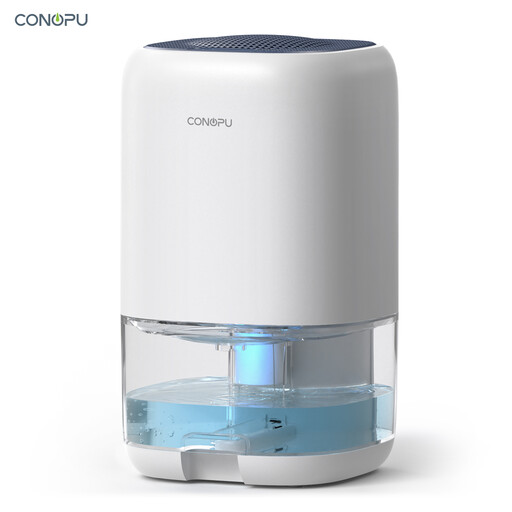
Why it stands out : Compact, energy-efficient, and discreet, it's perfect for tackling occasional dampness in a small bathroom, wardrobe, or camper van. It's the ultimate supplementary solution for spaces up to 15 m?.
Perfectly sized for small volumes, it avoids the oversizing issue. Its Peltier technology is much quieter than compressor models, countering the noise trap.
Near-silent operation, LED ambient light (7 colours), and an easy-to-empty 1L tank.
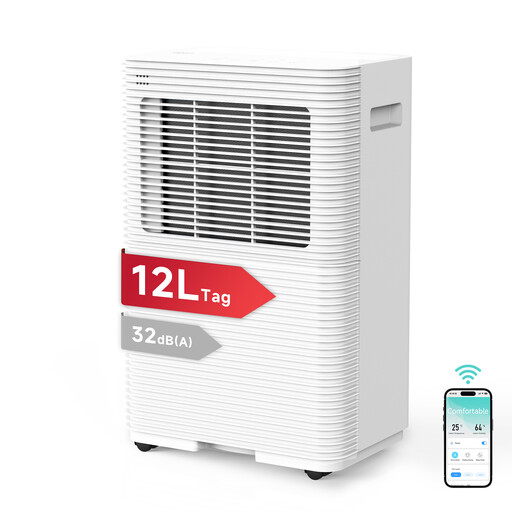
Why it stands out : It's the perfect balance of performance and discretion. Its 32 dB night mode makes it ideal for bedrooms, while its 12L/day capacity efficiently manages humidity in a living room. The Wi-Fi control is a real daily convenience.
It tackles the noise problem head-on with a specially designed night mode. Its capacity is well-calibrated for standard living areas, preventing the purchase of an overpowered, energy-hungry model.
Ultra-quiet night mode (32 dB), smart Wi-Fi control, and laundry dry function.
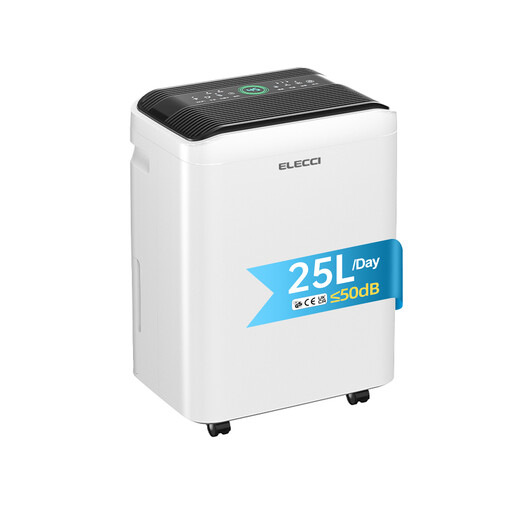
Why it stands out : With its large 25L/day capacity and 4.8L tank, it's built for tough jobs like a damp basement or a large laundry room. The laundry dry mode and continuous drainage are decisive assets for intensive use.
It ends the chore of emptying the tank thanks to its large basin and, most importantly, its continuous drainage mode. Essential for leaving the unit running unattended in a basement.
High extraction capacity (25L/day) and a large tank (4.8L) with a continuous drainage option included.
Discover our full selection of dehumidifiers, all approved according to our performance and safety criteria.
Consumption obviously depends on the unit's power (in Watts) and your usage. A 200W model running 8 hours a day will consume 1.6 kWh. Modern units using the more eco-friendly R290 refrigerant are often more energy-efficient. The secret to managing consumption? Use the built-in hygrostat to target a specific humidity level (e.g., 55%) rather than letting the unit run continuously.
No, and it's actually not recommended. Most models are equipped with a hygrostat that measures ambient humidity. You can set a target level (a rate between 50% and 60% is ideal for comfort and preventing mould). The unit will then turn on and off automatically to maintain this level, optimising its efficiency and consumption. Continuous mode should be reserved for specific needs, like drying laundry.
The difference is significant. A moisture absorber (like a salt-based tub) is a passive solution. Silent and electricity-free, it's suitable for very small, enclosed spaces (closet, car). Its action is slow and limited. An electric dehumidifier, on the other hand, is an active solution that circulates a large volume of air. Thanks to its fan and condensation system, it regulates the humidity of an entire room quickly and in a controlled manner. It is THE preferred solution as soon as humidity becomes a comfort issue or a threat to your home.