
Livraison le jour même ou le lendemain

Qualité garantie

Débloquez vos offres de bienvenue: Livraison GRATUITE | Jusqu'à -80 % | 30 jours d'essai gratuits à JoyPlus
Téléchargez l'application
A conversation with a foreign speaker, a language lesson or a business call can quickly become a headache when translation relies on a poorly configured app. AI translation Bluetooth earbuds promise smoother communication, but not all models work in the same way.
Before placing your order, check whether translation is carried out via an app, whether an internet connection is essential and whether the battery can last through a full day of travelling. Here are the criteria to consider to avoid unpleasant surprises and find earbuds that can translate in real time, suited to your everyday life in France.
A product listing may claim compatibility with 150 languages, without the earbuds being able to translate on their own. On many models, they simply act as a microphone and audio output, while translation is handled by a mobile app.
Before ordering, check:
The phrase “150-language translation earbuds” should therefore be understood as a capability claimed by the manufacturer, rather than a guarantee of perfect translation in every situation.
Noise reduction makes listening easier in a railway station, office or busy street. However, it is not enough to guarantee accurate translation. Results also depend on microphone quality, the connection, pronunciation and the processing carried out by the app.
Models with good sound isolation, a built-in microphone or microphones supported by software processing can be useful for calls. Even in particularly noisy environments, it is still best to speak clearly and avoid simultaneous conversations.
In-ear earbuds can be perfectly suitable for daily commuting. For walking or sport, a hook-style or open-ear model will often be more practical. A more substantial Bluetooth translator headset may provide a better sense of stability, but it will be less discreet during a business meeting.
Comfort depends on the shape of your ear, weight, fit and length of use. A technical specification cannot replace checking the dimensions, wearing style and care recommendations.
For study, travel or professional exchanges, choose a model whose installation process is clearly explained. The VoxorAI M113, M112, M76, M75 and XH12 advertise a Bluetooth 5.4 connection, touch controls and a range of up to 15 metres. Their product listings also mention around 150 languages and battery life of between 5 and 7 hours, depending on the conditions of use.
This battery life may be enough for a meeting or several short conversations. On a long journey, however, a charging case or power bank will still be very useful. Earbuds compatible with iOS and Android must also be paired with a correctly configured smartphone.
Compare the battery life of the earbuds on their own with the total battery life available with the case. The stated duration varies according to listening volume, calls, use of translation and the quality of the Bluetooth signal.
As a guide:
An IPX5 rating indicates resistance to water splashes. This may be suitable for perspiration and moderate outdoor use. An IPX8 rating corresponds to a higher level of protection against immersion, within the limits and conditions specified by the manufacturer.
The Verbex X7S are presented as Bluetooth sports bone-conduction earbuds with IPX8 protection, 32 GB of internal memory and a standalone MP3 player. After swimming, however, you should rinse and dry them, and check that the charging port is completely dry before connecting them. Water resistance does not remove the need to follow the manufacturer’s instructions.
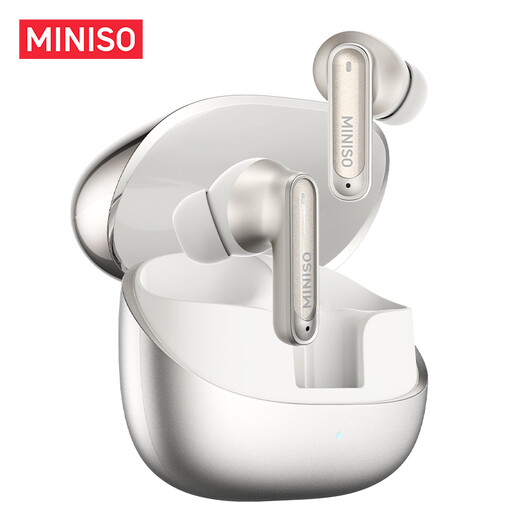
Why this choice suits this profile : This TWS model is aimed at anyone who wants to listen to music, make calls and use a translation app with an iPhone, iPad or Android device.
The listing specifies Bluetooth, iOS and Android compatibility, as well as use with translation apps. Its stated battery life of around 4 hours should nevertheless be taken into account.
Bluetooth 6.0, built-in microphone, TWS design and IPX5 protection against water splashes.
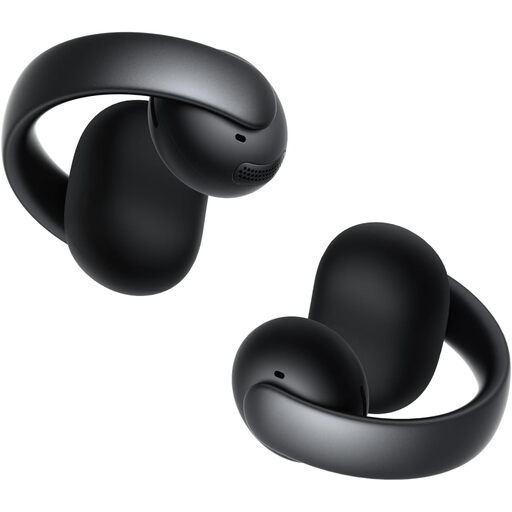
Why this choice suits this profile : Its open design is ideal for users who want to listen to music while remaining aware of their surroundings, both in the office and on the move.
The open design avoids the pressure of an ear tip inside the ear canal. The trade-off is limited sound isolation in very noisy transport environments.
Four microphones with software processing for calls, 12 mm speakers and IP55 resistance.

Why this choice suits this profile : This bone-conduction, open-ear model is designed for swimmers, runners, cyclists and anyone who uses earbuds during physical activity.
The 32 GB of internal memory lets you play MP3 files without a phone. IPX8 is stated, but the drying and charging instructions must be followed.
32 GB storage, Bluetooth, hands-free calls, open design and stated battery life of around 8 to 10 hours.
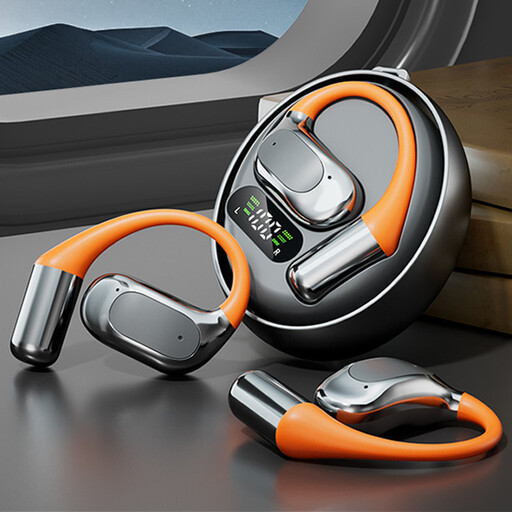
Why this choice suits this profile : Its hook-style design is made for conversations, travelling and professional exchanges. The listing claims translation in around 150 languages.
The app and pairing procedure are set out in the instructions. Download the app and test the connection before an important meeting.
Bluetooth 5.4, touch controls, 40 mAh earbuds, 300 mAh case and stated battery life of around 5 to 7 hours.
We have put together a complete, real-time updated list of products that meet these strict selection criteria and European safety requirements.
The range dedicated to artificial intelligence may also include very different devices, such as the Unitree R1 Air humanoid robot, equipped with a monocular camera, 20 degrees of freedom and a voice interaction function. However, this is a robotics product, not an audio translation accessory.
Not always. Many models rely on a mobile app to process translation. Bluetooth connects the earbuds to the phone, while an internet connection may be required depending on the app and selected language.
The models featured generally offer between 4 and 7 hours of battery life for translation, depending on the conditions of use. Calls, high volume and continuous translation can reduce this duration. A charged case lets you extend use between power sockets.
Yes, provided they have a microphone and can be paired with a compatible app. Bone-conduction or open-ear models prioritise awareness of your surroundings and stability during activity. In-ear earbuds, meanwhile, generally provide greater isolation from external noise.