
Livraison le jour même ou le lendemain

Qualité garantie

Débloquez vos offres de bienvenue: Livraison GRATUITE | Jusqu'à -80 % | 30 jours d'essai gratuits à JoyPlus
Téléchargez l'application
Are you looking for an autonomous training partner? Product descriptions often promise the world: artificial intelligence, high speed, hundreds of drills, voice control and performance tracking. Yet a tennis ball machine can quickly become cumbersome or impractical if certain key factors are overlooked.
Here are the main pitfalls to avoid before buying, along with a selection of models suited to different player profiles, from beginner to competitor.
A speed quoted in kilometres per hour is not enough to evaluate a machine. A tennis training robot must also allow you to adjust the feed frequency, trajectory, height and spin. A very high speed is of little use to a beginner, while an experienced player will want precise progression, from slow balls to fast sequences via paced rallies.
Also check whether the top speed is a manufacturer's figure and under what conditions it was measured. Performance can vary depending on the type of ball, battery charge level and court configuration.
The mention of "AI" does not necessarily mean the machine analyses every shot like a human coach would. You need to distinguish between automated modes, pre-set programmes and genuine analysis functions.
An app-controlled tennis ball machine should detail the available settings: landing zones, speed, spin, height, interval between balls and ball groups. If voice control is offered, also check for a wristband or remote control, and the procedure for activating them before use.
A professional tennis ball launcher can weigh several kilograms and require a separate bag to carry the balls. For municipal courts or journeys between home and the club, the size and ease of transport matter just as much as power.
The stated battery life should be compared with the usual length of your sessions. These devices are generally designed for use on flat, dry ground. Rain, fog, strong wind and standing water can compromise their stability or operation. Consult the manufacturer's recommendations before any outdoor use.
For personalised tennis training, choose a sufficiently wide adjustment range. For example, the Lumistar Tero claims a speed of 20 to 140 km/h, spin of ± 3,600 rpm, elevation of 0 to 50° and lateral oscillation of ± 25°.
These figures alone do not guarantee sporting progress: they mainly serve to compare adjustment possibilities. A ball machine suitable for both beginners and advanced players must be able to evolve with the user's level.
A hopper holding 80 to 100 balls limits interruptions during a solo session. The TENNIIX Pro Smart AI claims a capacity of over 100 balls, while the Lumistar Tero can hold 80 to 100 balls and promises up to 4 hours of battery life.
For a club, coach or intensive user, a removable or easily rechargeable battery can make all the difference. Also check what's included in the box: charger, battery, wristband and accessories are not necessarily supplied with all models.
A portable tennis training machine should be easy to move and remain stable once set up. The Lumistar Tero adopts a suitcase format that integrates the unit, ball storage and space for a racket. Its main unit is claimed at 9.96 kg, with stackable discs of 1.7 kg.
The app is handy for preparing a detailed session. The wristband becomes particularly useful when you need to change a setting without going back to the machine. In any case, remember to check for app and firmware updates before your first session.
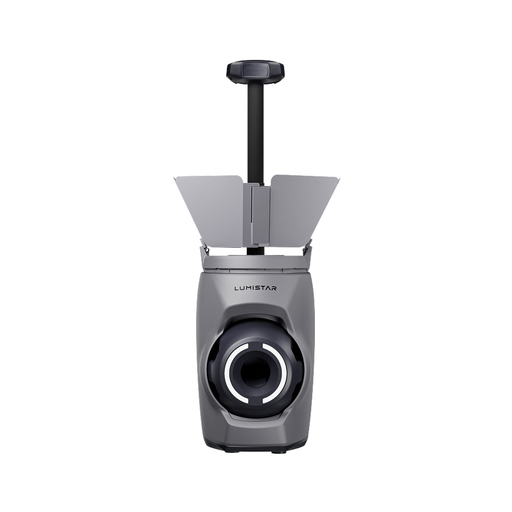
Why this choice suits this profile: Its suitcase format and built-in programmes make it a practical first machine for solo sessions, whether at home or on a nearby court.
The settings go beyond just speed: three announced modes, 259 pre-set drills and app control allow you to progress step by step.
Claimed speed of 20 to 140 km/h, stated battery life of 4 hours, control wristband and capacity of 80 to 100 balls.
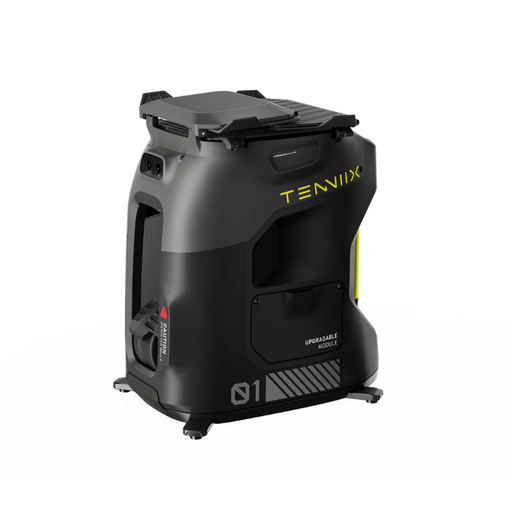
Why this choice suits this profile: This setup is aimed at players who want to multiply scenarios and enjoy more detailed tracking of their sessions.
The spec sheet claims over 1,000 customisable modes. That lets you examine the available parameters in detail, rather than stopping at the simple mention of "AI".
Claimed speed up to 75 mph, approximately 121 km/h, spin up to 5,000 rpm, voice control and app control, hopper capacity of over 100 balls.
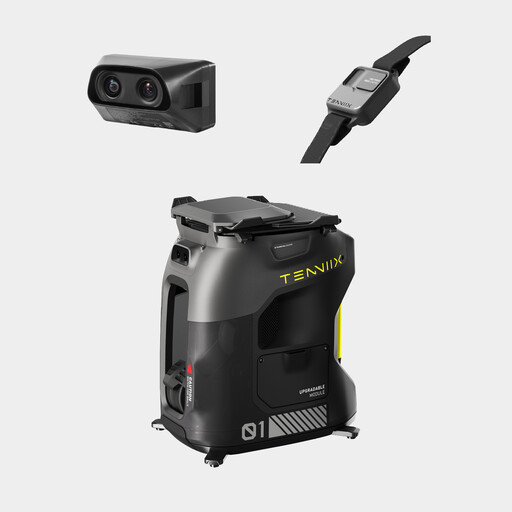
Why this choice suits this profile: With its claimed weight of 8.5 kg and control via app or wristband, this model can suit frequent sessions at the club or across multiple courts.
The spec sheet distinguishes between intelligent vision tracking, launch speed and remote control. However, check which modules are included before finalising your purchase.
Claimed speed up to 120 km/h, dual control via app and wristband, design intended for both indoor and outdoor use.
We have compiled a comprehensive list, updated in real time, of products that fully meet these demanding selection criteria and European safety regulations.
Generally, you just need to place the device on a flat surface, align it with the court markings, install the battery, then pair the wristband or app. Before the first session, update the app and firmware. Voice control may require activating the wristband before speaking the command.
The duration depends on the model, the selected speed, the feed frequency and the use of the oscillation motors. The Lumistar Tero claims up to 4 hours, but this remains a manufacturer's figure. For long sessions or club use, a spare battery could be worthwhile, if the manufacturer offers one.
Remove the balls after each session, store the device in a dry place and avoid adverse weather conditions. Regularly check the wheels, ventilation openings, cables and battery condition. Use the accessories recommended by the manufacturer and consult the manual before any updates or modifications.