
Livraison le jour même ou le lendemain

Qualité garantie

Débloquez vos offres de bienvenue: Livraison GRATUITE | Jusqu'à -80 % | 30 jours d'essai gratuits à JoyPlus
Téléchargez l'application
Finding the perfect chess partner is never easy. Whether you're looking to improve your skills, prepare for tournaments, or simply enjoy a challenging game away from screens, an AI electronic chessboard is the perfect solution. However, the market is flooded with marketing promises that often hide disappointing products.
As the Head of Product Recommendations at Joybuy, my role is to help you navigate this jungle. Together, we'll break down the common pitfalls and the essential criteria to look for. My goal: to arm you with the knowledge to make an informed choice that truly meets your needs, far from marketing hype and useless gadgets.
Too many players invest in an electronic chessboard hoping for a reliable training partner, only to be disappointed by an expensive and impractical gadget. Here are the most common traps:
To make an informed choice, focus on a few key technical parameters that determine the real quality of your future playing partner.
A good AI electronic chessboard is much more than just an opponent; it's a personal coach, the perfect tool for a solo chess training game. Here’s what to demand:
The balance between a standalone experience and connected features is essential.
The physical interaction with the board is paramount. A smart chessboard should replicate the feeling of a game against a real-life opponent.
Rather than drowning you in an endless list of products, we've matched specific models to player profiles. The idea is to help you find the perfect fit.
Why we chose it: This player isn't just looking for an opponent, but a true coach. Their goal: to analyze their games, correct their weaknesses, and methodically track their progress.
It sidesteps the poorly calibrated AI trap with its 25 difficulty levels (ELO 200 to 3200+) and the screen-dependency trap with over 1200 built-in lessons and exercises accessible without a subscription or third-party device.
Its structured educational content, available for life and co-developed with the European Chess Union. The integration with Lichess.org then allows players to put their new skills into practice against human opponents.
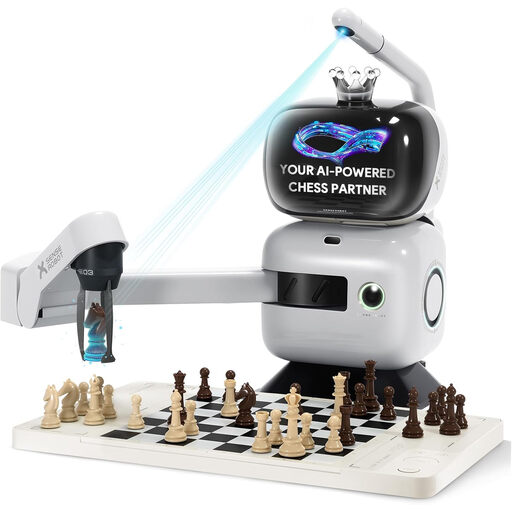
Why we chose it: For this profile, the chessboard is as much a technological marvel as it is a game. They are looking for a high-end experience, a visual "wow" factor, and a near-human interaction. The perfect gift for a chess player who is also a high-tech aficionado.
It avoids the trap of low-end mechanics with a high-precision robotic arm (<1 mm), which is both reliable and quiet. By replicating the tempo of a human player (about 8 seconds per move), it ensures total immersion.
The unique experience of a robot physically moving the pieces before your eyes. A stunning fusion of chess tradition and cutting-edge technology, for a guaranteed "wow" factor.
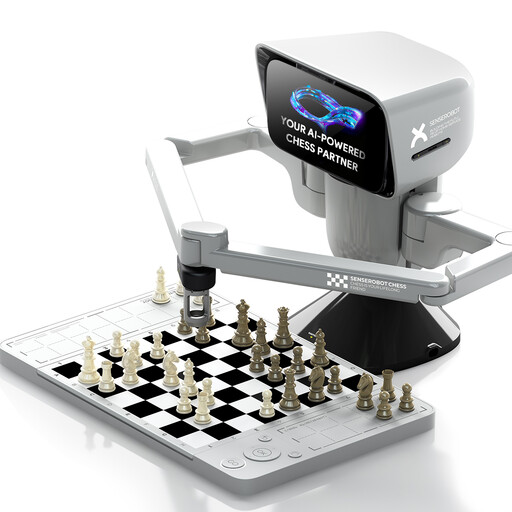
Why we chose it: This player wants to practice anywhere: while traveling, at the office, or in a small apartment. For them, portability and a small footprint are key, but without sacrificing the quality of the experience.
It avoids the compromise of a simple mobile app by retaining a true autonomous robotic arm that moves the pieces. It thus offers a real physical game, all in a foldable and ultra-portable format.
Its compact, foldable design, which includes secure storage for the pieces. It packs a complete robotic experience, with app connectivity for analysis and online play, all in a format built for travel.
We have selected other products for you that meet our demanding selection criteria.
Yes, absolutely. Many models are fantastic learning tools. Opt for a board that offers very accessible difficulty levels, guided exercises, puzzles, and voice prompts. It's an excellent gift for a budding chess player: it promotes fun, screen-free learning while stimulating concentration and strategic thinking.
It all depends on the manufacturing quality. Models from reputable brands are tested to withstand thousands of games. To be sure, look for concrete information on the mechanism's reliability (its placement accuracy, for example) and check if the manufacturer offers a warranty—a good indicator of their confidence in the product's durability.
Absolutely. It's one of the biggest advantages of recent models. A Lichess-connected chessboard or one compatible with other platforms opens the door to games against players from all over the world. You make your moves on your physical board, and the robot automatically moves your opponent's pieces. It's a perfect fusion of the comfort of playing at home and the global online gaming community.