
Livraison le jour même ou le lendemain

Qualité garantie

Débloquez vos offres de bienvenue: Livraison GRATUITE | Jusqu'à -80 % | 30 jours d'essai gratuits à JoyPlus
Téléchargez l'application
An agenda planner can quickly become the heart of your organisation: appointments, tasks, lessons, projects or habits – everything can find its place. But you need to choose a model that suits you. A layout that's hard to read, a format that's too bulky, or paper that feels unpleasant under your pen can turn a practical tool into a chore after just a few weeks.
Before you buy, here are the main pitfalls to avoid and the criteria to consider when finding an agenda that fits your lifestyle in the UK.
A pretty cover doesn't make a good planner. A model might catch your eye at first glance, yet still lack enough space to jot down an appointment, a task or a few ideas. So take a look inside: weekly planner, daily planner, monthly calendar and note pages all serve different needs.
A dated planner works perfectly if you plan your year on a regular basis. However, pages that have already passed will stay blank if you start organising mid-year, after the new term, or at the beginning of a new project. An undated planner or an 18-month planner lets you start whenever you like, without wasting any pages.
A pocket planner slips easily into a bag or jacket, but its writing space is naturally more limited. A large-format planner offers more room to detail meetings, homework and projects, at the cost of being bulkier. At roughly 14.8 × 21 cm, the A5 format is often the best compromise for everyday use.
Some planners combine several of these views. For example, you might find a monthly calendar followed by weekly double-page spreads, with a dedicated notes section.
Paper weight tells you about thickness, but it isn't enough on its own to judge writing comfort. At 100 g/m², the offset paper of the Jubiluu A5 feels denser than a 70 g/m² paper. However, your choice of pen is still decisive: a felt-tip or liquid ink can bleed through the thinnest sheets.
A hard cover will withstand repeated travel and daily handling better. A soft cover is generally lighter and less bulky. An elastic closure, a ribbon bookmark and a binding that lies flat are also real assets, whether you're working at the office, attending classes, or planning your days on the go.
Check the actual dimensions, the number of pages and the type of binding. A 15 × 21 cm format can work just as well for a school planner as for a professional organisation notebook. For heavy use, look at the sturdiness of the cover, whether it has a closure, and how durable the moving parts are.
Environmental claims also deserve a careful read. A mention of paper from FSC-certified forests refers to the raw material: it doesn't mean the entire product is certified. Conversely, the absence of certification doesn't let you assume an eco-friendly feature that isn't explicitly stated.
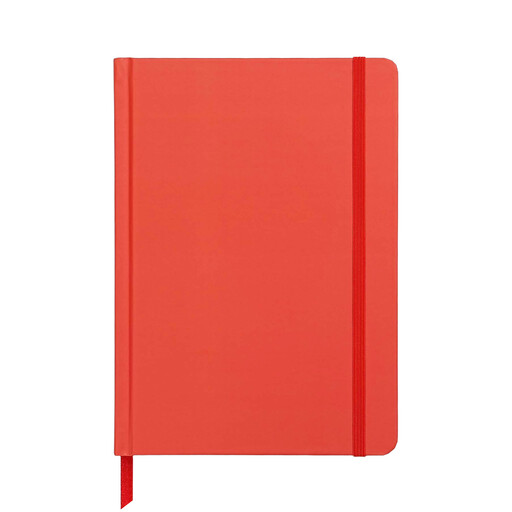
Why this choice suits this profile: Its A5 format and undated pages mean you can start straight away, without waiting for a new school or calendar year. It works equally well for study, work and personal organisation.
The undated pages prevent you from leaving several weeks blank if your habits change or if you buy the planner partway through the year.
224 pages, cream lined offset paper at 100 g/m², hard cover, bookmark and elastic closure.
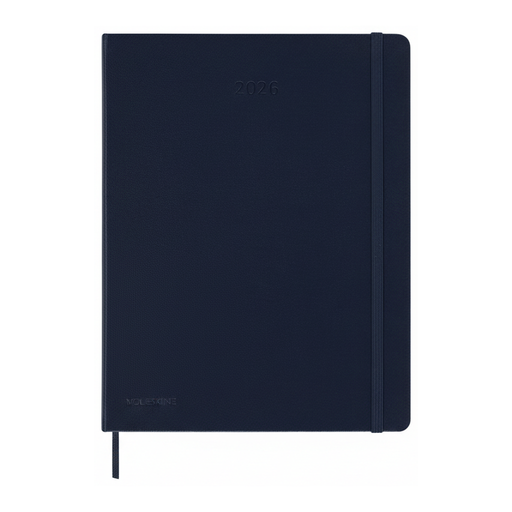
Why this choice suits this profile: This planner focuses on structured organisation, with a hard cover, note pages and dedicated sections for goals and travel.
The weekly double-page spread, complemented by a notes area, stops you from being stuck with a calendar that's just a simple list of dates.
Hard cover, ivory 70 g/m² paper from FSC-certified sources, elastic closure, ribbon and inner pocket.
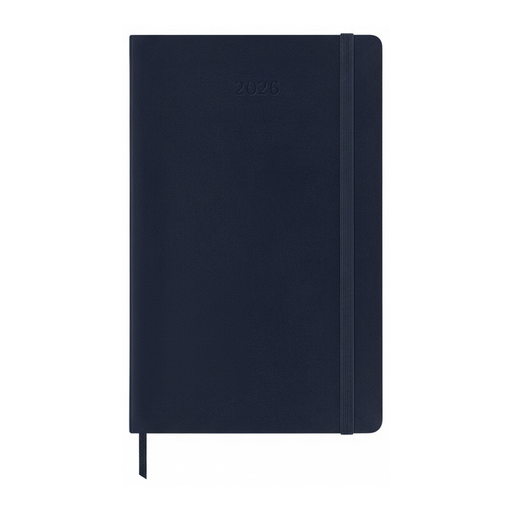
Why this choice suits this profile: With one page per day, this model is ideal for professionals, students, travellers and anyone who needs to detail their appointments and tasks.
The daily page offers far more writing space than a weekly view when your days follow one another at a fast pace.
Daily view, sections for calendar, travel, goals and ideas, elastic closure, ribbon and inner pocket.
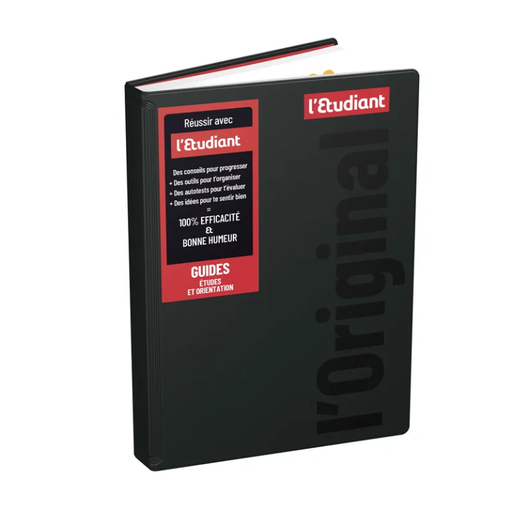
Why this choice suits this profile: Its one-page-per-day layout and 15 × 21 cm format make it easy to keep track of lessons, homework, appointments and extracurricular activities.
The academic format stops you from ending up with a professional planner that doesn't suit the rhythm and deadlines of the school calendar.
352 pages, 15 × 21 cm format, spiral binding and semi-rigid cover.
We've put together a complete selection, updated in real time, of products that meet these exacting criteria as well as European safety regulations.
Start by writing in your fixed appointments, then add tasks with specific deadlines. You could assign one colour to study, another to work and a third to your personal life. Each week, set yourself a few realistic priorities instead of trying to fill every box.
With an undated planner, number the weeks or add the dates by hand. That way, you can use it during a training course, a professional project or a transitional period, without leaving any unused pages behind.
A classic agenda generally focuses on dates and appointments. A planner often gives more space to goals, tasks, habit tracking and notes. Some models combine both approaches in one notebook.
It all depends on how often you use it, how much you carry it around, and how sturdy the binding is. A hard cover, an elastic closure and storing it away from moisture will help preserve your planner. However, avoid prolonged exposure to heat, water or the pressure of an overloaded bag.
The A5 format offers a good balance between writing space and portability. A larger model will suit detailed timetables and meetings better. If you're often on the move, a pocket planner will be more discreet, but you'll need to write more concisely.