What should you prioritise?
Individually wrapped filled wafer
Choose this if: you want to eat straight away, without needing anything to spread it on.
Bear in mind: the individual wrapper tells you nothing about the protein content.
Single-serve chocolate spread
Choose this if: you already have bread, brioche or something else to spread it on.
Bear in mind: the portion is pre-measured, but it isn’t ready to eat on its own.
Protein bar
Choose this if: the amount of protein per serving is your top priority.
Bear in mind: a chocolate and peanut or salted caramel bar may not satisfy a craving for praline.
To compare pre-packed products, check the nutritional values on the same basis. In France, the DGCCRF states that most of these products must carry a nutrition declaration, subject to certain exceptions. Santé publique France explains that displaying the Nutri-Score is voluntary.
| Criteria |
What to check |
Who is it for? |
| Format and portion |
Check how each item is packaged, its weight and whether you’ll need something to spread it on. |
I want to eat as soon as I leave my workout, without making a sandwich. Around 40% of consumers are said to put convenience first. |
| Nutritional composition |
Compare sugar and fat, in particular, per 100 g and per serving. Check the Nutri-Score if it appears on the packaging. |
Before choosing a treat, I want to compare what’s actually in the amount I’ll eat. Around 40% of consumers are said to put nutritional composition first. |
| Protein per serving |
Check the grams of protein per bar or piece. Don’t infer the amount from the product category or its shape. |
After a workout, I’m mainly looking for a snack whose protein content I can compare. Around 20% of consumers are said to prioritise this. |
Products to suit your priorities
These products suit different post-workout cravings: a filled wafer or hazelnut biscuit for a tasty break, and bars that are distinct from chocolate spread if you want to compare their nutritional composition. Check the exact packaging if you need an individually wrapped item.
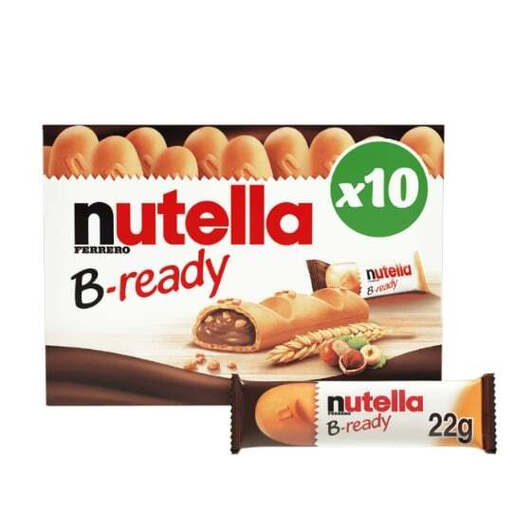 Image unavailable
Nutella B-ready, pack of 10, 220 g
A filled wafer to choose if you’re after a ready-to-eat treat rather than a spread.
The pack contains 10 pieces of 22 g. According to Nutella, each piece contains 1,6 g of protein. Check the allergens on the packaging.
View on Joybuy
 Image unavailable
Andros Sport High-Protein Bar Chocolate Peanut 55 g
This 55 g chocolate and peanut bar is for people who want to compare protein per serving after a workout.
It isn’t a hazelnut praline spread. Check its nutritional values and allergens before choosing.
View on Joybuy
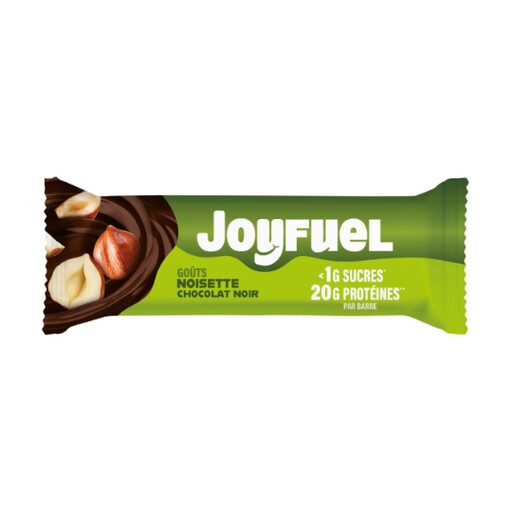 Image unavailable
Joyfuel Dark Chocolate with Hazelnut 55 g
Dark chocolate and hazelnut give this bar flavours reminiscent of praline, but it’s not a spread.
The stated format is 55 g. If nutritional composition is important to you, compare the values per serving and check the allergen labelling.
View on Joybuy
 Image unavailable
nu3 Fit Protein Bar Salted Caramel 55 g
This 55 g bar is an alternative to a filled wafer if you’re comparing protein per serving.
Its salted caramel flavour is different from hazelnut praline. Check the sugar content and ingredients list too.
View on Joybuy
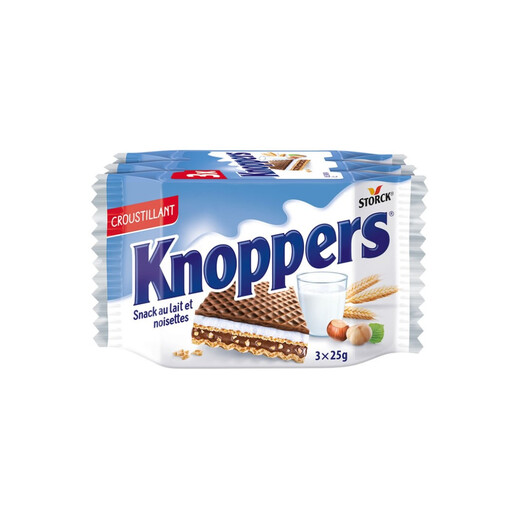 Image unavailable
Knoppers Milk & Hazelnut, 3 × 25 g
This milk and hazelnut wafer biscuit is better suited to a tasty break than a single-serve sachet of chocolate spread.
The stated format is 3 × 25 g. If you’re planning to take just one piece with you, check whether each bar is individually wrapped.
View on Joybuy
Frequently asked questions
Is the Nutri-Score compulsory on wafers or chocolate spread sold in France?
No. Santé publique France says that displaying the Nutri-Score is voluntary. Most pre-packed foods must, however, carry a nutrition declaration under the rules outlined by the DGCCRF, subject to certain exceptions. Compare the nutritional values and ingredients even if the logo isn’t shown.
Is Nutella B-ready equivalent to a protein bar after a workout?
No. Nutella B-ready is an individually wrapped filled wafer, not a protein bar. According to Nutella, one 22 g piece contains 1,6 g of protein. If protein is your main priority, compare this amount per serving with that of a bar.
Which allergens should I check in Nutella B-ready?
The recipe described by Nutella includes hazelnuts, milk, soya, wheat and barley, among other ingredients. Check the ingredients list and allergen information on the packaging of the version you’re buying.
Can you eat a single-serve sachet of chocolate spread like a bar?
No. A sachet contains spread, while a bar or wafer is ready to eat. St Mamet describes its 15 g portion as an accompaniment to toast, brioche or pancakes, so you’ll need something to spread it on if you choose this format.


