
Livraison le jour même ou le lendemain

Qualité garantie

Débloquez vos offres de bienvenue: Livraison GRATUITE | Jusqu'à -80 % | 30 jours d'essai gratuits à JoyPlus
Téléchargez l'application
Smooth skin, a refined texture, and an even complexion? The promise is alluring. The African net sponge, also known as a sapo, has established itself as the near-magical accessory to achieve this. But be warned: not all offers on the market are created equal, and it's easy to get duped by a disappointing product. To avoid buyer's remorse, here are the 3 essential pitfalls to be aware of.
To invest in a high-performing, durable product, there's no secret: you need to look closely at a few technical specifications. These details make all the difference in the effectiveness and longevity of your exfoliating sponge.
100% nylon is the gold standard, and for good reason: it's virtually indestructible, offers the perfect texture for an effective yet non-aggressive exfoliation, and, most importantly, it dries at record speed. This last property makes it a far more hygienic alternative to loofahs and classic shower poufs.
Also, pay attention to the weight or density, often indicated in grams (e.g., 70g or 90g). A denser weave (higher weight) provides a more vigorous exfoliation, ideal for thick skin or rough areas like feet and elbows. A lighter weight will offer more flexibility, perfect for a first-time user.
To effectively scrub your back, the length of the net is a non-negotiable criterion. A good exfoliating back scrubber should allow you to hold it firmly with both hands for an easy back-and-forth motion. Aim for models with a stretched length of at least 80 cm. The presence of handles or ropes is a real bonus for an optimal grip and a full-body cleanse.
A quality net should be easy to maintain. Check that it is machine washable, ideally in a laundry bag to protect the mesh. A reputable manufacturer will always recommend a crucial preparation step: soaking the net in very hot water (around 80°C) for 10 to 15 minutes before the first use. This simple action sets the color, softens the fibers, and ensures impeccable hygiene from the start.
Rather than an endless catalogue, we've selected products that meet specific needs. There's an ideal net for every profile.
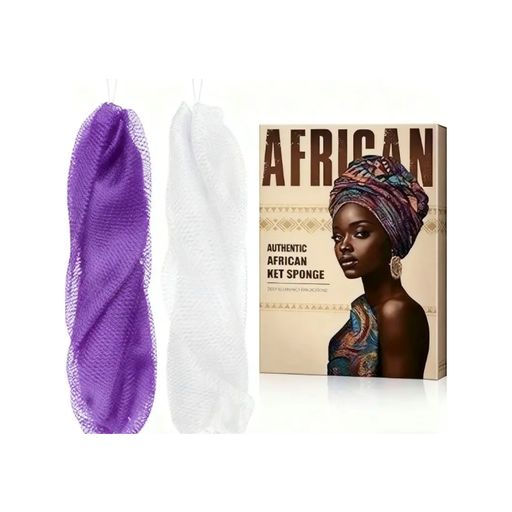
Why we chose it: Ideal for getting started with an African net without opting for an overly intense exfoliation. Its 70g weight offers an excellent balance between gentleness and effectiveness.
Made of 100% nylon, it dries quickly and eliminates the risk of bacteria. Its ropes make it practical for the back, unlike short 'one-size-fits-all' models.
It creates a rich lather with very little soap, and the clear preparation instructions limit color bleeding.
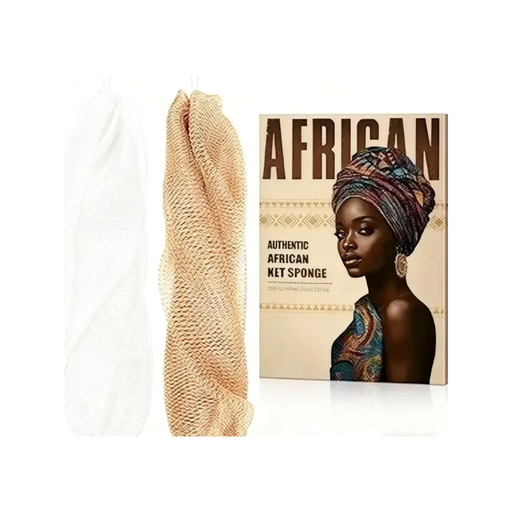
Why we chose it: For experienced users seeking a deep scrub. Its 90g high-density weave is formidable against keratosis pilaris or back acne.
Its "Sapo" style design with handles ensures an excellent grip for the back, sidestepping the ergonomics trap. Its highly porous structure guarantees ultra-fast drying.
Its dense nylon weave effectively dislodges dead skin cells and excess sebum. It's machine washable for maximum durability and hygiene.
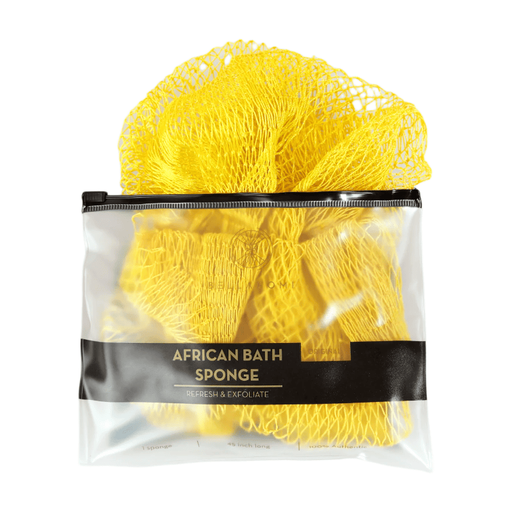
Why we chose it: Sold as a two-pack, this kit is the budget-friendly and practical solution for a couple, a family, or simply to have a spare net on hand.
Its quick-drying nylon material ensures perfect hygiene for each user. Each net has its own rope for hanging, which simplifies drying and storage.
The value for money of this set is unbeatable. The 90g weight makes it a versatile accessory, effective for most skin types in daily use.
We've curated a complete selection of products that meet all of our strict criteria.
Its main advantage is undoubtedly its longevity. Unlike loofahs or shower poufs that need to be replaced every month, a good quality nylon net can last over two years with proper care. Simply rinse it well after each use, hang it to air dry, and run it through the washing machine from time to time for impeccable hygiene.
Yes, but with caution. The exfoliation provided by the net is powerful. For sensitive skin, it's best to ease into it: start with one to two uses per week, applying very light pressure. The initial soak in hot water also helps to soften the fibers. Never use the net on irritated skin, open wounds, or during an active skin condition flare-up.
The solution is simple and should be done before the very first use. Soak the net in a basin of very hot water (over 80°C) for 10 to 15 minutes. This step sets the pigments in the nylon fibers and drastically reduces (or even eliminates) the risk of color bleeding in future uses.