A ready-made calendar is a good choice if you want to fill all 24 days without any preparation, as long as the recipient likes every recipe. Mini jars let you choose the flavours and the amount in each compartment, while a standard jar means you’ll need to prepare the portions yourself. In every case, check the ingredients, allergens and nutritional values per 100 g: a smaller container doesn’t change the recipe’s composition.
Who are these formats for?
Anyone putting together a 24-day calendar
You’ll want to know how many jars you have before you start filling the compartments. A calendar with 24 containers saves you having to top up a smaller set; Lucien Georgelin’s six-mini-jar selection, on the other hand, needs additional items.
Anyone who wants to control the amount in each compartment
A sealed mini jar tells you how much you have for one compartment. With a standard jar, you decide how much to put in when you make up the calendar. Either way, the nutritional information relates to the recipe, not just the size of the container.
Families checking every recipe
If an assortment contains several flavours, check the ingredients and allergens in each one before giving it as a gift. Anses points out that substances that can cause allergies or intolerances must be highlighted in the ingredients list.
What should you check before buying?
First, decide whether you want a sealed jar in every compartment. That will determine how many units to buy and how much preparation is involved.
Ready-made calendar
Choose this if: you want something for all 24 days without having to fill the compartments yourself.
Bear in mind: the selection may include products other than spreads, including caramels in the calendar featured by Calendriers-Avent.com.
Mini-jar set
Choose this if: you want to pick the flavours for a homemade calendar.
Bear in mind: Lucien Georgelin’s set of six 45 g jars isn’t enough to fill 24 compartments on its own.
Identical mini jars
Choose this if: you want the same recipe and amount in every compartment.
Bear in mind: the pack of 64 25 g jars featured on Amazon.fr is more than you need for a 24-compartment calendar.
Standard jar
Choose this if: you’re preparing the contents yourself and don’t need a sealed mini jar for every day.
Bear in mind: the amount for each compartment isn’t pre-set: you’ll need to decide on it and portion out the spread yourself.
| Criteria | What to check | Who is it for? |
|---|
| Filling the compartments |
Count the units and check their weight; check the list of contents if you only want spreads. |
If you’re filling 24 days, having enough units saves you from having to find extra items to complete the calendar. Filling the compartments would be the top priority for around 42% of consumers. |
| Portions and recipe |
Check the weight of each jar, then compare the sugar and fat content per 100 g in particular. |
If I’m setting an amount for each day, I also want to be able to compare recipes regardless of their format. Portion control and checking nutritional information would come first for around 33% of consumers. |
| Flavours and allergens |
Read the ingredients and allergen information for each recipe, along with the storage instructions. |
In a selection for someone else, even one jar may contain a recipe that isn’t suitable for them. Choosing flavours and checking allergens would take priority for around 25% of consumers. |
When comparing two recipes sold in different-sized containers, the nutritional information per 100 g gives you a common basis. The DGCCRF states that this information is mandatory for most prepacked foods, subject to regulatory exceptions; Nutri-Score, on the other hand, is voluntary.
Mistakes to avoid
-
Ruling out a recipe because it has no Nutri-Score
In France, the absence of this logo doesn’t mean the spread fails to meet the requirements. The DGCCRF describes Nutri-Score as a voluntary label.
Compare the nutritional information per 100 g and the ingredients; use the logo as an additional guide if it appears on the packaging.
-
Confusing ‘no added sugar’ with ‘sugar-free’
A claim on the front of the pack is no substitute for checking the nutritional information for the recipe in question.
Check the ‘of which sugars’ figure per 100 g and the ingredients list. In a gift set, don’t assume that a claim made for one recipe applies to the others.
-
Assuming all 24 compartments contain the same type of product
The calendar described by Calendriers-Avent.com includes spreads and caramels. So the number of jars alone doesn’t tell you how many spreads it contains.
Check the contents before choosing a calendar, especially if some flavours or ingredients aren’t suitable for the recipient.
-
Checking the allergens in just one jar in an assortment
The ingredients can vary from one recipe to another. The listing for the Nutella mini-jar pack featured on Amazon.fr includes hazelnuts, milk and soya for this product.
Read the information for each recipe, and keep its labelling details to hand until it’s eaten.
Brands to know
Nutella
The hazelnut and cocoa recipe is available in a pack of 25 g mini jars featured on Amazon.fr. The Nutella product listed on Joybuy in the information available is a 1 kg jar, so it’s a different format.
- The mini jars in the pack let you put a unit of the same weight in each compartment.
- A pack of 64 jars is more than you need for 24 compartments; also check the allergens for the product you choose.
Lucien Georgelin
The brand offers a selection of six 45 g mini jars of spread, so you can make a calendar with several recipes.
- The set lets you mix up the flavours in a homemade calendar.
- Six jars won’t fill 24 compartments; check the ingredients for each recipe separately.
Nocciolata (Rigoni di Asiago)
Auchan offers an organic cocoa and hazelnut spread in a 270 g jar. This format is suitable if you’re portioning out the spread yourself, rather than putting a sealed mini jar in each compartment.
- The jar lets you choose how much to put in each compartment.
- You’ll need to prepare the portions; check the nutritional information and ingredients for the version you buy.
Jars to portion out for a homemade calendar
These Joybuy spreads come in standard jars, for a calendar where you prepare the portions yourself. They aren’t a substitute for sealed mini jars if you want to put one directly into each compartment.
 Image unavailable
Rigoni di Asiago Nocciolata cocoa and hazelnut spread, 250 g
For a homemade calendar, this 250 g jar lets you decide how much to put in each compartment. It doesn’t provide sealed mini portions, so check the ingredients and nutritional information for this version before portioning it out.
View on Joybuy
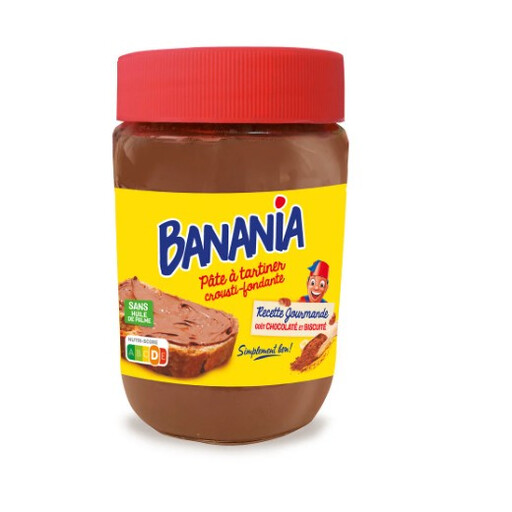 Image unavailable
Banania palm oil-free spread, 400 g
This 400 g jar is suited to a homemade calendar where you portion out the spread yourself, with no set amount for each day. Check the labelling for the version you choose to compare its values per 100 g and check the allergens.
View on Joybuy
 Image unavailable
Lucien Georgelin organic hazelnut and cocoa spread, 400 g
This 400 g jar can be used to fill compartments by hand if you don’t need a sealed mini jar for each day. It’s a standard jar, not the brand’s set of six mini jars; check the ingredients for this specific recipe.
View on Joybuy
 Image unavailable
FUNKIE smooth hazelnut and cocoa spread, 200 g
For a homemade calendar, you’ll need to portion out the contents of this 200 g jar yourself: it doesn’t come in sealed mini portions. Check the ingredients list and allergens on the packaging for this version before giving it to someone.
View on Joybuy
Frequently asked questions
Is Nutri-Score mandatory on spreads sold in France?
No. The DGCCRF says that Nutri-Score is voluntary. Nutritional information is mandatory for most prepacked foods, subject to regulatory exceptions. To compare recipes, look at their values per 100 g, whether or not the logo is shown.
What should I check before giving someone an assortment of mini jars?
Check the ingredients, allergens, quantity and date shown for each recipe. Don’t rely on the label on just one jar to assess the whole assortment: flavours and ingredients can vary.
Does a mini jar help you set the portion for each day?
Yes. A sealed mini jar tells you exactly how much it contains, for example 25 g for the Nutella product in the pack featured on Amazon.fr. However, the amount alone doesn’t tell you about its nutritional composition: check the recipe’s values per 100 g.
How should you store the jars before and after opening?
Follow the instructions on the packaging for each recipe and check its date. Storage instructions can differ: the Joybuy listing for FUNKIE praline spread, 200 g, says to refrigerate after opening; this instruction shouldn’t be applied to all spreads.


