
Livraison le jour même ou le lendemain

Qualité garantie

Débloquez vos offres de bienvenue: Livraison GRATUITE | Jusqu'à -80 % | 30 jours d'essai gratuits à JoyPlus
Téléchargez l'application
An adult mountain bike can meet a wide range of needs in the UK: daily commutes, forest tracks, uneven trails or occasional sporting outings. However, product listings sometimes focus solely on the number of gears or the bike’s appearance, without explaining the features that genuinely affect comfort, safety and lifespan.
Before placing your order, bear these three common pitfalls in mind:
The 26-inch mountain bike remains easy to handle and may appeal to adults looking for a bike that is simple to control, particularly in town or on relatively smooth tracks. The 27.5-inch mountain bike generally offers an appealing balance between manoeuvrability and the ability to clear small obstacles.
Frame size should be considered alongside your height and inside leg measurement. An indication such as “17-inch frame” is not always enough: geometry can vary from one manufacturer to another. Before ordering, check the technical specifications, standover height and riding position.
For a child or teenager, it is better not to choose an adult bike solely to allow for growth. A 20-inch junior bike will offer a more suitable riding experience, provided you follow the manufacturer’s height and weight recommendations.
An aluminium-frame mountain bike generally offers a reasonable weight and good resistance to corrosion. The Hiland H200 Plus, for example, has an aluminium alloy frame and weighs 15.54 kg according to its product specifications. This design may be useful for daily commutes, storing the bike in a flat or taking it on rides where you may occasionally need to carry it.
A steel-frame mountain bike, such as the Hiland Ridge, places greater emphasis on durability. In return, its stated weight of 16.9 kg may be noticeable on stairs or when transporting it on a bike rack. The choice is therefore not simply a matter of one material versus another: it mainly depends on how you intend to use the bike, how often you ride and your storage requirements.
An 18-speed mountain bike offers a range of gears suited to routes with gradual inclines and moderate climbs. However, the number of gears alone does not guarantee a better riding experience. Derailleur quality, chain adjustment and gear ratios are equally important.
A front suspension can reduce the impact felt on gravel, roots and small bumps. Nevertheless, it requires regular checks and does not replace tyres suited to the terrain.
For a mountain bike with disc brakes, examine the type of braking system and the maintenance guidance. The hydraulic brakes on the Oyama Freedom 2.1 do not work in the same way as cable-operated disc brakes. In all cases, check the brake pads, wheel tightness and braking performance before your first ride.

Why this choice suits this rider profile : Its carbon steel frame and 18 gears make it suitable for both urban commutes and leisure trails, with a design focused on durability.
The product listing provides details of the frame material, wheel size, gearing and brake type, rather than relying on a vague overview.
Steel frame, 2.125-inch tyres, reinforced rims, front fork and dual disc brakes.

Why this choice suits this rider profile : With its 17-inch aluminium frame and 27.5-inch wheels, this model is aimed at cyclists who alternate between urban commutes and rides on uneven terrain.
The listing clearly distinguishes the front suspension from the hydraulic disc brakes, while also specifying the frame and wheel sizes.
Aluminium frame, 27.5-inch wheels, hydraulic brakes and front suspension fork.

Why this choice suits this rider profile : Its aluminium frame, front fork and 18 gears are aimed at adults looking for a versatile bike for frequent journeys and uneven trails.
The listing specifies the weight, frame material, suspension, gearing and brakes, allowing for a practical comparison between models.
Stated weight of 15.54 kg, aluminium frame, 18 gears, suspension fork and dual disc brakes.
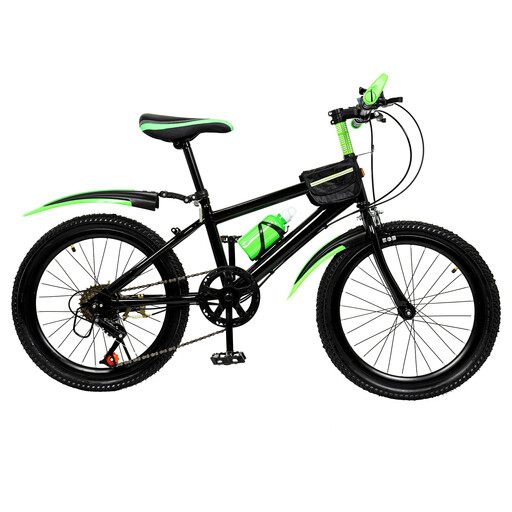
Why this choice suits this rider profile : Its 20-inch wheels are suitable for children and young riders who are not yet tall enough to ride an adult mountain bike comfortably.
The junior format prevents you from choosing a bike that is too large in the hope of keeping it for longer, which could compromise control and comfort.
20-inch wheels, carbon steel frame, mudguards and bottle cage included according to the available listing.
We have brought together a complete, real-time updated selection of products that meet these demanding criteria as well as European safety standards.
The models presented are delivered with some assembly required: the handlebars, pedals, front wheel and saddle may need to be fitted. Once the bike has been assembled, check that every screw is tight, that the handlebars are aligned and that the brakes work correctly.
To slow down wear:
Wearing a suitable helmet is recommended for every journey. If riding in low-light conditions, add a front and rear light, as well as a reflective item. You should also observe the maximum load and size limits stated on the model’s product listing.
A model equipped with front suspension, 18 gears, versatile tyres and disc brakes may be suitable for this combination of uses. For exclusively urban journeys, also check for practical features and whether mudguards or lights can be added.
The 26-inch size prioritises manoeuvrability and is still used on several versatile models. The 27.5-inch size may suit adults looking for a different balance between stability and the ability to clear obstacles. Frame size and your inside leg measurement should influence your decision just as much as wheel diameter.
Routine expenses mainly cover cleaning products, lubricant, brake blocks or pads, cables and tyres. How often these are needed depends on the distance you ride, storage conditions and exposure to mud or rain. Regular checks help you identify when adjustments are needed and preserve the various components.