
Livraison le jour même ou le lendemain

Qualité garantie

Débloquez vos offres de bienvenue: Livraison GRATUITE | Jusqu'à -80 % | 30 jours d'essai gratuits à JoyPlus
Téléchargez l'application
Between the "grain-free" promises, the protein-rich recipes and the value-for-money bulk bags, choosing adult dog kibble can quickly become a minefield. The right choice depends above all on your dog's size, activity level, whether they've been neutered, their weight and their digestive sensitivity.
Before you compare Farmina dog kibble with Ultima dog kibble, it's worth knowing how to spot the marketing claims that could steer you towards a product that's not right for your pet.
Seeing chicken, lamb or fish at the top of the list isn't enough to tell you whether the food is right for your dog. First, check that it's a complete adult dog food, not a supplement or a recipe intended for a different life stage.
The protein, fat and fibre levels also need to match your dog's profile. A very active dog won't have the same needs as a neutered dog living in a flat.
Grain-free dog kibble can suit certain preferences or be part of a specific formulation, but this label alone doesn't guarantee better tolerance or a more balanced nutritional profile. A recipe containing rice or other grains can be perfectly suitable for many dogs.
What matters most is checking the full ingredient list, the nutritional declaration and the feeding guidelines.
A kibble that's too large can be difficult for a small dog to eat. Conversely, very small pieces may be less suitable for a medium or large dog. The bag size also deserves your attention: 8 kg can be a good saving for a large dog, but the contents may lose freshness if left open for several months in a home with a small pet.
At a minimum, compare:
The Farmina recipes featured here often contain functional ingredients such as pumpkin, quinoa, psyllium, fish oil or glucosamine. These components tell you about the product's formulation, but they don't replace a vet's advice if your dog has digestive, skin or joint issues.
For small dog kibble, check the target weight stated on the packaging as well as the size of the pieces. The Farmina N&D Ocean Series Cod and Pumpkin Adult Small Dog Food is designed for small adult dogs and is available in a 2.5 kg bag.
For kibble intended for medium or large dogs, check the weight range indicated. The Ultima Medium to Maxi references shown here are for adult dogs weighing 10 kg and over, with a kibble size suited to their jaws.
The feeding amount on the bag is only a starting point. It should be adjusted according to your dog's weight, activity, age, neuter status and changing body condition. When switching foods, gradually mix the old and new food over around five to ten days to minimise digestive upset.
Always leave a bowl of fresh water available and store the bag tightly sealed in a cool, dry place.
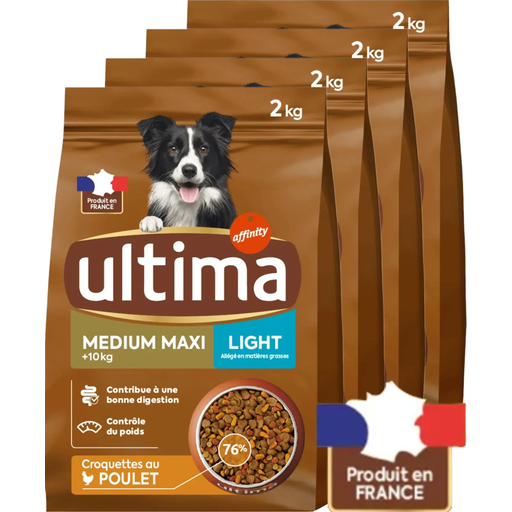
Why this choice suits this profile: Its large pack size is ideal for households with a medium or large adult dog weighing at least 10 kg. The formula is described as light.
The 8 kg net weight and feeding guidelines make it easier to compare the cost per kilogram. The recipe is not presented as suitable for small dogs.
Chicken, rice and whole grains feature in the declared composition, with 26.5% protein and 11.5% fat.
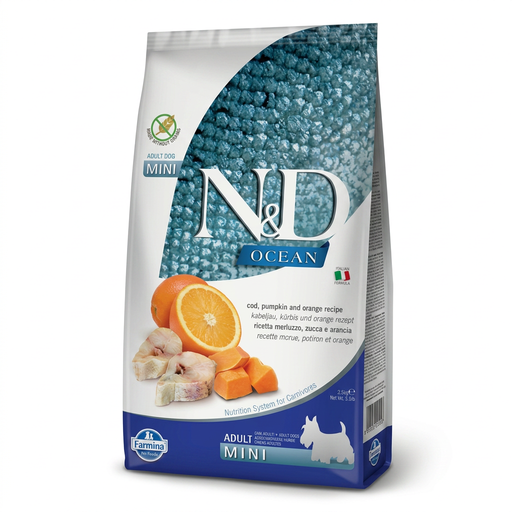
Why this choice suits this profile: This recipe for small adult dogs combines cod, herring oil and pumpkin in a formula without rice or maize.
The detailed ingredient list lets you check the protein sources, fibre and additives, rather than just relying on the "grain-free" label.
The composition notably includes dehydrated cod, herring oil, pumpkin, inulin and FOS.
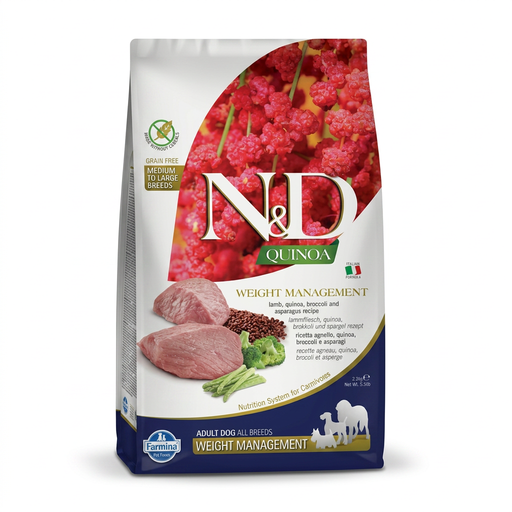
Why this choice suits this profile: This formula targets medium to large adult dogs where managing portion size and weight is a priority.
The product is explicitly presented as low in fat and high in fibre. This allows you to compare it more objectively against a standard formula.
The product page mentions lamb, 8% quinoa, pea fibre, psyllium, glucosamine and chondroitin.
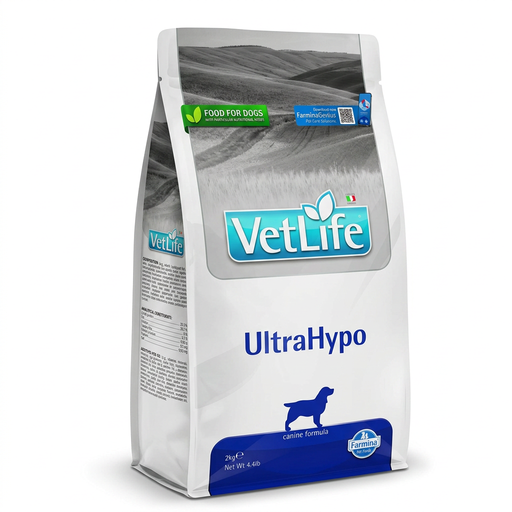
Why this choice suits this profile: Its limited ingredient list, based on hydrolysed fish protein and rice starch, is suitable for situations that require a controlled diet.
The product page details the ingredients and analytical constituents. If you suspect an allergy or intolerance, its use should be discussed with a vet.
The recipe contains hydrolysed fish protein and fish oil. Its detailed analytical profile shows 18% protein and 15% fat.
We've put together a comprehensive, real-time updated selection of products that meet these demanding criteria as well as European safety regulations.
Start by checking the manufacturer's feeding table, then adjust the portion according to your dog's weight, activity and body condition. Weigh them regularly and limit treats given outside of mealtimes. If your dog is significantly overweight or you notice a marked change, ask your vet for advice.
Not necessarily. However, a dedicated formula can help you better manage energy intake, provided you adjust the portions. Above all, compare the fat content, fibre level and energy density when it's stated.
Opt for a clear ingredient list, introduce the new food gradually and monitor how your dog tolerates it. Fish-based dog kibble typically contains ingredients like fish oil, while lamb or chicken dog kibble may suit other sensitivities or dietary preferences. If your dog has itching, persistent vomiting or diarrhoea, consult a vet.