
Livraison le jour même ou le lendemain

Qualité garantie

Débloquez vos offres de bienvenue: Livraison GRATUITE | Jusqu'à -80 % | 30 jours d'essai gratuits à JoyPlus
Téléchargez l'application
Choosing adult dog food is not simply a matter of comparing the price per kilo or being tempted by packaging featuring an appealing photo of meat. Between dry food, wet food, treats and grain-free recipes, it is easy to end up with a product that is unsuitable for your companion’s weight, activity level or size.
Here are the key points to consider when distinguishing complete dog food from complementary food, decoding marketing claims and choosing a practical format for everyday use in France.
Wet food or dry food labelled “complete food” is designed to meet an animal’s daily nutritional needs, provided the recommended feeding guidelines are followed. Dog treats, soft bites and meat strips are generally complementary foods.
INABA bites or MeatyWay strips can be used for training or to reward good behaviour, but they should not replace the main meal. Treats should remain a small part of your dog’s daily energy intake.
Grain-free dog food may suit the preferences of some owners, but the absence of grains alone is not enough to assess an item’s quality or nutritional balance. You need to consider the recipe as a whole, the analytical constituents and the legally required statement confirming whether the product is complete or complementary.
A recipe based on chicken, potatoes, peas or vegetables is therefore not automatically more suitable than a formula containing rice or maize. The right choice depends on your dog’s needs and the information provided on the packaging.
An 8 or 12 kg bag can reduce the cost per meal, but only if your dog enjoys the recipe and you have suitable storage. Once opened, the bag should be closed carefully, stored in a dry place and kept away from heat. For a small dog, a 1 or 2 kg format often makes it easier to preserve freshness.
The needs of a small dog food formula are not the same as those of a product intended for medium- or large-sized dogs. The size of the kibble matters too: a piece that is too large will be impractical for a dog weighing less than 10 kg, while very small kibble may be less comfortable for a large dog.
Examine the category shown on the product carefully:
The serving size shown on the packaging is a starting point, not an inflexible rule. It should be adjusted according to activity level, neutering, current weight and changes in body shape.
The levels of protein, fat, fibre, ash and moisture allow you to compare products on a more objective basis. However, bear in mind that wet food contains a great deal of water. Its protein level cannot therefore be compared directly with that of dry food without taking moisture content into account.
Wet dog food offers a texture that many dogs enjoy and makes a significant contribution to fluid intake. For example, Edgard & Cooper trays contain 82% moisture, while some CESAR terrines list approximately 80 to 82.5%. Once opened, these products must be refrigerated and consumed within the period stated on the packaging.
Chicken dog food can contain very different proportions of fresh chicken, dehydrated proteins, cereals, vegetables or fats. The highlighted percentage must therefore always be considered in context.
Edgard & Cooper’s dry recipe states 40% fresh chicken, while FIDO Adult lists 4% beef in its composition. These figures do not describe the same type of recipe and, on their own, cannot determine whether the food is suitable for a particular animal.
If your dog has a health problem, a suspected allergy or a specific weight-management requirement, ask a vet for advice before making a lasting change to its diet. Commercial information is not a substitute for medical advice.
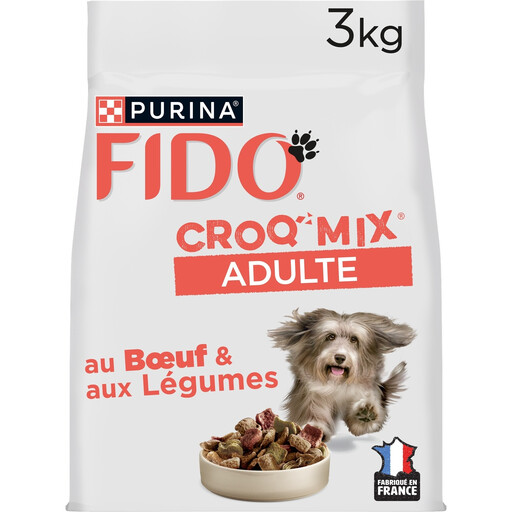
Why this choice suits this profile: This 3 kg format lets you try a recipe of dry food for adult dogs without committing a substantial budget or filling your cupboards with a bulky bag.
The product details clearly state that this is complete food for adult dogs and recommend a gradual transition over 10 days.
Crude protein: 20%; fat: 10%; the kibble can be softened with lukewarm water.
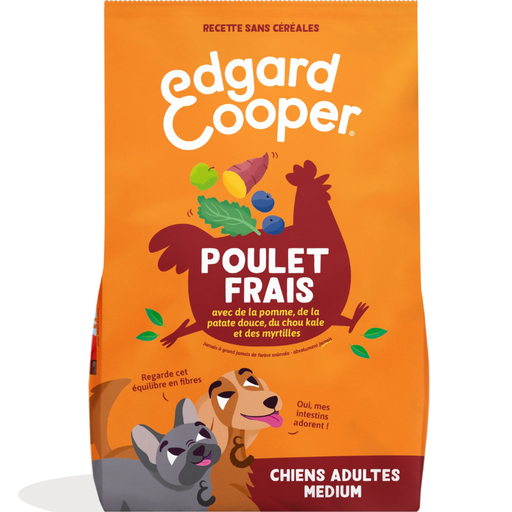
Why this choice suits this profile: Its 1 kg format is ideal for owners who prefer a grain-free recipe and like to replace their bag regularly.
The product details list the ingredients and analytical constituents instead of focusing solely on the “grain-free” label.
Fresh chicken listed at 40%; crude protein: 25%; crude fibre: 4.5%; contains omega-3 and omega-6.
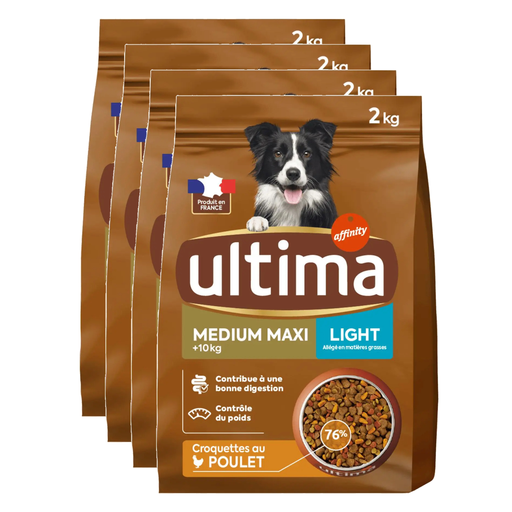
Why this choice suits this profile: This 8 kg bag is intended for medium- and large-sized adult dogs weighing more than 10 kg, when portion control is particularly important.
The label specifies the reference used to support the claim of 30% less fat and limits the product to dogs weighing over 10 kg.
Crude protein: 26.5%; fat: 11.5%; large kibble; feeding guide to be adjusted according to activity level.
Dry food is easy to measure and store. Wet food can be served on its own if it is complete, or included in a mixed diet by following the manufacturer’s guidance. In this case, reduce the amount of dry food to avoid overfeeding.
Dog treats should be included in your dog’s daily intake, particularly during training sessions. MeatyWay strips are presented as a complementary food made with chicken, with 70% crude protein according to their product details. Your dog should be supervised while chewing them, and they should not replace a complete diet.
When changing recipes, allow for a gradual transition over approximately 7 to 10 days. Monitor your dog’s appetite, stools, weight and water consumption. Any unusual reaction that persists should be discussed with a vet.
We have put together a complete, real-time updated list of products that meet these strict selection criteria and European safety requirements.
The serving size depends on your dog’s weight, age, activity level, neutering status and the product’s energy density. Start with the feeding guide on the packaging, weigh out portions and regularly reassess your dog’s body condition.
Yes, provided both products are suitable for your dog’s age. However, check that the wet food is complete and reduce the amount of dry food accordingly. Serve wet food at room temperature and refrigerate any leftovers, following the stated storage period.
No. A light recipe should be chosen according to your dog’s weight, size and health. The product information is not a substitute for veterinary monitoring, particularly if your dog is significantly overweight or has a low activity level.