
Livraison le jour même ou le lendemain

Qualité garantie

Débloquez vos offres de bienvenue: Livraison GRATUITE | Jusqu'à -80 % | 30 jours d'essai gratuits à JoyPlus
Téléchargez l'application
Choosing wet food for an adult dog is not simply a matter of picking your pet’s favourite recipe. With claims such as “high in meat”, “grain-free”, “natural” and “hypoallergenic”, the label can suggest quality without necessarily meeting your dog’s actual needs.
To avoid unnecessary purchases, first check the food’s nutritional status, ingredients, packaging and storage requirements. Here are the main criteria to consider before buying wet dog food, particularly if you have a small breed or a dog with sensitive digestion.
A dog terrine may be presented as an appetising recipe without being suitable for everyday feeding. On the packaging, look for the wording “complete food for adult dogs”, or an equivalent statement.
Complementary food can be added to a meal or given as a treat. However, it should not permanently replace a complete meal without taking the dog’s overall nutritional intake into account.
The name of a recipe does not always reflect the exact proportion of the meat advertised. In some dog food tins, the ingredients may be limited to a broad category such as “meat and animal derivatives”, with only a small proportion of chicken or beef in the end.
Take the time to read the ingredients list in descending order and check the percentages where they are provided. Two recipes marketed as chicken or beef wet food can therefore have very different nutritional profiles.
A large multipack of wet dog food often reduces the cost per portion. However, the saving becomes much less worthwhile if your companion refuses the texture or develops loose stools after the change. To test a new recipe, start with a smaller pack where possible, then gradually increase the quantity.
When changing food, mix the old food with the new one over several days. If a reaction persists or you suspect an allergy, ask your vet for advice rather than diagnosing an intolerance yourself.
The recipe should be suitable for adult dogs and clearly state that it is a complete food. The manufacturer’s recommended portion is a starting point; it should then be adjusted according to your dog’s weight, activity level, whether they have been neutered or spayed, and body condition.
Small breeds generally need smaller portions and formats that are easy to measure. A recipe intended for dogs weighing less than 10 kg may be easier to incorporate into everyday feeding, especially when sold in pouches or 100 g trays.
Monoprotein wet dog food contains one declared primary animal protein source. This makes the ingredients easier to understand, but you should still check the other ingredients, particularly fats, broths and any derivatives.
Grain-free wet dog food may suit certain dietary preferences, but “grain-free” does not mean that the food is complete or that every dog will tolerate it better. Grains are only one of the factors to consider.
For hypoallergenic wet dog food, examine all the protein sources carefully. A recipe based on an unusual animal protein may make it easier to establish an elimination diet, but only an animal health professional can determine the right approach if an allergy is suspected.
Wet food naturally contains a high proportion of water. For example, several products featured here have a moisture content of between 77 and 82.5%. It is therefore impossible to compare the protein content of wet food directly with that of dry food without allowing for this difference.
Pack size also affects waste:
After opening, follow the storage period stated on the packaging. Depending on the product, wet food may need to be consumed within 24 or 48 hours when refrigerated. Ideally, serve it at room temperature and always make sure fresh water is available.
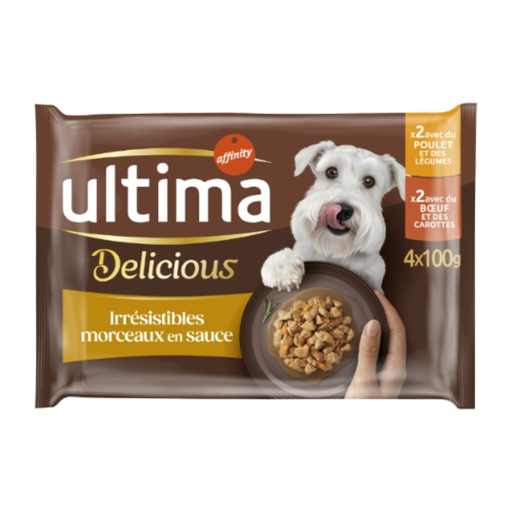
Why this choice suits this profile : This product is intended for adult dogs weighing less than 10 kg and comes in 100 g pouches, making it easy to portion every day.
The packaging helps limit leftovers after opening, and the product details describe it as a complete and balanced food for small adult dogs.
Two recipes, chicken and vegetables and beef and carrots, with small pieces, 8% protein and 3.5% fat according to the information provided.
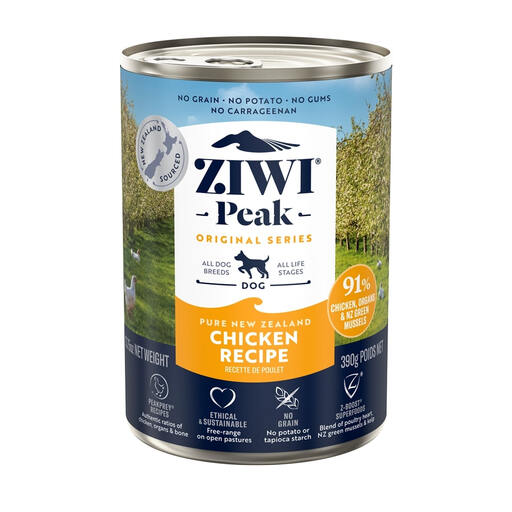
Why this choice suits this profile : The recipe highlights one clearly declared animal protein source and a 390 g format, suitable for households that regularly serve wet food.
The ingredients specify chicken, liver, heart and gizzards rather than simply relying on a general flavour description.
Declared complete food, with 11% protein and 8% fat. The manufacturer recommends a gradual transition over seven days.
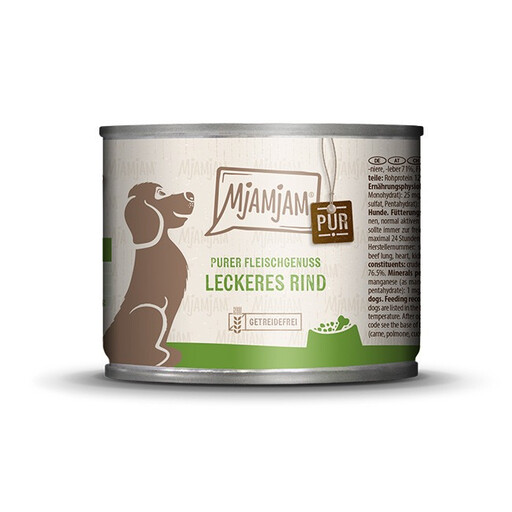
Why this choice suits this profile : This monoprotein beef recipe is aimed at shoppers who want to identify the animal protein precisely and easily manage 200 g portions.
The product details state that it contains a single protein source and no grains or gluten. If your dog has a diagnosed allergy, however, check the label and ask your vet for advice.
71% ingredients listed as beef, lung, heart, kidney and liver, with 12% protein and 7.5% fat.
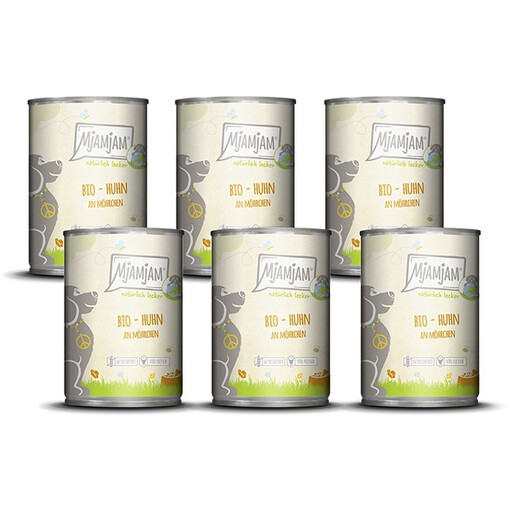
Why this choice suits this profile : This pack of six 400 g tins is aimed at owners who already know their dog’s preferences and are looking for a grain-free organic recipe.
The product details specify the main proportions : 67% organic chicken, 25% broth and 7.95% carrots. They also state that the product should be used within 24 hours of opening.
Declared complete food, organic recipe and analytical values provided : 10.1% protein, 6.5% fat and 79% moisture.
We have brought together a complete, real-time selection of products that meet these strict criteria, as well as European safety regulations.
The amount depends on your dog’s weight, activity level, age and the recipe’s energy density. Use the manufacturer’s feeding guide as a starting point, then monitor changes in your dog’s body condition. If you combine wet and dry food, remember to reduce the portion of each.
Place the wet food in the fridge in an airtight container and follow the storage period stated on the packaging. Some products must be consumed within 24 hours, while others can be kept for 48 hours, or two days. Do not leave an opened tray at room temperature for several days.
Not necessarily. A grain-free recipe is a compositional choice, but it must first and foremost be complete and suitable for your dog. If your dog has sensitive digestion or a food allergy, examine the ingredients list carefully and consult a vet if the problems persist.