
Livraison le jour même ou le lendemain

Qualité garantie

Débloquez vos offres de bienvenue: Livraison GRATUITE | Jusqu'à -80 % | 30 jours d'essai gratuits à JoyPlus
Téléchargez l'application
Choosing an adult dog food isn’t just about comparing chicken flavour, bag weight or a promise like “natural”. Between kibble, wet food, grain-free recipes and light formulas, it’s easy to get lost.
Three common pitfalls keep cropping up:
For everyday meals, look for a phrase like “complete food for adult dogs”. This helps you tell the product apart from a treat or a complementary food. Also check the analytical constituents: protein, fat, fibre, ash and moisture.
The figures can’t always be compared directly between adult dog kibble and adult dog wet food, because wet food generally contains much more water. A wet food showing 9 % protein isn’t necessarily less rich than a kibble showing 25 %.
Being an adult isn’t enough to determine your dog’s needs. Take several factors into account:
For example, the Ultima Light formula for adult dogs of medium and large size weighing over 10 kg shows 11.5 % fat, 26.5 % protein and a claimed 30 % reduction in fat compared with the brand’s reference Ultima Medium-Maxi Adult formula. This comparison only makes sense when you consider its exact reference, and it doesn’t remove the need to monitor weight changes.
A large bag can sometimes reduce the price per kilogram, provided you can store it properly. Seal the kibble packet carefully and keep it in a dry place away from heat. For wet food, keep the cold chain after opening: depending on the recipe, it can keep for anywhere from 24 hours to two days.
When changing your adult dog’s food, plan a gradual transition over 5 to 10 days. Mix the old and new food, slowly increasing the proportion of the new one. A bowl of fresh water should always be available.
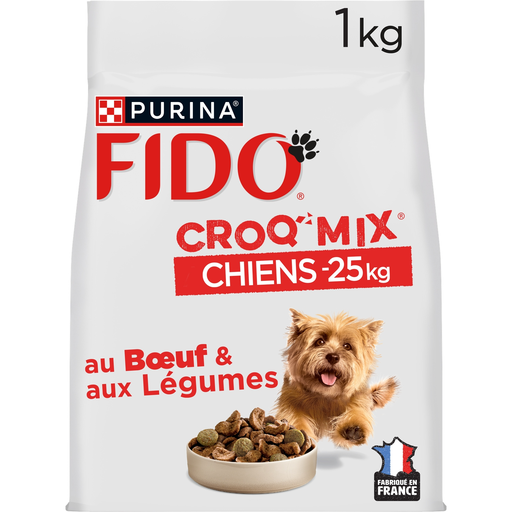
Why this choice suits this profile: This small pack lets you test a complete recipe before moving to a larger bag. It’s designed for small adult dogs and contains beef and vegetables.
The product page clearly presents it as a complete food for adult dogs. Its composition also mentions cereals, animal derivatives and the various added constituents, rather than relying solely on a marketing promise.
1 kg format, beef and vegetable recipe, made in France, with omega-3, omega-6, vitamin D and minerals.
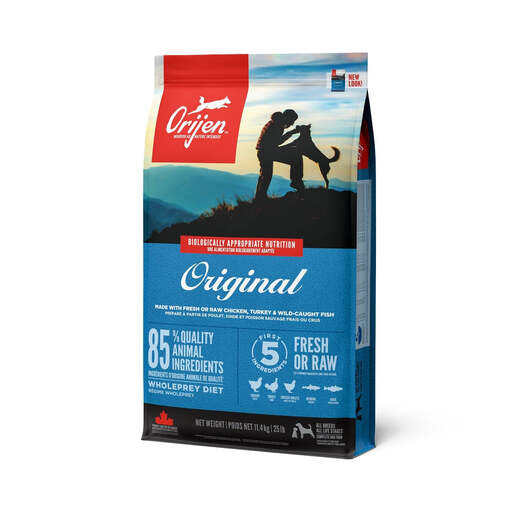
Why this choice suits this profile: This large bag is aimed at households looking for a well-documented dry recipe, made with chicken, turkey, fish and eggs.
The product page details the composition, analytical constituents and recommended rations by weight. That gives you a concrete basis for comparing this kibble with other options.
38 % crude protein, 18 % fat and a portion guide covering several weight ranges. A gradual transition of 7 to 10 days is recommended.
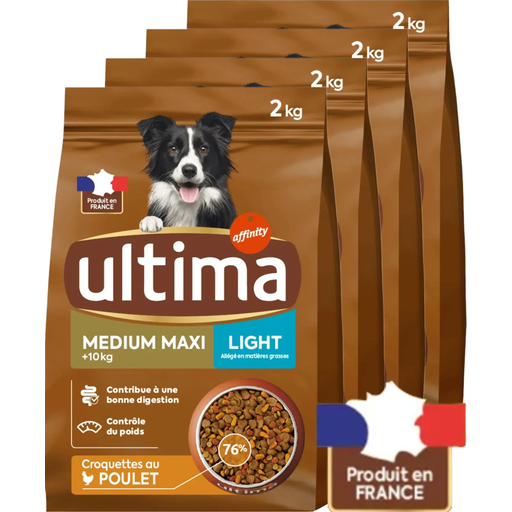
Why this choice suits this profile: The product clearly states its target: adult dogs of medium or large size weighing at least 10 kg, with the ration to be adjusted according to activity and metabolism.
The packaging distinguishes dogs over 10 kg and advises against the product for small dogs. This detail reduces the risk of choosing kibble that’s too large or unsuitable.
Large kibble, 26.5 % protein, 11.5 % fat and a chicken, rice, wholegrain cereal, carrot and green bean recipe.
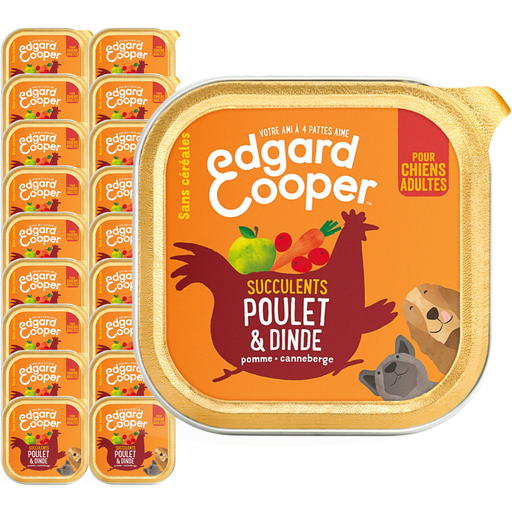
Why this choice suits this profile: The individual 100 g portions fit easily into your meal routine, either on their own or as a supplement to a calculated dry ration.
The product page presents a complete recipe for adult dogs and details its main ingredients: 30 % chicken and 26 % turkey, along with vegetables and fruit.
Grain-free recipe, 9 % protein, 5 % fat and refrigerated storage after opening, with consumption within 24 hours.
We’ve put together a full selection, updated in real time, of products that meet these strict selection criteria and European safety requirements.
Dental treats for dogs are complementary products. They don’t replace tooth brushing or veterinary check-ups. Choose a product suited to your dog’s weight and stay nearby while it chews.
Pedigree Dentastix sticks exist, for example, for small dogs from 3.2 to 10 kg and for medium-sized dogs from 10 to 25 kg. The recommendation is generally limited to one stick per day, but the main ration should be reduced if necessary to account for this intake.
Use the manufacturer’s table as a starting point, then adjust the amount according to your dog’s weight, activity, age and body condition. Weigh the kibble and include treats in your daily ration calculation. If the weight changes persistently, ask a vet for advice.
Yes, provided both products are suitable and the total ration is recalculated. Wet food provides more water, while kibble is more concentrated. Introduce the mixture gradually to check that it’s well tolerated digestively.
Kibble keeps in a well-sealed packet, stored in a dry place away from heat. Opened wet food should be placed in the fridge and consumed within the time stated on the label, usually between 24 hours and two days.