
Livraison le jour même ou le lendemain

Qualité garantie

Débloquez vos offres de bienvenue: Livraison GRATUITE | Jusqu'à -80 % | 30 jours d'essai gratuits à JoyPlus
Téléchargez l'application
As a pet owner, you know that good nutrition is the key to your dog's health. But the adult dog food aisle is a marketing jungle, and it's easy to get lost. Between promising packaging and sometimes vague claims, making the right choice can be a challenge. This guide is here to give you clear benchmarks, help you decipher labels, and choose the best food for your companion, without falling for marketing traps.
Pet food marketing is incredibly effective, but it sometimes hides less glamorous realities. Here are two common pitfalls that can cost you dearly—both in your wallet and in your companion's health.
To make an informed choice, you need to learn how to decipher labels. Here are the two fundamental points to check before you head to the checkout.
The law is clear: ingredients must be listed in descending order by weight. The first one on the list is therefore the most abundant in the recipe.
A Chihuahua doesn't have the same needs as a Great Dane. Size, activity level, and individual sensitivities are determining factors.
Here are a few recommendations that cater to specific dog profiles, selected based on the objective criteria we've just covered.
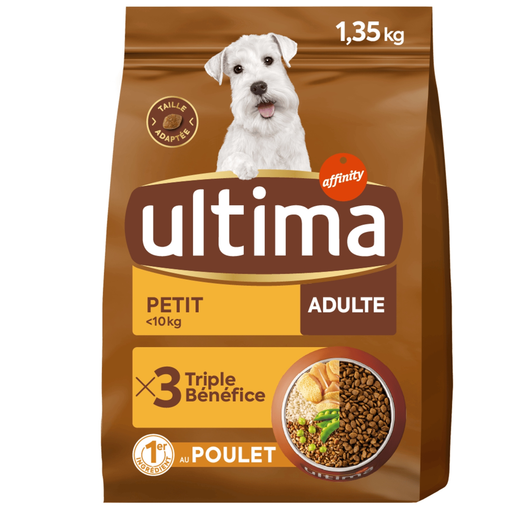
Why we chose it : This recipe is specifically designed for small dogs (under 10 kg) with a fast metabolism. The kibble size is tailored to their small jaws, promoting good oral hygiene.
Instead of a "one-size-fits-all" formula, this product targets a specific need. Chicken is the first ingredient, avoiding the vagueness of "meats and by-products."
A 27% protein level to support their vitality. The addition of specific minerals helps limit tartar buildup, a common issue for small dogs.
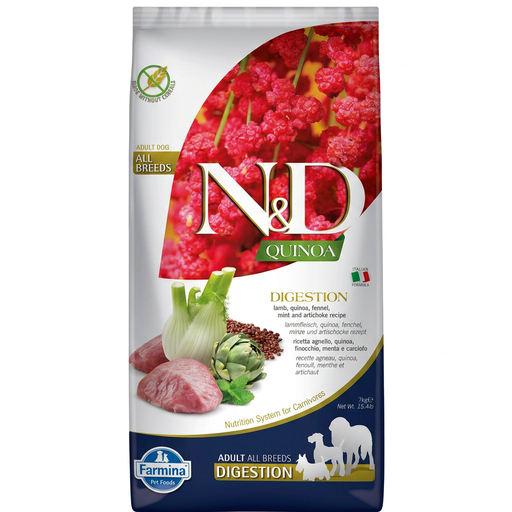
Why we chose it : Perfect for dogs with sensitive digestion. This grain-free recipe features lamb, a protein known for being highly digestible, and quinoa, a low-glycemic-index superfood.
The recipe goes beyond just being "grain-free" by incorporating functional ingredients. The list is transparent, with fresh lamb at the top, a far cry from vague marketing claims.
Excellent protein level (32%) sourced predominantly from animals. An advanced formula for digestive health, with no grains or potatoes.
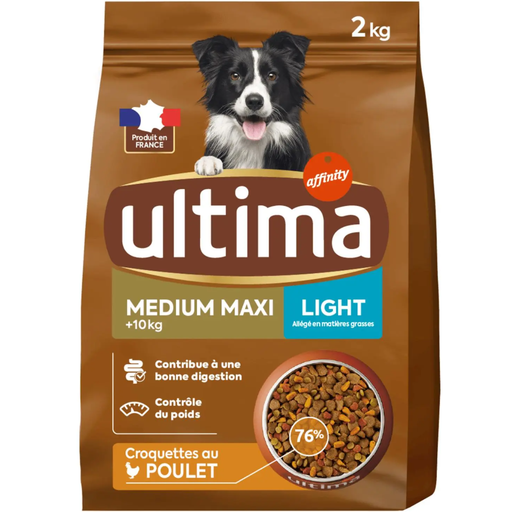
Why we chose it : Designed for medium and large dogs (over 10 kg) prone to weight gain. Its recipe is lower in fat and includes L-carnitine, which helps burn fat while preserving muscle mass.
This product provides a targeted solution for weight management, instead of just reducing the portion of a standard food (which can lead to deficiencies).
Reduced fat content at 11.5% (30% less than the standard version). The kibble size is adapted to the jaws of medium to large dogs.
Explore our full selection of products that meet our quality criteria and current regulations.
To avoid digestive issues (diarrhoea, vomiting), a gradual transition is essential. Over 7 to 10 days, mix the new food with the old, progressively increasing the amount of the new food:
The daily portion depends on your dog's weight, age, breed, and activity level, as well as the caloric density of the chosen food. Always refer to the recommended daily feeding chart on the package. These guidelines are a starting point; feel free to adjust the portion while monitoring your dog's weight to maintain their ideal body condition. If in doubt, ask your veterinarian for advice.
Not necessarily. The most important thing is the overall quality and digestibility of the ingredients. Grain-free dog food is an excellent solution for dogs with a confirmed intolerance or allergy. For all others, a food with high-quality whole grains (brown rice, oats) can be perfectly healthy and very well-digested. The key is to always choose a recipe where the first ingredient is a high-quality source of animal protein.