
Livraison le jour même ou le lendemain

Qualité garantie

Débloquez vos offres de bienvenue: Livraison GRATUITE | Jusqu'à -80 % | 30 jours d'essai gratuits à JoyPlus
Téléchargez l'application
An adult bike helmet needs to stay firmly in place, feel comfortable and suit the way you ride – whether that’s in the city, on the road, on a mountain bike or BMX. Yet some models end up at the back of a cupboard after just a few weeks. An imprecise fit, poor ventilation or an awkward visor can quickly turn a promising piece of kit into something you dread wearing.
Before you start comparing models, let’s look at the most common pitfalls and the key features to check.
The same letter can mean very different measurements from one brand to another. A size L bike helmet might fit a head circumference of 56 to 61 cm, while another brand’s L might start at 58 cm. The right approach is to measure your head with a soft tape measure, just above the eyebrows and across the widest part of your skull.
A helmet that’s too big will shift around as you ride. One that’s too tight will create pressure points and is likely to end up in the cupboard. The rear adjustment system and chin strap help fine-tune the fit, but they can’t compensate for choosing the wrong size in the first place.
A rear LED light, reflective elements or a bright colour can make you more visible in traffic. But they don’t replace proper protection or the legally required bike lighting when it’s needed.
Similarly, a visor protects your eyes from the sun, rain and spray, but it doesn’t turn a bike helmet into motorcycle gear. Always check what the product is designed for: a cycling helmet is not built for a motorbike.
MIPS is a system designed to help reduce certain rotational forces during angled impacts. It doesn’t make a helmet invincible, and it certainly doesn’t remove the need for a precise fit. A helmet without MIPS can still be perfectly suitable for its intended use, as long as it meets the manufacturer’s recommendations and the relevant safety standards.
The number of vents alone isn’t enough to judge ventilation quality. You also need to consider their placement, the rigidity of the shell, the inner padding and the precision of the retention system.
Measure your head circumference in centimetres, then compare the result with the product’s size chart. The helmet should sit horizontally on your head, without tipping backwards. The side straps usually form a ‘V’ shape around each ear, while the chin strap should hold the helmet securely without restricting your breathing.
For a teenager over 14 or an adult, also check the strap length. A bike helmet for men or women is often marketed as unisex, but comfort really depends on the shape of your head and the range of adjustment available.
The models featured here typically combine an outer shell made of polycarbonate (PC) or ABS with an EPS inner liner. This liner is designed to absorb some of the energy from an impact. The ‘in-mould’ construction, where mentioned, bonds the shell and liner together during manufacturing.
Read the compliance information carefully and look for the marking applicable to cycling in Europe, particularly the EN 1078 standard if it appears on the product page. Any mention of certification should be verifiable in the manufacturer’s documents – you can’t tell just by looking at the helmet.
A lightweight, well-ventilated bike helmet will be much more comfortable on a long ride or in warm weather. The number of vents gives you a rough idea, but their shape and position also affect airflow.
A removable visor is especially useful for mountain biking, helping to shield you from mud, branches and sunlight. In the city, a rechargeable rear light can be a handy addition. Remove any washable padding according to the manufacturer’s instructions, clean it with mild soap and let it air dry. Avoid solvents, high temperatures and any modifications to the shell.
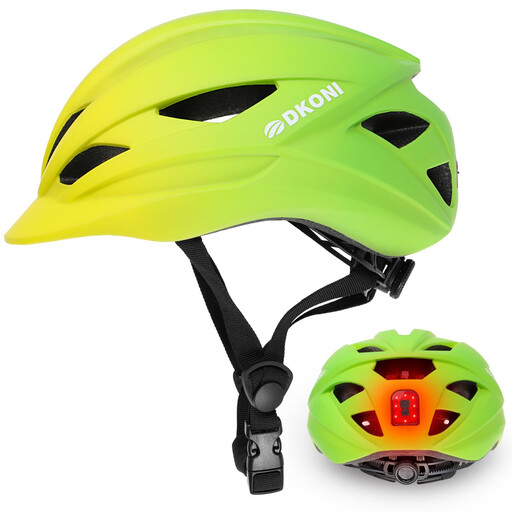
Why this choice suits this profile: This model works well for daily commutes and first rides, thanks to its adjustable fit, 15 vents and removable USB rear light.
The stated sizes let you compare the product against your head circumference rather than relying on a simple letter. The LED is rechargeable and removable, making it easy to maintain.
Head circumference M: 55-58 cm, USB rear light with two modes and an estimated battery life of around 3 to 5 hours.
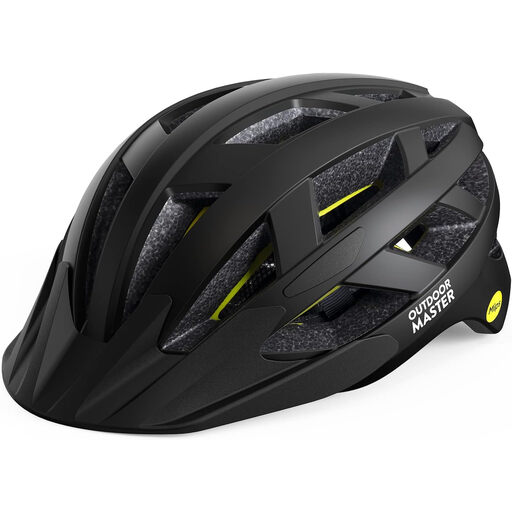
Why this choice suits this profile: It’s aimed at cyclists who want a versatile helmet for road, mountain biking, BMX and skateboarding, with a particular focus on precise adjustment.
The MIPS system is clearly described as a technology for certain angled impacts, without promising universal protection. The two removable pads allow you to fine-tune the positioning.
25 vents, removable visor, adjustment dial and two liners of different thicknesses.
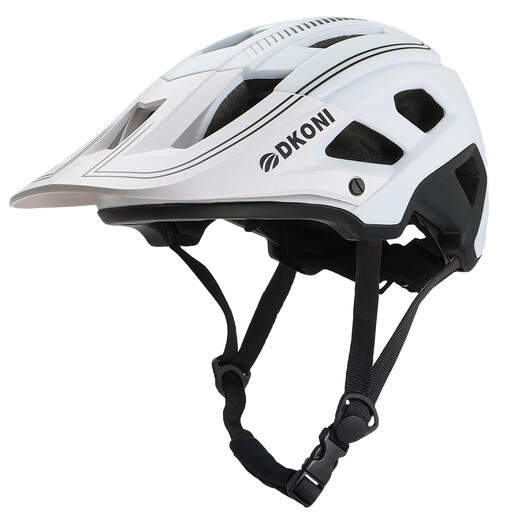
Why this choice suits this profile: This adult mountain bike helmet is designed for long rides and terrain where you’ll face spray and debris, with a wide visor and reinforced coverage on the sides and rear.
The ABS visor is removable and the one-handed adjustment makes it easy to get the right fit before you set off. The inner pads can be removed and washed.
Stated weight of 380 g, 17 vents, sizes M 54-58 cm and L 56-61 cm, with adjustable chin strap.
We’ve put together a comprehensive, regularly updated selection of products that meet these demanding criteria and European safety regulations.
Before every ride, check that the helmet doesn’t slide when you gently shake your head. The chin strap should be fastened and free of any twists. The rear dial should hold the helmet securely without creating too much pressure. Any removable accessories must also be properly attached before you set off.
After a fall or significant impact, replace the helmet even if you can’t see any cracks. The internal materials may have been compressed. Also inspect the straps, padding and attachment points. How long a helmet lasts depends on the manufacturer’s recommendations, how often you ride and the overall condition of the product – regular checks are more useful than applying the same lifespan to every model.
Measure your head circumference just above the eyebrows, then compare the result in centimetres with the model’s size chart. If your measurement falls between two sizes, check the range covered by the adjustment dial and choose a helmet that stays stable without squeezing your head.
A rechargeable rear LED can improve your visibility to traffic coming from behind, especially at dawn, dusk or on poorly lit streets. It complements the lighting and signalling equipment required for cycling, but doesn’t replace it.
Replace it immediately after a significant impact, or if the shell, padding, straps or fixings show any damage. Never use glue or any part not supplied by the manufacturer to repair the structure.