
Livraison le jour même ou le lendemain

Qualité garantie

Débloquez vos offres de bienvenue: Livraison GRATUITE | Jusqu'à -80 % | 30 jours d'essai gratuits à JoyPlus
Téléchargez l'application
Choosing an adult bike for men and women isn’t just about comparing a price or a number of gears. To find the right model, you need to consider your height, the terrain, your usual routes and how often you plan to ride — whether that’s in the city, on country lanes or during your camping holidays.
Certain pitfalls crop up time and again when buying. A product listing might boast “21 speeds” without mentioning the quality of the shifters or the maintenance required. Very wide tyres give an impression of versatility, but they make the bike heavier and increase rolling resistance on tarmac. And a model described as “all-terrain” isn’t necessarily built for jumps, technical descents or intensive use.
Here are the points to check before you order, along with a selection suited to different profiles.
A 21-speed mountain bike or an 18-speed mountain bike offers several ratios, but the number alone doesn’t guarantee smooth gear changes. You also need to look at the type of derailleur, the handlebar controls and the range of the gear ratios.
For urban trips with a few hills, 6 to 14 speeds can be perfectly adequate. On a hilly route or a rough trail, an 18- or 21-speed drivetrain gives you more options to adapt your effort. When Shimano components are clearly stated, it helps identify the system used, but it doesn’t replace checking the whole drivetrain.
A 26-inch fat bike fitted with 26 × 4-inch tyres offers a large contact area on sand, mud, gravel and some snowy paths. On the flip side, this type of bike is heavier and less manoeuvrable on long tarmac distances.
At the other end of the scale, a 700C road bike is particularly efficient on tarmac thanks to its wheels designed to reduce rolling resistance. However, it will be less comfortable on stony or badly rutted paths.
Many bikes are delivered partially assembled. You may need to fit the handlebars, front wheel, pedals and saddle. Before your first ride, check the tightness of every component, the brake function, the tyre pressure and, if applicable, the locking mechanism of a folding frame.
Poor assembly can compromise safety, even if the bike has disc brakes or a suspension fork.
The frame size must match your height and inside leg measurement. Carefully check the manufacturer’s sizing in inches or centimetres before ordering. An adjustable saddle isn’t always enough to compensate for a poorly sized frame.
Aluminium is generally appealing for its light weight and stiffness. High-tensile steel can offer a robust construction, but the bike will often be heavier. The right choice therefore depends on your priorities: carrying it up stairs, storing it in a vehicle, gaining comfort on trails or prioritising stability.
Always compare the stated weight with your intended use. A bike weighing around 12 to 16 kg will be easier to move than a model close to 20 kg, especially on public transport or during a camping trip.
Mechanical disc brakes are fitted to many mountain bikes and can offer effective braking on varied routes, provided they are correctly adjusted and maintained. V-brakes are simpler to maintain and suit urban use or occasional rides well.
A suspension fork helps absorb bumps on trails. It doesn’t, however, turn a leisure bike into a machine designed for jumps or technical descents. For riding on the road, also check for lights, reflectors and compliance with current traffic regulations.

Why this choice suits this profile: This Hi-Ten steel model, available with 24- or 26-inch wheels depending on the version, is suitable for daily commutes, leisure rides and first outings on trails.
The listing specifies the brake type, wheel size and recommended height range. So you’re not choosing the bike based solely on the number of gears.
21-speed drivetrain, high-volume XC tyres and adjustable V-brakes.
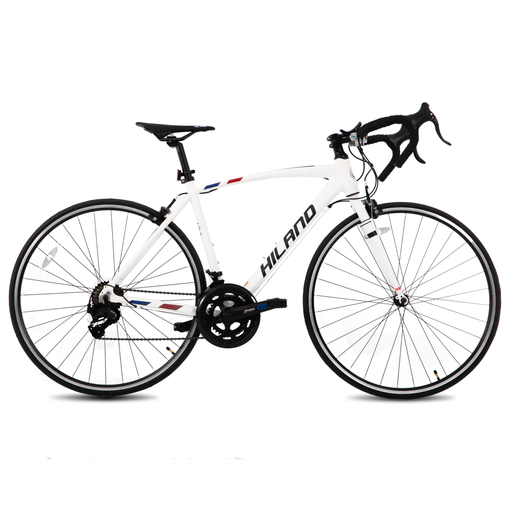
Why this choice suits this profile: Its aluminium alloy frame and 700C wheels are aimed at cyclists who prioritise road riding, commuting and long outings on smooth surfaces.
The description clearly distinguishes road use from off-road use and indicates frame sizes S, M and L.
Stated weight of 12.53 kg, 14-speed drivetrain and dual-pivot calliper brakes.
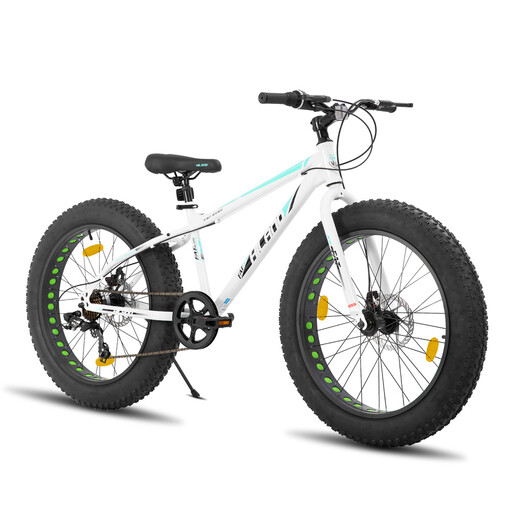
Why this choice suits this profile: Its 26 × 4-inch tyres are designed for riding on sand, snow, mud and gravel, as well as winter journeys where extra stability is welcome.
The tyre size and intended terrains are clearly stated. This helps you avoid choosing this bike for purely road use, where its stated weight of 19.8 kg would be less practical.
Shimano TY300D rear derailleur, 7 speeds and dual mechanical disc brakes.
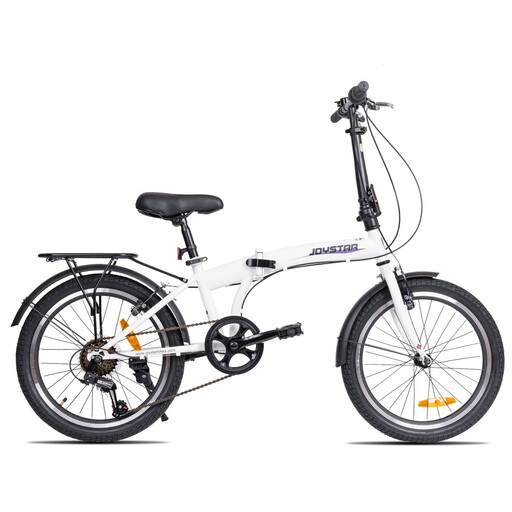
Why this choice suits this profile: Its low-step folding frame makes it easy to store in a flat, car boot or camping gear.
Before each ride, check the folding mechanism, locking system and bike dimensions. The compact format shouldn’t be the only factor in your choice.
20-inch wheels, 6 speeds, adjustable saddle and handlebars, dual V-brakes.
We’ve put together a comprehensive, real-time updated selection of products that meet these demanding criteria and European safety regulations.
For a commuter bike, prioritise a frame that fits your height, a comfortable riding position, tyres suited to your routes and a braking system that’s easy to control. A 20-inch folding bike works well when storage and transport are top priorities. For longer distances on tarmac, a 700C model will generally be more efficient.
A bike’s lifespan depends on the weight carried, mileage, storage conditions and maintenance. Clean the frame after rides in the rain, check tyre pressure regularly, inspect the brakes and lubricate the chain. Also check the wheels, bolts and frame before each ride. Using the bike beyond its intended limits, heavy impacts or prolonged storage in a damp environment can accelerate wear.
A standard bike remains perfectly suitable if you want to pedal actively, keep the bike’s weight down or avoid the hassle of recharging. On frequent climbs, the gear ratio choice, bike weight and riding position matter more than the number of gears alone. If you opt for an electric model, check the stated range, battery capacity, assistance level and applicable regulations separately.