
Livraison le jour même ou le lendemain

Qualité garantie

Débloquez vos offres de bienvenue: Livraison GRATUITE | Jusqu'à -80 % | 30 jours d'essai gratuits à JoyPlus
Téléchargez l'application
An adjustable bed rail can reduce the risk of falling out of bed while you sleep, provided it’s suitable for the bed, mattress and person using it. Whether you’re moving a child into a bigger bed, caring for someone who is vulnerable, or sharing a family bed, your choice shouldn’t be based on colour or price alone.
There are a few common pitfalls to watch out for when buying.
A fall-prevention bed rail is never a substitute for appropriate supervision. Don’t use one if it leaves a dangerous gap between the mattress, bed frame and rail.
Compare the stated height with the combined thickness of your mattress and mattress topper. A 50 cm bed rail may suit a relatively low sleeping surface, while a 60 cm bed rail will extend further above a deep mattress.
Height isn’t the only thing to consider. Also check:
A model with 5 adjustment holes will usually offer a choice of heights. Even so, check the product listing and instructions for the exact dimensions of each position.
Measure the length of the area you need to protect, as well as the mattress thickness and bed base structure. Beds with drawers or storage compartments, along with beds with very thick frames, may not leave enough room to fit the rail properly.
For a child’s bed rail, check in particular:
To protect a family bed, two 50 cm sections can cover a wider area or protect both sides of the bed. However, you’ll need to check the joins and ends carefully.
Before placing your order, look for clear instructions, contact details for the manufacturer or seller, full dimensions, and any age or weight limits. CE marking, where applicable, is no substitute for reading the instructions and checking that the rail is fitted correctly.
Once assembled, apply moderate pressure to the rail. Check that it doesn’t lift or tip, and that it doesn’t leave a gap between the rail and the mattress. Inspect the screws, straps, joints and adjustment parts regularly.
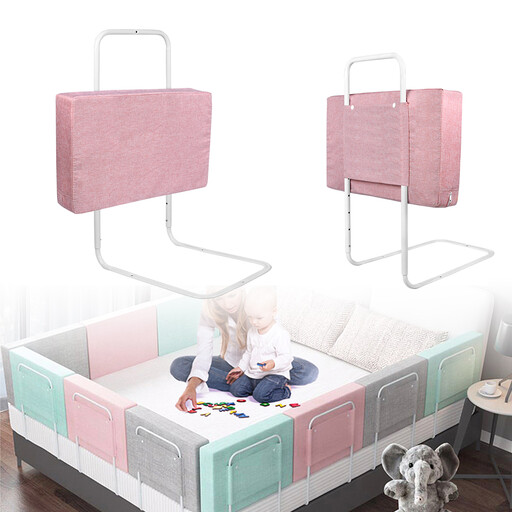
Why it suits this need : At 50 cm high, this model is a straightforward option to consider for a child’s bed or a narrower sleeping area. It has five adjustment positions and a cherry-pink finish.
The five positions let you adjust the height to suit the mattress thickness, rather than relying on a fixed measurement. It’s still essential to measure the bed before fitting the rail.
A 50 cm size and five adjustment positions, as stated in the product name.
Why it suits this need : This 60 cm version may appeal to households with a deep mattress or anyone looking for a rail that extends further above the bed.
At 60 cm high, this model helps reduce the risk of choosing a rail that’s too low for a deep mattress. You should still check that it’s compatible with your bed frame.
A height of 60 cm and five adjustment positions, as stated in the product name.
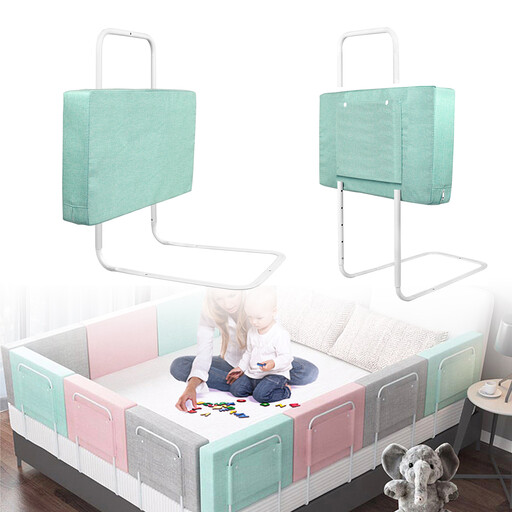
Why it suits this need : This set of two 50 cm sections is a good option if you want to protect both sides of the bed or cover a longer area.
Two sections help you avoid ending up with a single rail that’s too short for a family bed. After assembly, check the joins and ends carefully.
A set of two 50 cm sections with five adjustment positions, as stated in the product name.
We’ve put together a comprehensive list, updated in real time, of products that meet these strict selection criteria and European safety regulations.
Fit it in accordance with the instructions, check that the parts are facing the right way and make sure it’s held securely by the bed base or the specified fixing system. The mattress should sit flush against the rail, with no accessible gap. Then check that the rail is stable along its full length.
It depends on the mattress thickness, the height of the bed and the child’s age. Measure how far the rail actually extends above the mattress. Follow the manufacturer’s usage limits, and never treat the rail as a substitute for supervision.
Replace it if any part is cracked, a fixing no longer locks properly, the fabric is torn or the frame feels loose. Regular checks are particularly important after taking the rail apart, moving house or using it frequently.