
Same-day & Next-day Delivery

Quality Guaranteed

Unlock Your Welcome Offers: FREE Delivery | Up to 80% OFF | Free 30-day JoyPlus trial
Download the APP
A glue that peels off, a seal that turns black or a fixing that leaves marks can quickly turn a small repair into an unexpected expense. Choosing an adhesive isn't just about spotting the words "strong glue" on the packaging. You also need to check its compatibility with the materials, the environment and the stresses the bond will have to withstand.
A multi-purpose glue can work on paper, cardboard, light wood or certain small repairs. It won't necessarily be suitable for a damp, porous or vibration-prone surface. Similarly, a fixing glue designed for an interior wall won't automatically work in a bathroom or for outdoor use.
Phrases like "instant grab" or "extra-strong" don't always specify the conditions needed to achieve the promised result. The final strength can sometimes take several hours, or even 24 hours, to develop. The load it can bear also depends on the surface area, the amount applied, the drying time and how the weight is distributed.
Polyethylene, polypropylene, PTFE, certain flexible plastics and dusty surfaces can all prevent an adhesive from holding properly. A silicone sealant may also be unsuitable for a freshly painted surface or a highly absorbent material. Take the time to check the exclusions on the product page – it saves you buying a solution you can't use.
Start by identifying the two surfaces you need to join: wood, glass, metal, tiles, PVC, plaster, paper or fabric. A wood glue is formulated for wood joints, while a wallpaper paste is designed for heavy, vinyl or specialist wall coverings.
For light decorative fixing, a repositionable adhesive putty or adhesive pads can be perfectly adequate. They're handy for photos, posters and small items, but they don't replace a mechanical fixing once the load becomes significant.
In a kitchen, shower or around a basin, choose a sanitary silicone sealant designed to resist water. An anti-mould sealant, enriched with antifungal agents, can be particularly suitable for joints regularly exposed to moisture, provided you follow the manufacturer's recommendations.
For windows, doors and roof windows, an elastic silicone sealant can accommodate the natural movement of the joinery. Outdoors, check its resistance to UV, temperature fluctuations and moisture. An indoor glue has no place in an environment constantly exposed to water.
Cartridges of 280 to 300 ml usually require a mastic gun. They are well suited to long joints and renovation work. For small repairs and craft projects, a tube or glue stick will be easier to handle.
Preparation plays a crucial role: surfaces must be clean, dry, degreased and free from any loose material. Also follow the stated application temperature and curing time. Even a transparent glue or a high-performance fixing glue can fail if the parts are moved before it has fully set.
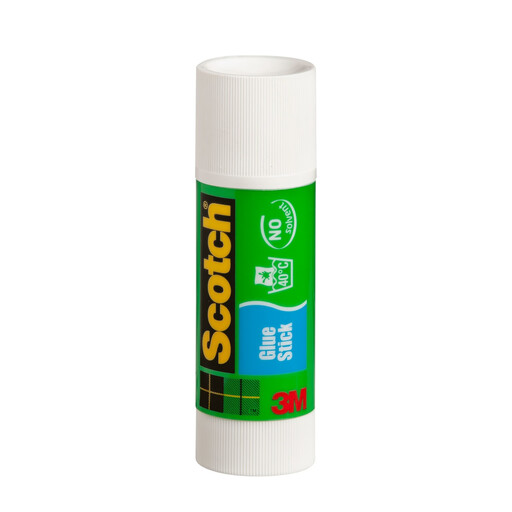
Why this choice suits this profile: Its 40 g format is ideal for homework, craft projects and small office tasks, without needing any tools.
The stick limits drips and excess product, unlike some liquid glues used on paper.
Acid-free formula, even application and cleans off hands and most household surfaces with soapy water.
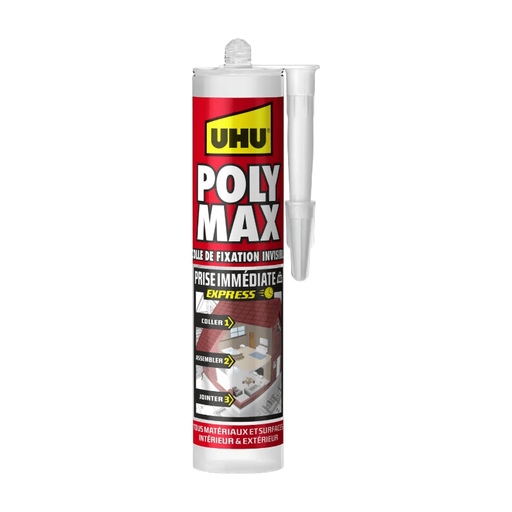
Why this choice suits this profile: Its cartridge supports renovation projects that require bonding, assembly and sealing on various surfaces, indoors and outdoors.
The product page details compatible materials and exclusions, including PE, PP, PTFE and bitumen. A good habit to check compatibility before buying.
Solvent-free, acid-free and reportedly odourless formula, with a transparent finish and a temperature resistance range from −40 °C to +100 °C.
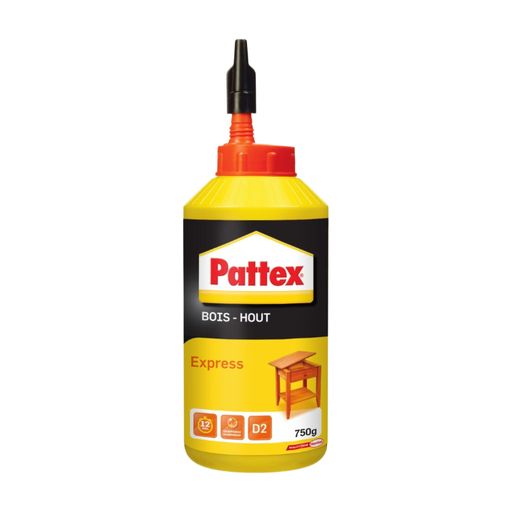
Why this choice suits this profile: Its large format is aimed at those who regularly carry out bonding, veneering or laminating on wooden pieces.
The product page clearly distinguishes wood uses from excluded surfaces, such as PVC, ABS and polyester with an unsanded reverse side.
Initial drying reportedly in around five minutes and final strength after 24 hours, depending on the surface and conditions of use.
For joints around a basin, shower or bath, choose a silicone sanitary sealant designed for wet rooms. Check its compatibility with tiles, enamel, glass or ceramic, then let it dry according to the manufacturer's instructions before any contact with water.
It all depends on the formula used. A glue stick can be handled quickly on paper, whereas a fixing glue or sealant may need up to 24 hours to reach its final strength. Temperature, bead thickness and surface porosity also affect the result.
Close the cap or cartridge carefully, clean the nozzle, then store the product in a cool, dry place, away from frost and excessive heat. Follow the safety pictograms, ventilate the room and keep products out of reach of children.