
Livraison le jour même ou le lendemain

Qualité garantie

Débloquez vos offres de bienvenue: Livraison GRATUITE | Jusqu'à -80 % | 30 jours d'essai gratuits à JoyPlus
Téléchargez l'application
Renovating a splashback or a wall without dust, mortar or heavy tools is possible thanks to adhesive wall tiles for the kitchen and bathroom. This solution is particularly popular with tenants, DIY beginners and homeowners who want to transform a room quickly.
However, not all models are suitable for the same uses. A poorly chosen adhesive splashback can peel off, turn yellow or reveal imperfections in the wall surface. So before you order your self-adhesive tiles, it's worth keeping three common pitfalls in mind.
A tile-effect sticker, a stone-look finish or a self-adhesive mirror mosaic can transform a wall in just a few hours. But its appearance alone tells you nothing about its resistance to moisture, heat or splashes.
In a kitchen, the wall behind a hob is exposed to heat and grease splashes. In a bathroom, water splashes and condensation require a perfectly dry surface. Simply seeing "wall use" on a product description does not mean the covering will withstand immersion, constant steam or direct contact with a flame.
Adhesive tile-effect panels stick best to a smooth, clean, dry and degreased surface. A rough, dusty or freshly painted wall can compromise their adhesion. Old silicone traces, crumbling grout and flaking paint are also weak points.
Test a small area before covering the entire splashback. If you are a tenant, also check the conditions for returning the property and make sure removing the covering will not damage the wall surface.
30 x 30 cm adhesive tiles are easy to handle, but cutting around sockets, corners and pipes can quickly increase waste. Measure the width and height of the area to be covered, then allow extra for cuts and potential repairs.
For example, ten 30 × 30 cm tiles cover approximately 0.9 m², according to the relevant product description. This figure should be compared to the actual measured area, not just the length of the wall.
Vinyl, PVC and gel-effect materials each offer a different look and level of flexibility. A peel-and-stick vinyl tile can be practical for a DIY wall decoration project – it can usually be cut with a suitable tool. A rigid panel gives a more structured finish, but requires a perfectly even wall surface.
Mirror glass models have real decorative potential. They are better suited to a frame, an accent wall or a creative project than to an area directly exposed to splashes and knocks. Handle them with care, even if the manufacturer states the edges are smoothed.
Always compare:
A hexagonal pattern requires more precision when fitting than a rectangular format. 3D reliefs can also make joins more visible if the rows are not perfectly aligned.
For a bathroom wall covering, choose an area with limited direct water exposure, unless the manufacturer explicitly states otherwise. In the kitchen, keep adhesive materials away from flames and follow the instructions regarding heat sources carefully.
Fitting generally follows these steps:
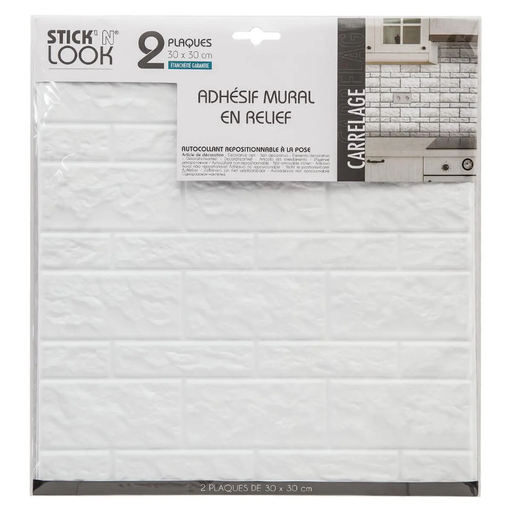
Why this choice suits this profile: These two white PVC stickers, each 30 × 30 cm, let you create a small splashback or make a decorative touch-up without any difficulty.
The size and stated coverage of 0.18 m² reduce the risk of ordering too much for a small area.
Lightweight PVC, a white finish, a surface that is stated to be easy to clean, and self-adhesive fitting.
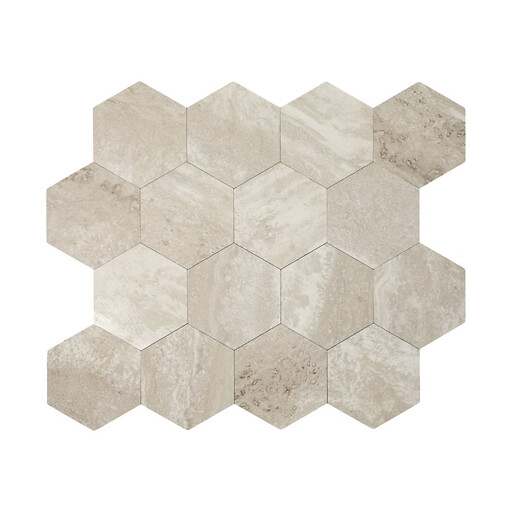
Why this choice suits this profile: Its hexagonal travertine-effect pattern brings a mineral touch to a splashback or accent wall in the kitchen, bathroom or utility room.
The product description details its limitations: the wall must be smooth and dry, with no direct heat exposure, and the product should be used with care in very humid areas.
A rigid adhesive backing, tool-free fitting as stated, and cleaning possible with a damp cloth.
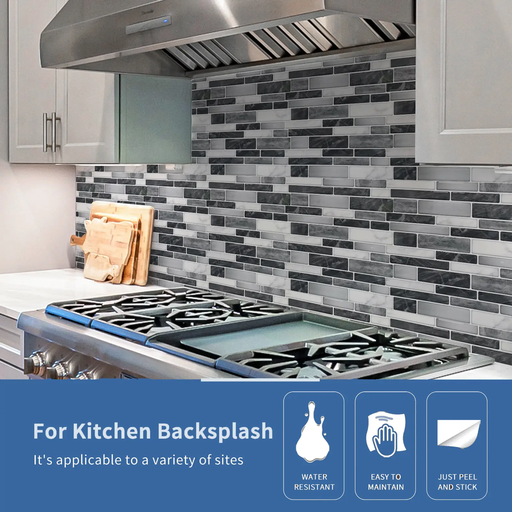
Why this choice suits this profile: This pack covers approximately 0.9 m² and is suitable for kitchen, bathroom or wall decoration projects that require an easy-to-maintain vinyl surface.
The stated non-porous surface simplifies cleaning, while the regular format makes it easier to calculate joins.
A vinyl with a thickened top layer, stated resistance to stains and moisture, and fitting without additional adhesive.
We have compiled a complete selection, updated in real time, of products that meet these demanding criteria and European safety regulations.
Yes, provided the old tiles are stable, clean, degreased and smooth enough. Grout lines that are too deep can create visible bumps and reduce the contact surface. In that case, a smoothing compound may be needed before fitting.
It depends on the material, wall preparation, temperature and exposure to water or heat. Fitting on a dry, even surface helps ensure good adhesion over time. Check the edges regularly and avoid abrasive cleaners when cleaning.
They can be used to decorate a wall or create an accent feature, but you must check the product description for its moisture resistance. Small glass elements are better suited to decorative surfaces protected from direct splashes than to the wall behind a shower.