
Livraison le jour même ou le lendemain

Qualité garantie

Débloquez vos offres de bienvenue: Livraison GRATUITE | Jusqu'à -80 % | 30 jours d'essai gratuits à JoyPlus
Téléchargez l'application
Renovating a wall without dust, mortar or endless disruption is possible with adhesive wall tiles. This solution is ideal for homeowners, tenants and DIY wall décor enthusiasts – provided you understand the difference between a decorative cover-up and a genuine technical wall covering.
A self-adhesive splashback can transform a kitchen in just a few hours. Imitation tile stickers for the bathroom can give a fresh look to a wall that isn't directly exposed to water. However, rushing to apply them onto a damp, uneven or poorly cleaned surface risks peeling and wasted money.
3D visuals, stone effects and mirror finishes are designed to change the appearance of a surface. They don't necessarily provide the same waterproofing as traditional tiles and proper grouting.
In a kitchen, check the distance from the hob and sink. In a bathroom, don't assume a self-adhesive wall panel offers sufficient protection inside a shower, unless the manufacturer clearly states the product is intended for that use.
The adhesive won't make up for wall imperfections. Powdery paint, old wallpaper, rough plaster or a greasy surface will all compromise adhesion. Previously tiled walls can sometimes work, but the grout lines may show through thinner panels.
A clean, dry, smooth and stable surface matters far more than the pattern you choose.
A box of 10 tiles measuring 30 × 30 cm covers approximately 0.9 m². However, you need to allow extra for cuts, corners and fitting errors. For a 2.4 m² wall, budget for around 10 to 15% more material, depending on the complexity of the job.
Always compare the actual coverage area, the number of tiles and their usable dimensions. Two visually similar packs can have very different coverage.
Measure the length and height of the area, then multiply these two figures to get the surface area. Clean with a degreasing product suitable for the surface and allow it to dry completely. Remove any dust and check that the paint isn't flaking.
In a rented property, start by testing the product on a small, discreet area. Removal can pull off fragile paint or leave residue. Strictly speaking, there is no such thing as a glueless wall covering when a product is self-adhesive – it typically relies on a pre-applied adhesive layer.
Vinyl and PVC can generally be cleaned with a soft sponge and a non-abrasive cleaner. Textured surfaces may trap more splashes and require more careful cleaning. A glossy finish can make wiping easier, but it also shows marks more clearly.
Mirror glass mosaics are primarily intended for decoration, frames, creative compositions or event displays. They can work as an adhesive mirror mosaic, but their small size requires more installation time and careful handling.
Before fitting a 3D adhesive tile behind a hob, check the distance from the heat source and the recommendations on the product page. Never cover a socket, an access panel or a ventilation grille.
For cutting, use a ruler, a pencil and a suitable craft knife. Wear gloves when handling glass pieces. Smooth edges, as stated on some products, reduce the risk of cuts but don't remove the need for caution.
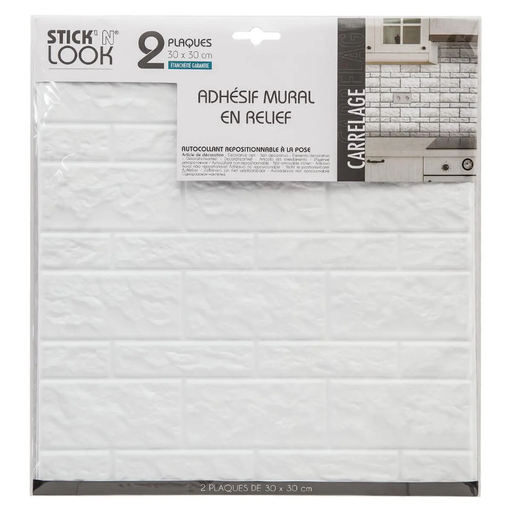
Why this product suits them: This pack of two 30 × 30 cm tiles is ideal for a small splashback, a feature wall section or a first small-scale DIY project.
The small quantity limits the risk of buying too much material before you've checked the adhesion and finish on your wall.
White PVC, dimensions of 30 × 30 cm, stated weight of 0.21 kg and a claimed coverage of 0.18 m² per pack.
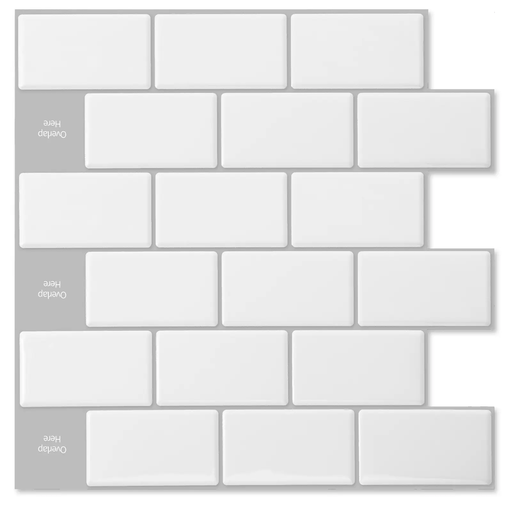
Why this product suits them: Its white metro tile relief with grey grout lines works well in a kitchen, a bathroom (outside the shower) or a contemporary feature wall.
The stated 30 × 30 cm format and coverage of around 0.9 m² make calculations easy before ordering, while the relief texture is worth checking in the visual preview.
10 tiles, cuttable with a craft knife and a textured gel surface; the product page also mentions a self-adhesive design and heat resistance.
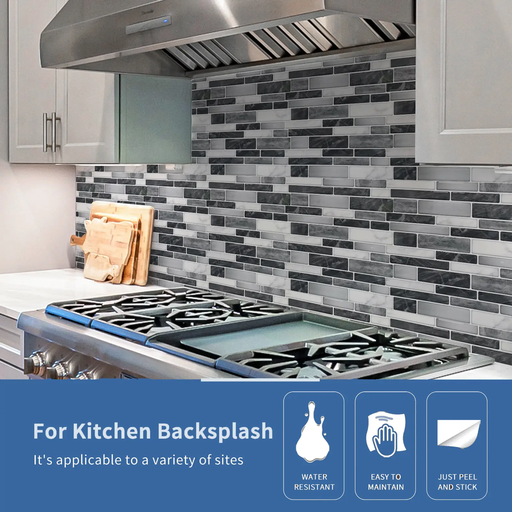
Why this product suits them: This pack covers around 0.9 m² and is designed for adhesive splashback projects, quick renovations or larger decorative wall schemes.
The usable area is stated on the product page, helping you compare the price per square metre rather than just the pack price.
Vinyl with a gel top layer claimed to be resistant to scratches, moisture and stains; non-porous surface and easy cleaning according to the description.
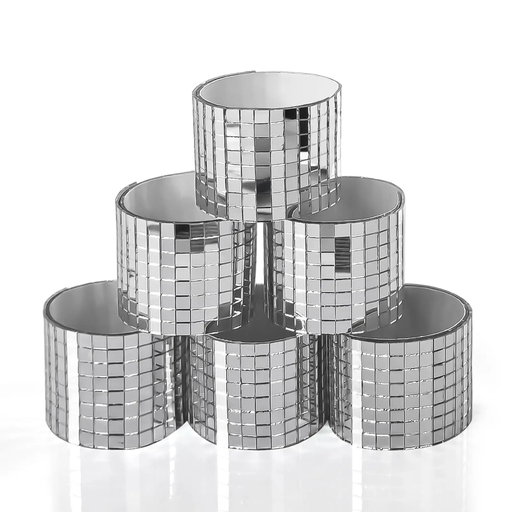
Why this product suits them: Creators, window dressers and event organisers can put together mirror frames, disco balls, collages or stage props.
The small square format allows for precise patterns and reduces complex cutting on curved or uneven surfaces.
Silver mirror glass mosaics, smoothed edges according to the product page, 6 rolls and 2,364 pieces stated; self-adhesive backing, no glue required.
We've put together an updated selection of products that meet these criteria and suit interior decoration needs in the UK.
In a rented property, keep some offcuts and the packaging. They may come in handy for a touch-up or to find the reference when it's time to remove them.
It can be suitable for an area exposed to moderate splashes if the product page states it can be used in a humid environment. That doesn't automatically mean it's suitable for a shower or prolonged contact with water. The joins and edges must remain clean and be properly installed.
Its lifespan depends on the surface, heat, humidity, cleaning and the quality of the installation. There is no universal duration that applies to all products. Regularly inspect the edges and replace any tile that peels or warps.
Removal is generally easier on a smooth, stable surface than on old paint. Gently warm the adhesive if the instructions allow, then peel it off slowly. Always test on a discreet area first to minimise the risk of pulling off the existing wall covering.