
Livraison le jour même ou le lendemain

Qualité garantie

Débloquez vos offres de bienvenue: Livraison GRATUITE | Jusqu'à -80 % | 30 jours d'essai gratuits à JoyPlus
Téléchargez l'application
Looking to transform a dull wall, modernise a kitchen, or add a touch of creative flair to a bedroom without committing to a major renovation? Adhesive wall decor is the perfect solution: it's practical, budget-friendly, and quick to apply. But behind the promise of an effortless upgrade, a few pitfalls can turn a DIY decor project into a real disappointment.
Before you fill your shopping cart, a quick overview of the common traps is in order. Many people complain about adhesive peeling off after just a few weeks, especially in humid rooms. Others are let down by a "plastic" finish that looks nothing like the product photos. Finally, the fear of damaging the wall upon removal is a major concern, particularly for renters. This guide is here to help you see things more clearly and make the right choice.
To avoid these setbacks, three technical criteria must be scrutinised. They determine not only the appearance but also the durability and ease of installation of your decor.
The material is the first clue to the product's quality and intended use.
Even the best product won't stick to an unsuitable surface. The golden rule: the surface must be perfectly smooth, clean, dry, and non-porous. Freshly painted walls require a full curing time (several weeks) before any application.
For rooms like the kitchen or bathroom, opt for products that explicitly mention a reinforced adhesive or moisture resistance. This is your guarantee that your decor won't peel off at the first sign of condensation.
It may seem obvious, but many people find themselves running out of material mid-project. Precisely measure the height and width of the area to be covered. For tiles or wallpaper panels, check the dimensions of a single unit and the total area covered by one pack. Always plan for an extra 10% margin to account for offcuts and inevitable cutting mistakes.
To put theory into practice, here are a few scenarios and the products that fit them.
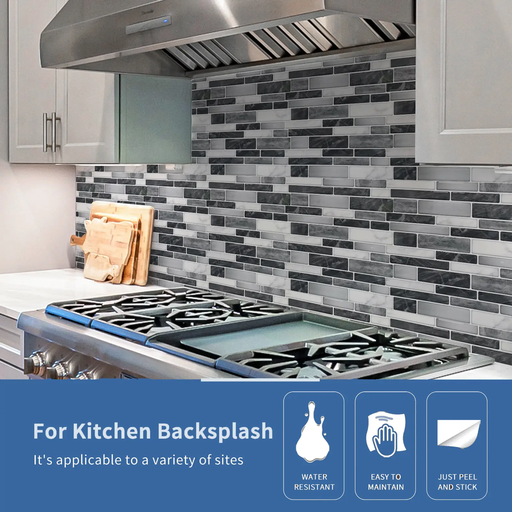
Why it's a great choice: Perfect for those who want to update a kitchen backsplash or a bathroom wall without the hassle of traditional tiling. Installation is fast and creates no dust or noise.
Its thick gel layer and textured finish combat the cheap "plastic" look. The reinforced adhesive is designed for a strong hold in humid areas, preventing premature peeling.
The stunningly realistic look perfectly mimics real tile. The non-porous surface makes cleaning up cooking splashes a breeze.

Why it's a great choice: Perfect for creating a themed world in a child's bedroom or playroom. The playful design sparks imagination, and its adhesive format ensures an ultra-fast installation.
Designed to be removable, it reassures renters and parents who know that children's tastes change at the speed of light. Its damage-free removal is a major selling point.
Allows you to create a full accent wall with a continuous pattern, delivering a much stronger visual impact than a simple sticker.
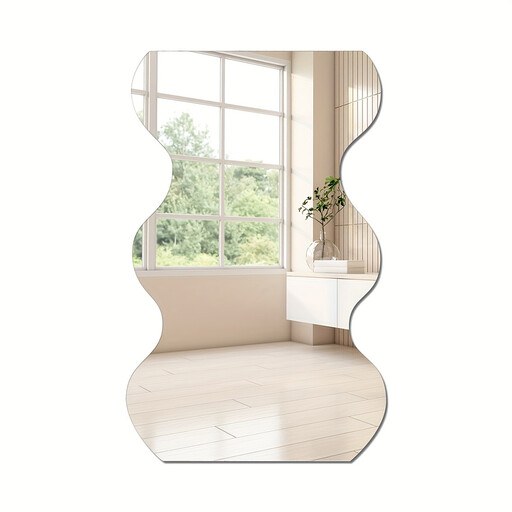
Why it's a great choice: This type of **adhesive mirror** is an excellent trick for visually enlarging a space, like an entryway or hallway, by adding light and a touch of design without drilling a single hole.
By fully embracing its decorative rather than functional role. It doesn't pretend to replace a real glass mirror, which avoids the disappointment of a distorted reflection.
Lightweight, shatterproof, and easy to install, it offers a safe and creative solution for decorating walls where a heavy mirror would be impossible or risky to hang.
Discover our complete selection of products that meet our quality criteria and safety standards.
Longevity heavily depends on the material, adhesive quality, and location. A simple PVC decorative sticker in a bedroom can last for several years. A high-quality vinyl and resin adhesive tile, properly installed on a kitchen backsplash, can maintain its appearance and adhesion for over 5 years with proper care.
For most products marketed as "removable," the answer is yes. The trick is to gently heat the surface with a hairdryer on low heat. The warmth softens the glue, allowing you to peel the sticker off slowly, pulling parallel to the wall. As a precaution, it's always a good idea to test on an inconspicuous area first.
High-quality models designed for this purpose are made to resist splashes from water and grease, as well as indirect heat from a stovetop. It is crucial to respect the safety distance from the heat source, which is usually specified by the manufacturer (often 20 to 25 cm). However, using them inside a shower stall, where contact with water is direct and constant, is not recommended.