
Same-day & Next-day Delivery

Quality Guaranteed

Unlock Your Welcome Offers: FREE Delivery | Up to 80% OFF | Free 30-day JoyPlus trial
Download the APP
So, your new floor is installed. You step back to admire your work, but one detail spoils the view: that unsightly seam between two rooms or different types of flooring. An adhesive transition strip seems like the easy fix. But be careful—the wrong choice can quickly turn this miracle solution into a costly headache. As a product expert at Joybuy, my mission is to help you navigate the jungle of options to find the right model for your needs, without falling for marketing traps.
Before diving in headfirst, let's review the 3 most common mistakes that lead to buyer's remorse:
Identifying these pitfalls is the first step. The second is understanding what truly makes a difference.
To ensure a clean, durable finish, focus on these three points before you pull out your credit card.
While aluminium remains a sturdy option, flexible PVC has become the go-to solution for drill-free installations. A well-made PVC floor transition profile offers several key advantages:
Check that the PVC is described as durable and scratch-resistant. This is a mark of quality that often justifies a slightly higher price.
A self-adhesive threshold strip is only as reliable as its glue. The "peel and stick" promise is tempting, but it must be backed by a powerful adhesive. For maximum effectiveness, preparation is crucial:
A good adhesive saves you from having to use nails and screws, thereby preserving your floor. This is a significant advantage, especially if you are a renter.
The goal of an adhesive floor seam cover is to blend into the background. To achieve this, colour and texture are paramount. A wood-look floor transition should match the shade of your flooring as closely as possible.
To help you see more clearly, here are a few models that meet our criteria, each suited to a specific need.
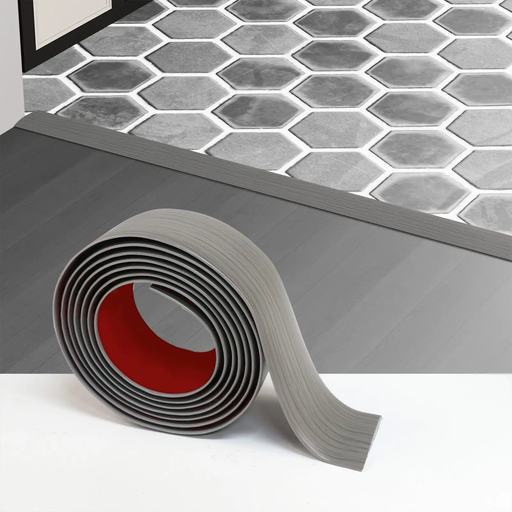
Best for: A quick and effective solution for a standard doorway. Its 1-metre length is perfect for a classic door, which prevents waste.
Its powerful adhesive and durable PVC are designed to withstand daily foot traffic, preventing the premature peeling typical of entry-level products.
Ultra-simple installation: measure, cut with scissors, peel off the backing, and apply. No need to be a DIY pro.
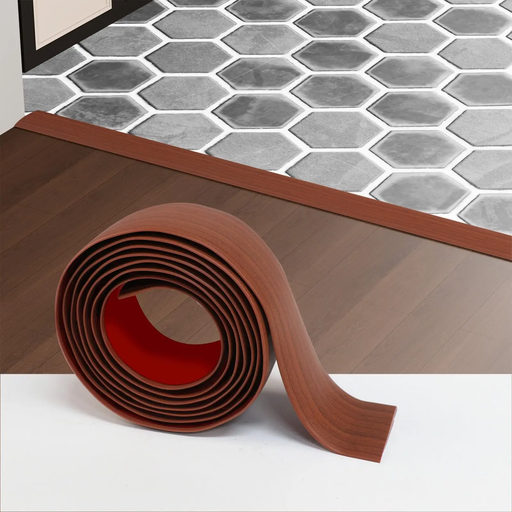
Best for: Those seeking perfect harmony with their wood flooring. The cherry wood-look finish adds a warm and elegant touch.
The wood grain pattern is designed to be realistic and wear-resistant, avoiding the "plastic" look and rapid fading of low-end finishes.
A refined finish that blends naturally with warm-toned hardwood and laminate floors for a nearly invisible transition.
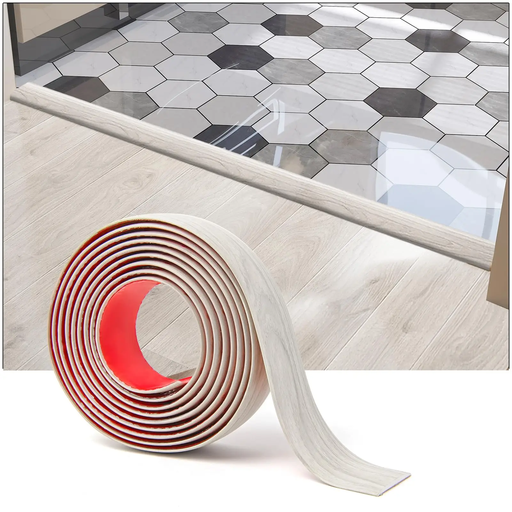
Best for: Extra-long transitions in open-plan living areas (kitchen/living room) or for handling multiple thresholds with a single purchase, all while ensuring visual continuity.
The 3-metre roll format prevents unsightly seams over long distances. Its flexibility allows it to follow the floor's contours without creating weak points.
Economical and practical for larger jobs. The whitewashed finish is modern and complements many contemporary decor styles.
We have compiled a comprehensive list of products that meet our strict selection criteria and quality standards.
It all depends on the product's quality and the amount of foot traffic. A good PVC profile, installed correctly in a moderate-traffic area, will last for several years without budging. In high-traffic areas, like an entryway corridor, an annual check-up is a good habit to adopt.
This is a very bad idea. Adhesives are designed for smooth, hard, non-porous surfaces like tile, hardwood, linoleum, or vinyl. The texture and fibres of a carpet prevent a proper, long-lasting bond. For a transition involving carpet, you need to use specific screw-in or clip-in profiles.
The trick is to use a hairdryer to soften the glue. Gently heat the strip along its entire length, then gradually peel it away by pulling carefully at a low angle. If any adhesive residue remains, use a gentle adhesive remover (available at hardware stores) or isopropyl alcohol on a cloth, after testing it on an inconspicuous area of your floor.