
Livraison le jour même ou le lendemain

Qualité garantie

Débloquez vos offres de bienvenue: Livraison GRATUITE | Jusqu'à -80 % | 30 jours d'essai gratuits à JoyPlus
Téléchargez l'application
Want to modernise a kitchen or bathroom without the hassle of endless, messy, and expensive construction? Adhesive tile is emerging as the perfect solution. But be warned: not all products are created equal. As product experts, our mission is to guide you through the jungle of options to make an informed choice. Follow our guide to avoid the common pitfalls and select the product that will truly transform your interior.
The market is flooded with tempting promises, but the reality is often disappointing. Here are the three most common issues that can turn your easy kitchen renovation project into a total nightmare.
To make the right choice, focus on these key technical specifications. They are what separate a mere decorative gadget from a truly durable renovation solution.
The choice of material directly impacts durability and the final look.
A simple flat sticker will always give itself away. For a convincing trompe-l'?il effect, especially for a white stone imitation, prioritise models that feature:
Always check the manufacturer's specifications. For a kitchen, ensure the product is designed to withstand the moderate heat of a cooking area (while respecting safety distances). For a bathroom, a '100% waterproof' or 'moisture-resistant' label is non-negotiable.
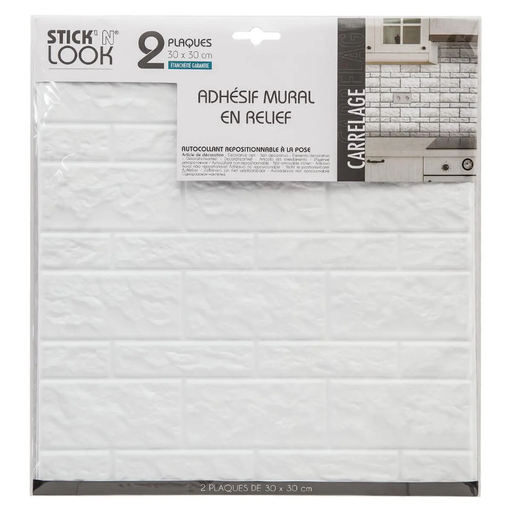
Why we recommend it: Perfect for renters or for a first-time makeover project. It's the ultimate quick and budget-friendly solution for refreshing a wall or backsplash without breaking the bank.
The PVC used by Secret de Gourmet provides a smooth, easy-to-clean surface, which eliminates the risk of stubborn stains. Its ultra-simple installation directly onto the wall prevents any complications.
Its white stone imitation effect adds a touch of modern brightness in an instant. The two-pack format is perfect for covering a small area at a low cost.
Why we recommend it: For those who demand a visual and tactile finish that's nearly identical to real tile, but without the installation hassles. The investment is slightly higher, but the result is stunningly realistic.
Thick vinyl or resin models, with their pronounced 3D relief, directly combat the 'plasticky' effect of low-end stickers. Here, texture makes all the difference.
Striking visual realism and enhanced durability. The thickness also helps to conceal minor imperfections on the original wall, ensuring a flawless finish.
1. Can adhesive tiles really withstand the heat behind a hob? It all depends on the product. It is imperative to check its technical sheet. Most quality PVC or vinyl adhesives can handle the ambient heat of a kitchen, but they should never be in direct contact with an intense heat source. It is recommended to leave a safety distance of at least 15 to 20 cm between the hob and the backsplash.
2. Can you apply adhesive tiles to a wall that isn't already tiled? Yes, absolutely. Adhesive tiles can be applied to many surfaces, provided they are smooth, clean, and dry: a painted wall (with non-powdery paint), melamine, or even glass. The key to success lies in meticulous preparation: the surface must be thoroughly degreased and dusted to ensure maximum adhesion.
3. How should you clean an adhesive backsplash to make it last as long as possible? Maintenance is a breeze. Use a soft sponge or a microfibre cloth with warm water and a neutral detergent (washing-up liquid, for example). Above all, never use abrasive products, scouring pads, bleach, or solvents. They could irreversibly damage the printed surface or the protective film. Proper care will preserve the shine of your new backsplash for years to come.