
Livraison le jour même ou le lendemain

Qualité garantie

Débloquez vos offres de bienvenue: Livraison GRATUITE | Jusqu'à -80 % | 30 jours d'essai gratuits à JoyPlus
Téléchargez l'application
So, your new hardwood or elegant tile floor is finally installed. But there's an unsightly transition between two rooms spoiling the look. This gap isn't just an eyesore?: it's a dust trap and a potential tripping hazard. The adhesive threshold strip emerges as the quick and easy miracle solution. However, choosing the right model is far from straightforward. Many products promise express installation but hide flaws that quickly appear after just a few weeks.
Before you commit, beware of these common traps that can turn a good idea into a purchase you'll regret?:
To ensure a finish that is as durable as it is beautiful, a few technical points need to be checked. These are the details that will make the difference between a purchase you'll regret and a solution that will last for years.
The longevity of your adhesive door threshold depends on two things?: the quality of the profile and the performance of its adhesive strip. Opt for high-quality PVC. It should be flexible enough to be cut easily but dense enough to withstand daily scratches and scuffs. A good vinyl transition strip won't warp and will keep its colour intact.
When it comes to the adhesive, don't just trust the "self-adhesive" label. Look for products that mention a powerful adhesive designed for long-lasting hold on various surfaces (tile, parquet, lino, etc.). Surface preparation is just as crucial?: a perfectly clean, dry, and degreased floor is the essential prerequisite for a successful installation.
A floor transition profile must be perfectly adjusted to the situation. Before buying, precisely measure three things?:
The product's flexibility is a real plus for a drill-free parquet-to-tile transition. A model that can be slightly softened with a hairdryer to conform to small floor irregularities will ensure better adhesion and a flawless result.
For your adhesive floor joint cover to blend into the decor, its finish is critical. If you're aiming for a wood effect, pay close attention to the texture. Quality models feature a matte, textured grain that mimics wood convincingly, a world away from the plastic, smooth appearance of low-end products. The shade should also be as close as possible to your flooring for a nearly invisible transition. Don't hesitate to compare shades (oak, grey, black, etc.) to find the adhesive finishing threshold that will enhance your interior.
We have scrutinised several products based on durability, ease of installation, and final appearance. Here are products that meet distinct needs and project requirements.
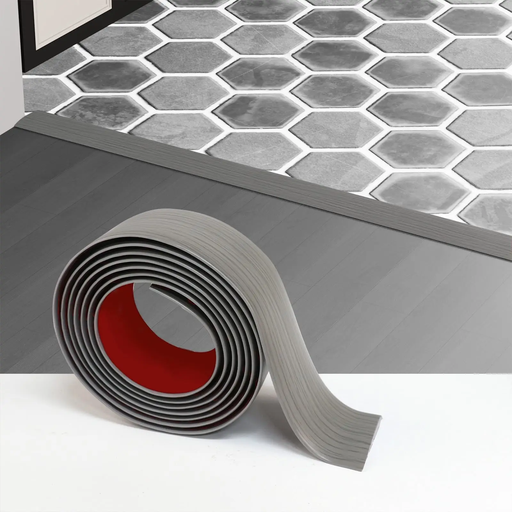
Why it's a great choice: Ideal for a quick and effective solution at a standard doorway. Its 1-meter length is perfect for a single junction, with no waste. Installation requires no complex tools—a simple pair of scissors is all you need.
Its self-adhesive backing is designed for a strong hold, which prevents premature peeling. The grey wood grain finish is understated and realistic, far from a "plastic" look.
Cuts with scissors for a custom fit. Ultra-fast "peel and stick" installation in minutes.
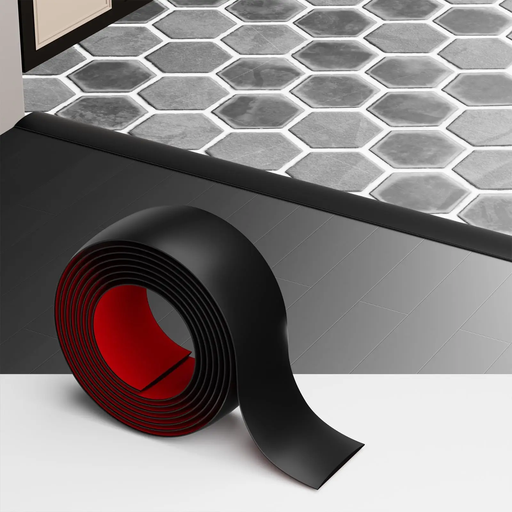
Why it's a great choice: Perfect for hallways, entryways, or kitchens where foot traffic is frequent. Its design is engineered to resist daily wear without degrading. The black colour adds a modern, graphic touch.
Made from high-quality PVC, this profile is advertised as resistant to scratches, stains, and abrasion, which counteracts the pitfall of material that wears out too quickly.
Durable material, designed for high-traffic areas. Cleans easily with a damp cloth.
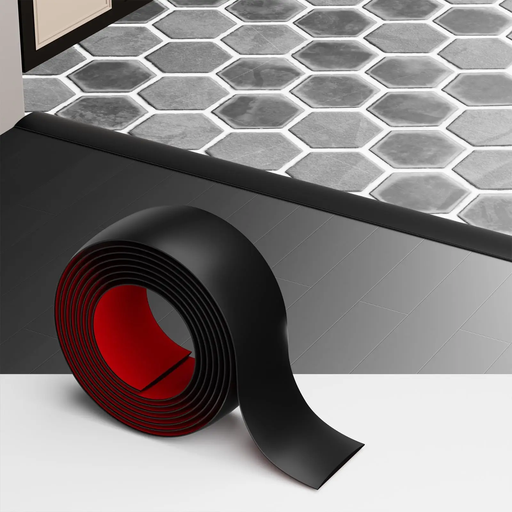
Why it's a great choice: For those who leave nothing to chance. Its long 3-meter length allows you to cover wide openings or long transitions (e.g., an open-plan kitchen to living room) in one continuous piece for a flawless, professional look.
By providing continuous coverage, this product eliminates the unsightly seams that often betray adhesive solutions. Its durable PVC ensures a finish that stands the test of time.
Extra-long 3-meter length for large-scale projects and a seamless finish. Flexible yet durable PVC material.
We've curated a complete, up-to-date selection of products that meet our strict selection criteria and current standards.
The lifespan of an adhesive threshold strip depends on three factors: the quality of the adhesive, the robustness of the material, and the intensity of foot traffic. A high-quality model, installed on a well-prepared surface (clean and dry), can last for several years without peeling, even in a moderately trafficked area. In very humid rooms or high-traffic zones, its lifespan will logically be shorter.
This is strongly discouraged. The adhesives on these profiles are designed for hard, smooth, non-porous surfaces like tile, parquet, vinyl, or lino. Carpet fibres prevent a proper and durable bond. For a transition involving carpet, it's better to opt for screw-down threshold bars or dedicated profiles.
To remove an adhesive strip, the secret is to soften the glue. Use a hairdryer to gently and progressively heat the surface of the profile. The heat will soften the adhesive. Then, carefully slide a plastic spatula (or an old loyalty card) under one edge to start peeling it up. Pull slowly and steadily. If any glue residue remains, use an adhesive remover compatible with your flooring or simply rubbing alcohol on a cloth.