
Livraison le jour même ou le lendemain

Qualité garantie

Débloquez vos offres de bienvenue: Livraison GRATUITE | Jusqu'à -80 % | 30 jours d'essai gratuits à JoyPlus
Téléchargez l'application
So, your new floor is installed. You step back to admire the result... and then your heart sinks. That unsightly little gap between two rooms, or that tiny difference in level between the living room hardwood and the kitchen tile, is glaringly obvious. The adhesive threshold strip seems like the perfect quick and easy fix. Except that a poor choice can quickly turn this finishing touch into a real headache.
Don't panic. Our team has tested and analysed the market to help you see things more clearly. Follow this guide to find the ideal model and guarantee a flawless finish.
The threshold strip aisle is a real minefield. All the products look similar, but the quality varies enormously. Here are the most common disappointments that turn a smart buy into a bitter regret.
To avoid ending up with a subpar fix, here are the three points to scrutinize. This is what separates a professional-grade finish from an amateur DIY job.
PVC is the go-to material for an adhesive floor transition strip: it's flexible, water-resistant, and affordable. But be warned, not all PVC is created equal. Insist on high-density PVC. It will stand up much better to scratches, scuffs, and stains. This ensures your floor joint cover will keep its new look, even in a high-traffic hallway or entryway. As for maintenance, it's hassle-free: a wipe with a damp sponge and you're done.
A self-adhesive door threshold is useless without a reliable glue. Look for terms like "high-performance" or "long-lasting" adhesive. The "peel-and-stick" application is ultra-convenient, but it's unforgiving of poor preparation. The floor must be impeccably clean, dry, and grease-free for maximum adhesion. A pro tip: running a hairdryer over the strip just before installation can soften the PVC and boost the adhesive's effectiveness.
Before you click "Add to Cart," get out your tape measure. Measure the width of the joint you need to cover. The strip must be wide enough to cover the gap and any small cutting mistakes in your planks or tiles. Also, consider the profile. For a tile-to-wood transition on the same level, a flat profile will do the job. To bridge a slight height difference, opt for a reducer profile, with its gentle slope that prevents tripping. A model that can be easily cut with scissors or a utility knife is a real bonus for a perfect fit.
Rather than drowning you in an endless list, we've matched user profiles with solutions that have proven their worth, based on durability and ease of installation.
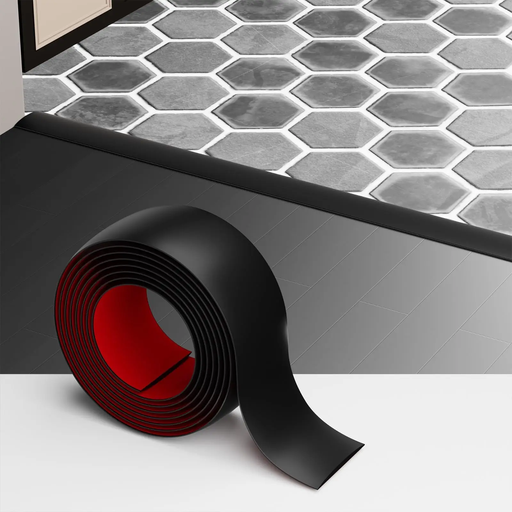
Why we love it: It's the ultimate express solution. Installs in minutes, no toolbox required. Its black wood-effect finish is a chic all-rounder that works with most modern decors.
Its adhesive is designed for normal household use. If you prepare the floor well (clean and dry!), it won't let you down anytime soon.
Ultra-simple installation: measure, cut (a pair of scissors is all you need), peel off the backing, and stick. Done.
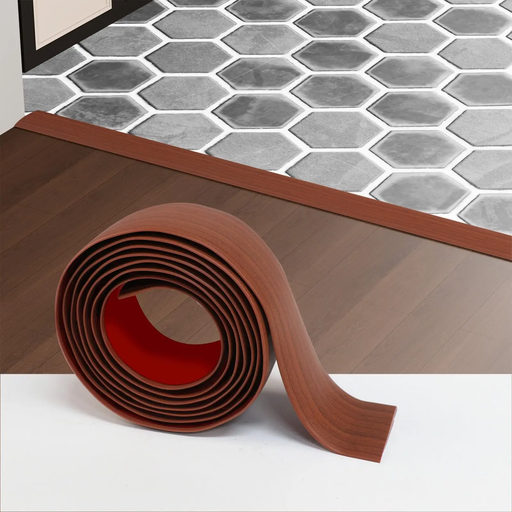
Why we love it: For those who leave nothing to chance. The cherry wood-effect finish, with its warm hue, is perfect for blending in with similarly toned hardwood or laminate floors. The transition becomes almost invisible.
Its quality PVC holds up well to everyday scratches and scuffs. The wood effect remains impeccable, avoiding the trap of a fading pattern.
A stunningly realistic finish that ensures a discreet and harmonious transition.
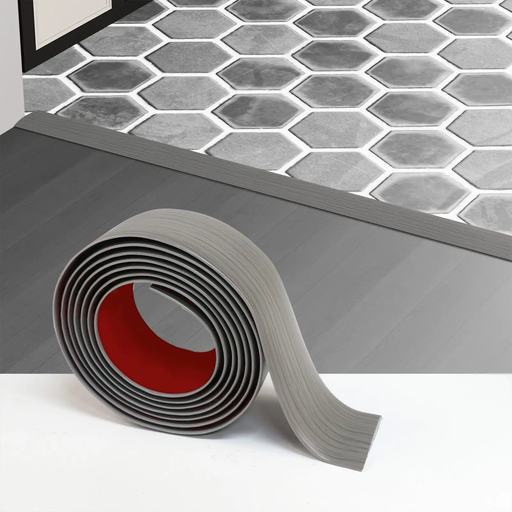
Why we love it: When you're a renter, drilling into the floor is a no-go. This **no-drill** solution is therefore perfect. It's easy to install and, crucially, can be removed without leaving a trace. All with a very contemporary grey wood finish.
Its non-permanent nature is its greatest advantage. By following the installation instructions (spotless floor!), adhesion is optimal, but removal remains possible and clean.
A reversible solution that respects the original flooring. Ideal for renters or temporary setups.
With such a clean floor transition, it would be a shame not to put the finishing touches on your decor. A well-chosen rug, for example, can enhance the overall look and define your living spaces.
Your floors are impeccable, the transition is perfect. All that's missing is a beautiful rug to define the space and warm up the atmosphere.
It all depends on the quality of the product, the care taken during installation, and the amount of foot traffic. On a well-prepared floor (clean and dry) and under normal conditions, a good quality adhesive threshold strip can last for several years without any issues.
Yes, it's entirely possible. Most models are designed to bridge the gap between a hard floor (hardwood, tile, etc.) and a carpet. The adhesive sticks to the hard floor, and the profile simply covers the edge of the carpet for a clean finish. Note that the result is best with low-pile carpets.
The trick is heat! Gently heat the strip along its entire length with a hairdryer to soften the glue. Then, slide a plastic spatula (definitely not a metal one, which could scratch your floor!) under one edge and lift gently. Pull gradually. If any glue residue remains, a little rubbing alcohol or a mild adhesive remover will do the trick, after testing on an inconspicuous area.