
Livraison le jour même ou le lendemain

Qualité garantie

Débloquez vos offres de bienvenue: Livraison GRATUITE | Jusqu'à -80 % | 30 jours d'essai gratuits à JoyPlus
Téléchargez l'application
Adhesive tape can save the day in seconds, but not every type is designed for the same jobs. Fixing a shelf, insulating a cable, sealing a leak on a motorhome or joining two lengths of artificial grass requires very different properties.
The most common mistake is to rely solely on claims such as “extra strong” or “weather resistant”. To avoid a disappointing purchase, consider the surface, the environment, the load to be supported and how long you expect the tape to remain in use.
Tape can adhere very firmly to a clean surface while struggling to support a permanent load. An extra-strong double-sided tape intended for mounting should specify the permissible load, the compatible surfaces and the setting time. Dust, porosity and surface irregularities also reduce adhesion.
For a heavy object, spread the load across several strips and allow the adhesive to stabilise for the time stated by the manufacturer. A no-drill fixing is not necessarily suitable for an item exposed to impacts, vibrations or repeated movement.
Moisture, ultraviolet rays, temperature fluctuations and frost can quickly degrade some adhesives. An indoor mounting tape therefore cannot replace an outdoor adhesive tape designed to withstand rain and sunlight.
Conversely, weather-resistant tape may be thicker, harder to remove or less discreet on a painted wall.
Electrical insulating tape is used to insulate and protect de-energised conductors, not to repair a pipe. Repair tape can reinforce a tarpaulin or an object, but it does not necessarily guarantee long-lasting waterproofing for a roof. Similarly, anti-slip tape improves grip underfoot, but it cannot replace repairing the floor.
The surface matters just as much as the tape. Metal, glass, PVC, wood, concrete, paint and bituminous materials do not offer the same level of adhesion. Always clean the surface, dry it thoroughly and remove any traces of grease before applying the tape.
The width determines the area covered. A 19 mm roll is suitable for many everyday fixing and repair jobs, while a 50 to 150 mm format covers a crack, joint or roofing area more quickly.
Greater thickness generally provides more material to absorb irregularities, but it can make cutting more difficult and produce a less discreet finish. For insulating tape, check the width, length and thickness in particular. The Aigostar model featured below measures 17 mm wide, 10 m long and 0.13 mm thick.
For outdoor applications, check the information regarding rain, UV exposure and the temperatures the tape can withstand. Waterproofing tape must be applied to a dry surface free from standing water. Some butyl products then require protection from rain for around 24 hours.
For electrical work, always switch off the power before starting. Details relating to voltage, fire resistance or standards, such as IEC 60454-3-1 when shown on the product listing, should be checked on the packaging and in the instructions.
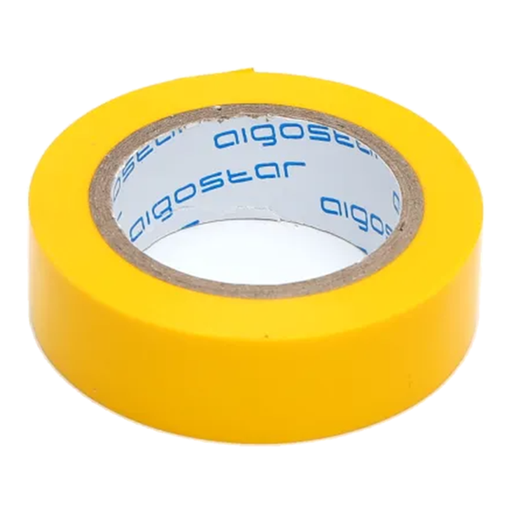
Why this choice suits this profile : At 10 m long, this roll is suitable for small DIY jobs and visually identifying indoor cables. Its yellow colour makes it easier to distinguish circuits.
The listing states that it is intended for indoor use and advises against damp environments and high temperatures.
Flexible PVC, 17 mm width, 10 m length and CE certification stated on the product listing.
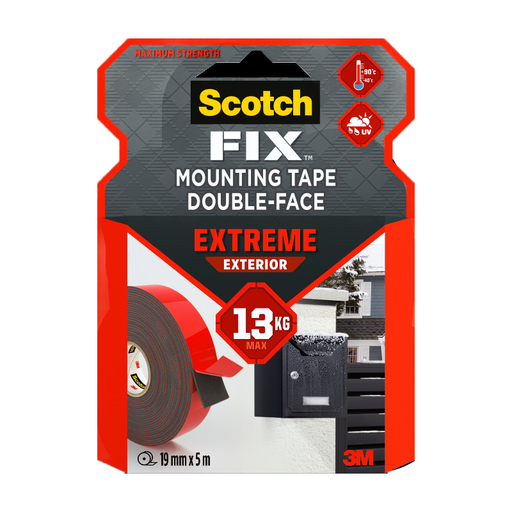
Why this choice suits this profile : This roll is intended for outdoor fixings that require a consistent width and stated resistance to weather and UV rays.
Outdoor use, UV resistance and the stated 13 kg load are specified in the description. However, this figure must be interpreted in relation to the surface and the quality of the application.
5 m roll, 19 mm width, black permanent adhesive and stated suitability for use in rain, sunlight and UV exposure.
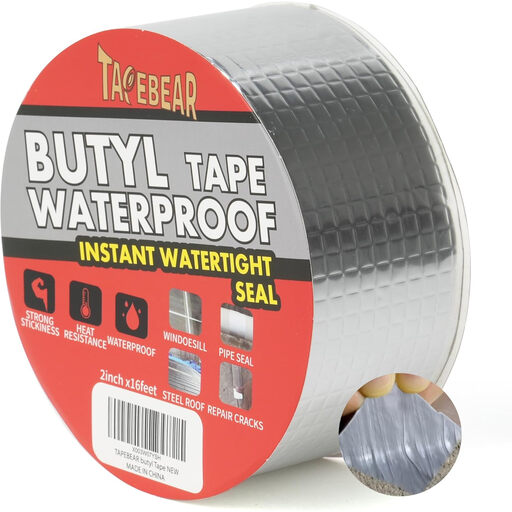
Why this choice suits this profile : This butyl tape is suitable for motorhome owners and work on windows, gutters, boats or pipes, where flexibility and waterproofing are the top priorities.
The description specifies the compatible surfaces, the need for a clean, dry surface and protection from rain for 24 hours.
Butyl rubber, reinforced aluminium foil, 50 mm width and stated compatibility with PVC, EPDM, glass, wood and metal.
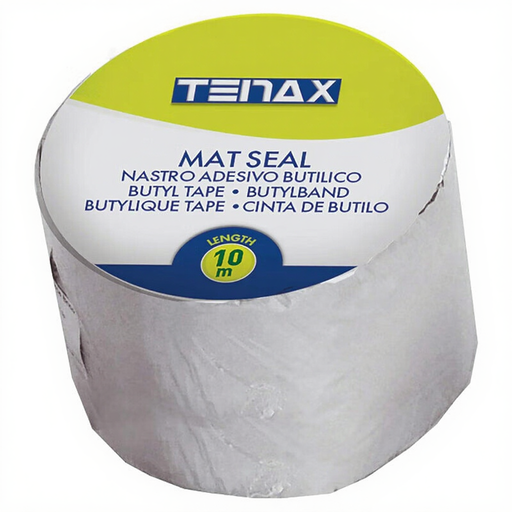
Why this choice suits this profile : This artificial grass tape is designed to join two lengths using a suitable adhesive, particularly for residential or landscaping installations.
The listing states that grass adhesive must be applied to the non-woven backing before pressing the edges together. It is therefore better to follow this method than rely on a universal adhesive.
Grey roll measuring 15 cm by 10 m, synthetic non-woven backing and intended for joining artificial grass.
For demanding repairs, thick, reinforced repair tape may be suitable for metal, plastic or smooth concrete. For steps, ramps or workshops, choose anti-slip tape with a textured, water-resistant surface. For a roof or gutter, check the required width and compatibility with the material before you begin.
Choose a model whose listing explicitly mentions resistance to weather, UV rays and moisture. For mounting, double-sided tape designed for outdoor use may be suitable. To seal a leak or create a joint, butyl tape or roofing tape will generally be more appropriate. The surface must be completely dry when the tape is applied.
Its lifespan depends on the material, exposure and surface preparation. Sunlight, temperature fluctuations, water and friction accelerate ageing. Inspect outdoor applications regularly and replace the tape if it lifts, cracks or loses its flexibility.
No. Switch off the power before starting any work and check the condition of the cable. Electrical insulating tape is used for insulation and protection within the limits set out in its instructions, but it does not make a damaged installation safe. If there is significant damage, contact a qualified electrician.