
Livraison le jour même ou le lendemain

Qualité garantie

Débloquez vos offres de bienvenue: Livraison GRATUITE | Jusqu'à -80 % | 30 jours d'essai gratuits à JoyPlus
Téléchargez l'application
Adhesive tape may seem like a minor consideration… until a box springs open during a move, paint seeps beneath masking tape, or an outdoor repair starts peeling after just a few days. Price and the claim “high adhesion” are therefore not enough to make the right choice.
To avoid unnecessary purchases, it is better to compare the material, dimensions, strength and compatibility with the surface. Here are the criteria to review before choosing packing, masking or DIY tape.
An adhesive can bond perfectly to a clean surface yet tear as soon as it is subjected to tension. When sealing a box, the tape backing matters just as much as the adhesive. Polypropylene, BOPP and kraft paper do not behave in exactly the same way.
For repairs, strong adhesive tape reinforced with a fabric mesh will generally be more suitable than a thin packing tape. Conversely, a very thick model offers no real benefit for sealing envelopes or securing a few sheets of paper.
Two rolls sold at the same price can contain very different quantities. Always check:
A 48 or 50 mm roll is ideal for boxes. The 19 mm format is more convenient for office use, creative projects or wrapping small items.
Masking tape is designed to define an area during painting work. It is not a substitute for repair or packing tape. The stated clean-removal period also depends on the surface, temperature, humidity and quality of application.
The ScotchBlue tapes featured here claim clean removal for up to 14 days on certain surfaces. This does not eliminate the need to test the tape in an inconspicuous area, especially on old paint, wallpaper or delicate wood.
Clear adhesive tape made from BOPP is suitable for sealing parcels while keeping labels visible. Kraft packing tape offers an opaque, writable surface and may help reduce the use of plastic film, depending on its composition. If you are looking for a more responsible option, check the manufacturer’s precise claims regarding recyclability and biodegradability: these terms do not always mean the same thing.
American tape, also known as cloth tape or “duct tape”, generally combines a reinforced backing with an adhesive designed for temporary repairs and bundling objects. However, it should not be regarded as a universal solution for permanent installations.
Thickness, expressed in microns or mils, is a useful indication, but it is not enough to predict how well the tape will hold. For heavy boxes, compare the width, thickness, backing material and expected load. The TAPEBEAR product featured below states a thickness of 9 mils, or approximately 0.23 mm.
For office use, a 19 mm tape with a 2.54 cm core fits easily into a compatible dispenser. For painting, widths of 24 or 48 mm make it possible to protect narrower or wider edges.
Before application, the surface must be clean, dry and free from dust or grease. For outdoor use, look for information about resistance to water, weather, ultraviolet rays and temperature fluctuations.
Electrical insulating tape requires particular care. Check the intended use, permitted voltage and the manufacturer’s instructions. It must not be used as an improvised substitute for a proper electrical repair, especially on a live installation.
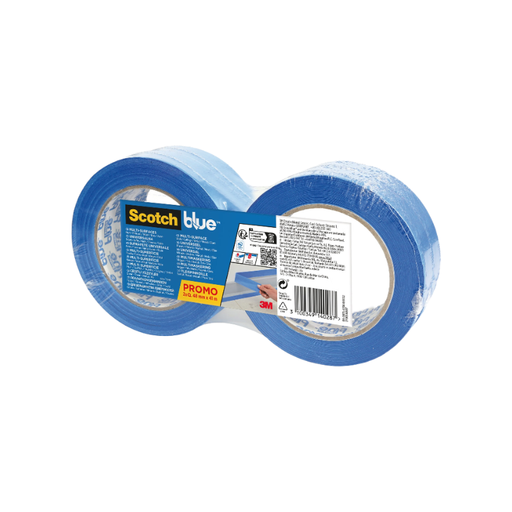
Why this product is a good fit: its dimensions suit walls, woodwork, glass surfaces and metal elements during household painting projects.
The width and length are clearly stated, and the product listing claims clean removal for up to 14 days under the specified conditions.
2-roll pack, 41 m per roll, 48 mm width and stated compatibility with several surfaces.
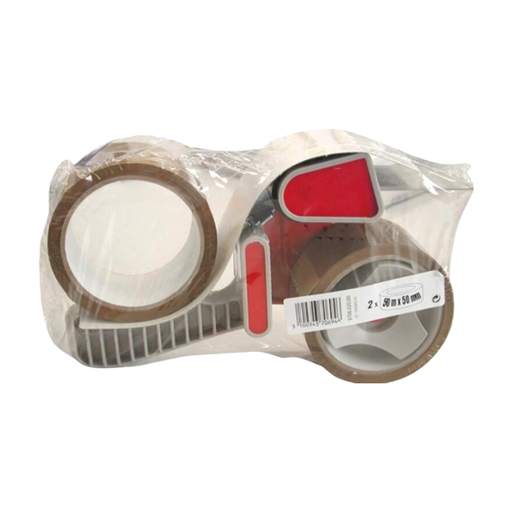
Why this product is a good fit: the included dispenser simplifies repeated box sealing at home, in the office or in a storage area.
The format is specified for each roll — 50 m x 48 mm — and the cutting tool means you do not need to reach for scissors with every parcel.
Polypropylene backing, brown finish, 2 rolls and 1 dispenser included.

Why this product is a good fit: its reinforced structure is suitable for repairs, securing cables and bundling objects, both indoors and outdoors.
The product listing specifies the reinforced material, 9 mil thickness and possible use on wood, plastic, metal or carpet.
48 mm width, writable surface, stated water resistance and hand-tear design.
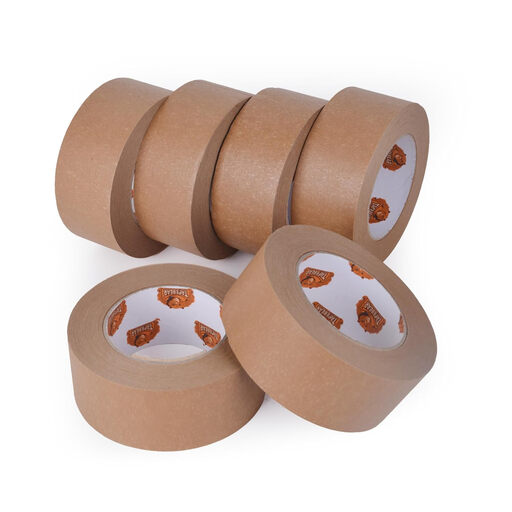
Why this product is a good fit: its brown, writable surface makes it easier to identify boxes during storage, organisation or a move.
The product listing details a kraft paper composition without plastic components and states that the tape tears by hand.
6 rolls measuring 50 mm x 55 m, writable surface and adhesive presented as compatible with recycling.
Explore an up-to-date selection of packing tapes suited to different formats, materials and applications, at home or at work.
For even adhesion, apply the tape to a dry, dust-free surface. Unroll it without stretching it excessively, then press down evenly, paying particular attention to the corners and ends. On a box, cover the central seam and allow enough tape to extend over the sides.
Store rolls in a dry place at a moderate temperature, away from direct sunlight. Excessive heat, freezing temperatures or humidity can affect the adhesive’s properties even before first use. For masking tapes, reseal the packaging after use to prevent the adhesive edge from drying out.
PP, BOPP or kraft paper packing tape approximately 48 to 50 mm wide is generally suitable. For heavy boxes or those intended for long-term storage, also compare the thickness, backing strength and transport conditions.
Yes, but a dispenser provides a more consistent cut and speeds up packing when parcels need to be sealed one after another. Check the core diameter before buying: some office models and parcel dispensers do not accept the same rolls.
It depends entirely on the adhesive, backing and storage conditions. A roll kept dry, protected from ultraviolet rays and major temperature fluctuations will generally retain its properties longer than one left in a damp garage or on a windowsill.