
Livraison le jour même ou le lendemain

Qualité garantie

Débloquez vos offres de bienvenue: Livraison GRATUITE | Jusqu'à -80 % | 30 jours d'essai gratuits à JoyPlus
Téléchargez l'application
Adhesive tape can seal a parcel, repair an item, protect a surface before painting or organise documents. However, not every roll is suitable for the same tasks. Tape designed for paper may come loose from corrugated cardboard, while a very strong adhesive could strip paint from a wall or leave marks behind.
To avoid buying the wrong product, it is better to consider the intended use, surface, width, length and type of adhesive rather than relying solely on claims such as “reinforced” or “professional”.
Tape that sticks very firmly is not necessarily designed to withstand a load, repeated friction or major temperature fluctuations. Strong adhesive tape intended for DIY can be useful for a temporary repair, but it does not always replace mechanical fastening.
To seal a parcel, pay particular attention to the width, thickness and compatibility with cardboard. For outdoor repairs, look for precise information about resistance to water, ultraviolet rays and the weather.
Cardboard, paper, glass, painted wood, metal and plastic do not all provide the same level of grip. Dust, moisture and greasy residues also reduce adhesion.
Before applying the tape, the surface should generally be clean, dry and dust-free. On fresh or delicate paint, packaging tape could pull off the coating when removed. In this situation, choose masking tape suitable for the surface instead.
Transparent tape is not always essential for a box intended for storage. Conversely, brown tape could cover an important label or marking. Buying an oversized multipack for occasional use can also leave the rolls unused for months, gradually affecting their adhesive properties.
To seal a box, a width between 48 and 50 mm effectively covers the join between the flaps. 50 or 66 m rolls are suitable for everyday needs. Multipacks containing several rolls are more suited to removals, offices and regular despatches.
Expressed in microns, thickness indicates the structure of the film, but it is not enough to predict how well the tape will hold. The material also matters: BOPP, PP, PVC and kraft paper do not react in the same way to tension, tearing or moisture.
A tape dispenser makes application more even and cutting easier, particularly when several boxes need sealing. In an office, a weighted base often allows you to work with one hand. Always check the core diameter to ensure that refills are compatible.
For rolls used when despatching parcels, a handheld dispenser speeds up application. For school or household use, a compact desktop model will generally be more convenient.
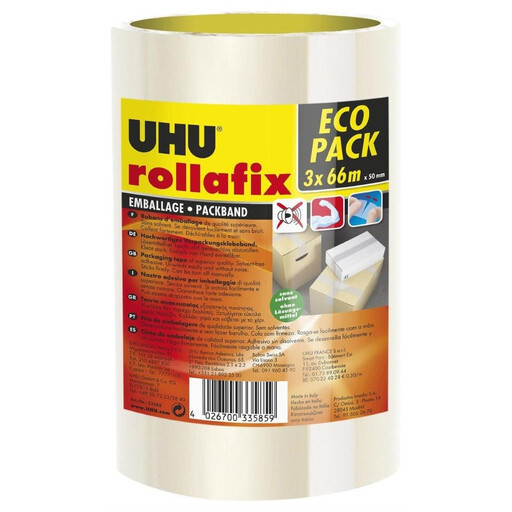
Why this choice suits this profile: With three 66 m rolls, this pack is suitable for small-scale removals, organising things at home and occasional despatches. Its 50 mm width matches the most common format for sealing boxes.
The product details mention a solvent-free formula, quiet unwinding and hand-tear capability. This makes it easier to check that the product genuinely suits the intended use, rather than relying on a vague performance claim.
Three 66 m rolls, a 50 mm width and a transparent finish that keeps markings visible.
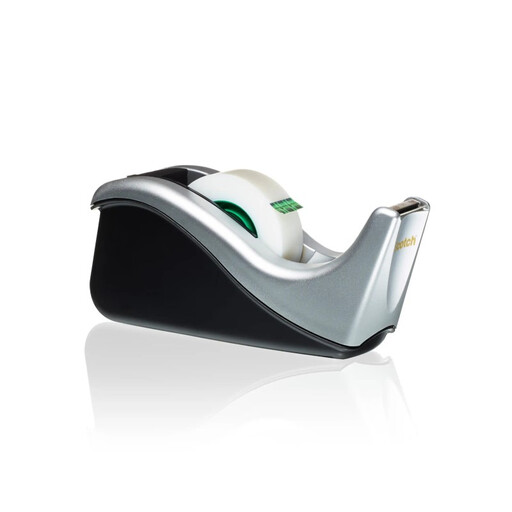
Why this choice suits this profile: This set is aimed at offices, students and households that regularly use tape for documents, gift wrapping or arts and crafts.
The weighted base helps prevent slipping while cutting, and the dispenser can be refilled. This means you avoid buying a complete set again each time.
Refillable dispenser, one-handed use, 19 mm x 33 m tape and stated compatibility with 2.54 cm cores.
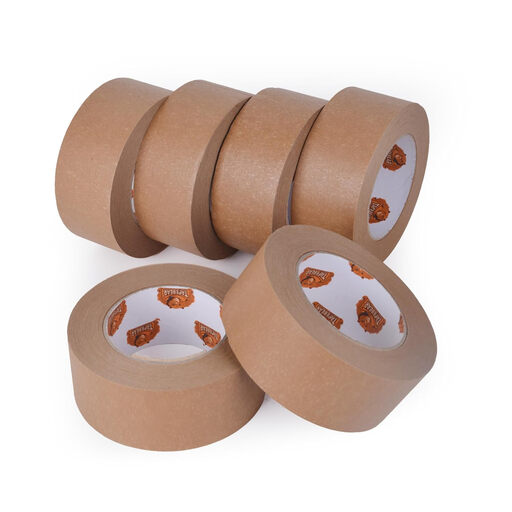
Why this choice suits this profile: People moving home, community groups and despatch professionals will appreciate its writable kraft surface, which is useful for quickly identifying the contents of boxes.
The product details specify that the uncoated kraft surface can be written on and that the tape tears by hand. However, check UK recycling guidance before putting the box in the recycling bin.
Six 50 mm x 55 m rolls, a writable surface and a stated composition with no plastic elements.
We have put together a comprehensive, real-time updated list of products that meet these demanding selection criteria and European safety regulations.
Parcel tape should offer a width suitable for the flaps, adhesion compatible with cardboard and enough length for the number of despatches planned. A transparent model keeps information visible, while brown tape blends in more with the packaging. For larger volumes, a dispenser makes application quicker and more consistent.
Storage life depends on the material, adhesive and ambient conditions. Keep rolls in their packaging, in a dry, temperate place away from sunlight. Before an important application, test the tape on a small area to check its adhesion and unwinding.
No. The paint, wall texture, age and length of time it is left in place all affect removal. Choose a model specified for the surface concerned, apply it without creases and remove it according to the manufacturer’s recommendations. On a delicate finish, test the tape first in an inconspicuous area.