
Livraison le jour même ou le lendemain

Qualité garantie

Débloquez vos offres de bienvenue: Livraison GRATUITE | Jusqu'à -80 % | 30 jours d'essai gratuits à JoyPlus
Téléchargez l'application
An adhesive tape can be used to fix, protect, insulate, repair or hold a dressing in place. But not all rolls are designed for the same purpose. Relying solely on colour, price or a promise of "extra-strong" can lead to a fixing that peels off, marks on a wall or unsuitable electrical insulation.
Here are the criteria to consider before buying, along with a selection of products suited to different everyday uses.
A double-sided adhesive tape may feel particularly tacky to the touch without actually being able to support a heavy object. The maximum load depends on the surface, temperature, setting time and how the product is applied.
For a permanent fixing, check the maximum load capacity stated by the manufacturer. This is not a guarantee that will hold on every surface. A dusty, damp, porous or freshly painted wall can significantly reduce adhesion.
Masking tape is used to mark off an area during painting work. It is not a substitute for an outdoor adhesive or a product designed for long-term fixing. The removal time stated on the packaging is not arbitrary: left in place for too long, the tape can become harder to remove or leave residue.
Standard models are generally intended for smooth surfaces in good condition. On fragile paint, wallpaper or a freshly painted surface, always test on an inconspicuous area first.
An outdoor adhesive tape must withstand very different stresses to one used in an office. Rain, ultraviolet rays, temperature fluctuations and dust can all affect the performance of the adhesive.
Conversely, a PVC electrical tape intended for indoor use should not be used in a damp environment or one subject to high heat if the product specification excludes it. Before any work on a cable, switch off the power supply and follow the manufacturer's instructions carefully.
Before applying an adhesive, the surface should generally be clean, dry and degreased. Glass, metal, certain plastics, painted wood and smooth walls all react differently.
For wall-mounting strips, check the usage restrictions carefully: some models are not suitable for wallpaper, delicate surfaces or unpainted surfaces. The removal method is equally important. A removable strip should be pulled slowly in the intended direction, not yanked perpendicular to the wall.
Width affects the contact surface area and the stability of the fixing. To mark off an area before painting, a tape of 24, 36 or 48 mm can be chosen depending on the width of the area to be protected. For repairing paper or sealing packaging, a clear adhesive tape of 19 mm will often be more practical.
Also remember to check the length of the roll. A 1.5 m length may be enough for a small fixing, while a 5 m roll will be better suited to several installations. For regular use, an integrated dispenser makes cutting easier and avoids wasting tape.
Medical products are not a substitute for treatment. In the event of irritation, a significant wound or doubt, remove the product and seek advice from a healthcare professional.
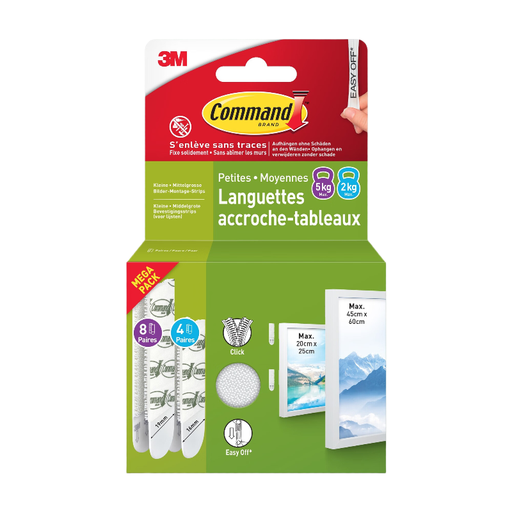
Why this choice suits this profile: This multipack includes 4 pairs of small strips and 8 pairs of medium strips, giving you the flexibility to fix different items around the home or office.
The different sizes prevent you from using a strip that is too small or unnecessarily large. Its removable design does, however, remind you to check the list of compatible surfaces.
A multipack comprising 4 small pairs and 8 medium pairs; removal designed to minimise holes and residue on suitable indoor surfaces.
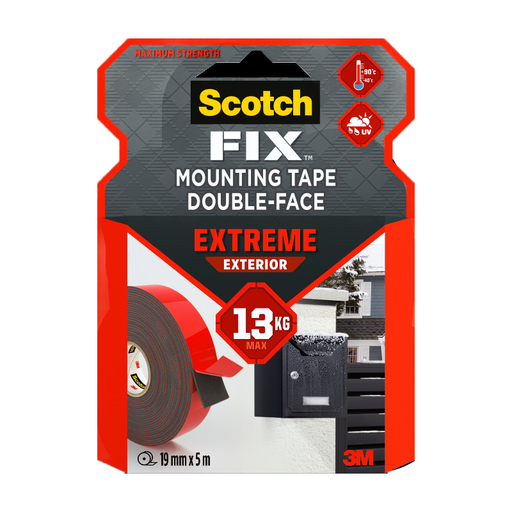
Why this choice suits this profile: This outdoor adhesive tape is designed for permanent fixings on suitable surfaces, particularly for decorative items or DIY projects.
The specification states resistance to weather, rain, sun and UV: this is therefore not an adhesive reserved for indoor use.
A 5 m x 19 mm roll, with a stated capacity of up to 13 kg depending on application conditions and the manufacturer's instructions.
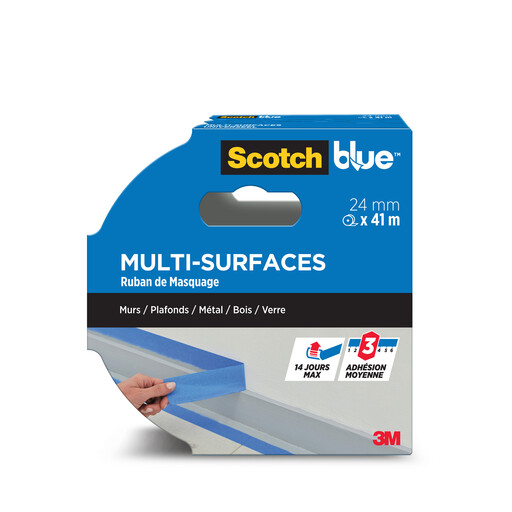
Why this choice suits this profile: Regular painters and DIYers benefit from a masking tape stated for walls, wood and metal, indoors and outdoors.
The stated removal time can be up to 14 days in direct sunlight, provided the surface is properly prepared and compatible.
Medium adhesion, UV resistance and a 41 m length for painting work and surface protection.
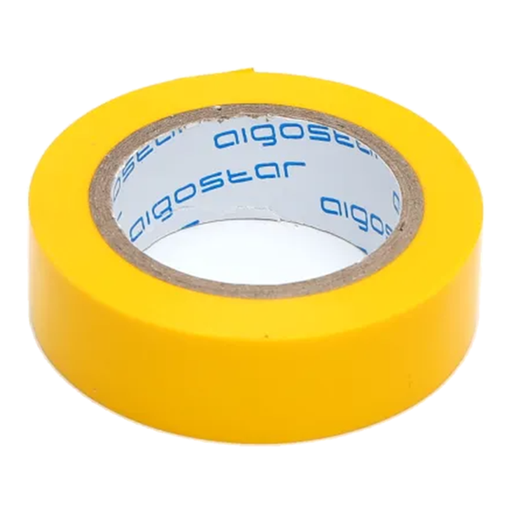
Why this choice suits this profile: This roll is suitable for DIY work, cable identification and indoor cable protection, once the power supply has been switched off.
The specification states that this tape is not intended for outdoor use or damp environments. A limit to respect to avoid unsuitable use.
A flexible PVC tape 0.13 mm thick, 17 mm wide and 10 m long; its yellow colour makes circuit identification easy.
We have put together a comprehensive, real-time updated selection of products that meet these demanding criteria, as well as European safety standards.
Clean the wall with a suitable product, let it dry, then apply the adhesive without touching the sticky part. Press firmly for the stated time and respect the setting time before hanging the item. Check that the weight of the item and the type of wall match the manufacturer's recommendations.
It depends on the model. Some standard tapes must be removed within two days, while multi-surface tapes can stay in place longer under certain conditions. Remove it slowly, keeping a steady angle, and avoid applying it to fresh paint without testing first.
An anti-blister strip is used to protect an area exposed to friction. It should not be applied to an already-formed blister or an open wound if the instructions forbid it. To hold a dressing in place, choose a medical tape or a strip specifically designed for that purpose. Follow the instructions, monitor the condition of your skin and stop using it if irritation occurs.