
Livraison le jour même ou le lendemain

Qualité garantie

Débloquez vos offres de bienvenue: Livraison GRATUITE | Jusqu'à -80 % | 30 jours d'essai gratuits à JoyPlus
Téléchargez l'application
Adhesive tape may seem simple to choose… until the day it comes loose, leaves marks or fails to withstand the intended use. Moving house, renovation, professional packaging or a minor repair: the type of adhesive matters just as much as the surface to be covered.
The most common mistakes are based on three misunderstandings:
The best approach is to start by defining the intended use, then check the surface, dimensions and limitations specified by the manufacturer.
Each tape category is designed for a specific purpose:
The width determines coverage and contributes to stability. A 48 to 50 mm roll is often suitable for packaging or sealing larger surfaces, while a 17 to 19 mm format is easier to handle for cables, office use or minor repairs.
The thickness also provides a useful indication, but it is not enough on its own to assess adhesion. The Aigostar insulation tape featured here measures 0.13 mm thick, 17 mm wide and 10 m long. Its flexible PVC makes it easy to wind around a cable.
For mounting, focus primarily on the stated load and conditions of use. A strip designed for a lightweight frame will not necessarily be suitable for a shelf or an item exposed to vibrations.
Before application, the surface should generally be clean, dry, dust-free and degreased. Glass, metal, tiles and smooth paint often provide more consistent adhesion than a porous, dusty or freshly painted wall.
Outdoor use requires a few additional checks. Rain, ultraviolet rays, temperature changes and condensation can reduce the adhesive’s hold. Even double-sided outdoor tape described as weather-resistant is not a universal solution. Observe the maximum load, setting time and instructions provided.
For floors, steps and entrances, choose a non-slip surface suited to the frequency of use. The edges should be pressed down carefully and checked regularly, particularly in damp or busy areas.
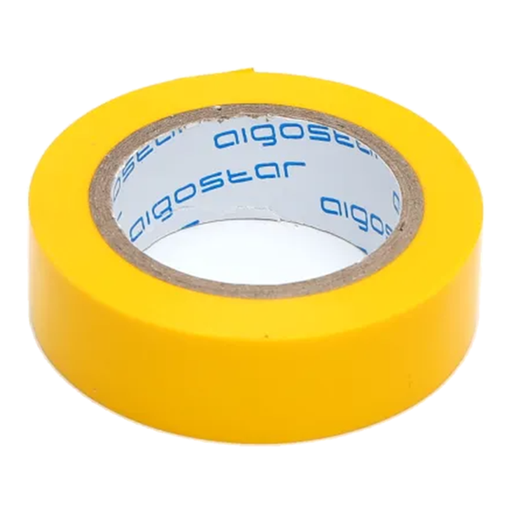
Why this choice suits this profile : The 10 m format is suitable for minor DIY jobs, circuit identification and protecting indoor, de-energised connections.
The dimensions and usage warnings are clearly stated: indoor use, a dry surface and the power switched off before application.
Flexible PVC, 17 mm width, 0.13 mm thickness and a yellow colour for identifying a circuit.
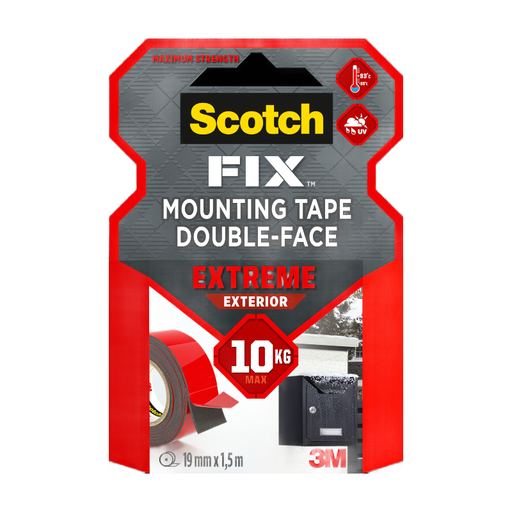
Why this choice suits this profile : This format is intended for outdoor mounting where permanent adhesion is required, particularly for decorative items or signage.
The product details state that it is intended for outdoor use and resistant to weather and UV rays. The stated maximum load is 10 kg.
Black 1.5 m x 19 mm roll, tool-free mounting and a design made to withstand both rain and sunlight.
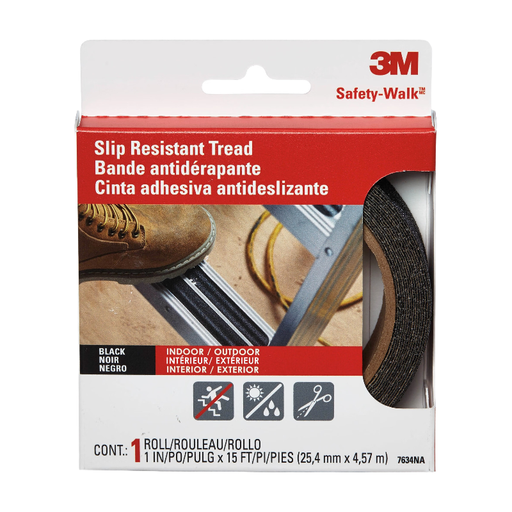
Why this choice suits this profile : Its self-adhesive, wear-resistant design is suitable for stairs, step stools, ramps and walkways.
It is designed for walkways and is easy to maintain. However, the surface must be stable, clean and dry before application.
4.5 m x 25 mm roll, suitable for indoor and outdoor use, with a self-adhesive surface and good wear resistance.
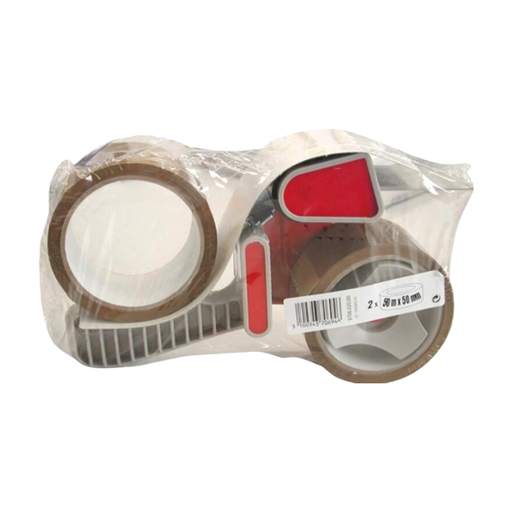
Why this choice suits this profile : The pack of two rolls with a dispenser makes it easier to seal boxes repeatedly at home, in the office or in a logistics environment.
The 48 mm format is suitable for box flaps, while the dispenser prevents uneven cuts during frequent use.
Two 50 m x 48 mm PP rolls, with a dispenser included for easy application.
We have put together a complete, real-time updated list of products that meet these demanding selection criteria and European safety regulations.
Clear adhesive tape is suitable for discreet repairs, labels and office use. For boxes, kraft adhesive tape makes identification easier thanks to its writable surface. In all cases, check the storage conditions: heat, direct light and moisture can affect the adhesive.
For a frame or lightweight decoration, no-drill mounting strips are generally more suitable than packing tape. Check the maximum load, compatibility with paint and any restrictions relating to wallpaper, freshly painted walls or porous surfaces.
Its lifespan depends on its material, temperature, humidity, exposure to UV rays and the mechanical stresses it undergoes. Tape applied to a poorly cleaned surface may come loose quickly. Store rolls in a cool, dry place and replace them if they become brittle, dry or misshapen.
No. Switch off the power before carrying out any work and check the condition of the cable. Insulation tape is used to insulate and protect cables in accordance with the manufacturer’s instructions, but it must never be regarded as permission to work on a live installation.