
Livraison le jour même ou le lendemain

Qualité garantie

Débloquez vos offres de bienvenue: Livraison GRATUITE | Jusqu'à -80 % | 30 jours d'essai gratuits à JoyPlus
Téléchargez l'application
An adhesive tape might seem easy to choose, but not all types are designed for the same jobs. Fixing a carpet, insulating a cable, preparing a wall before painting or securing a step all require very different characteristics. An adhesive that works well on a dry surface can lose all its grip in a damp room or outdoors.
Before you order, it's worth looking beyond the width and the price. Here are the criteria to check to avoid disappointing purchases and choose a tape suited to your environment.
A tape can stick instantly without lasting against temperature changes, vibrations or the weight of an object. This distinction is especially important for a strong adhesive tape, a double-sided model or a fixing intended for outdoor use.
Always check the intended use, any load, the duration of hold and the application conditions. A capacity expressed in kilograms is not a universal guarantee: it usually depends on the surface, the contact area and the preparation.
A masking tape designed for interior painting won't necessarily suit an exterior wall. Similarly, a water-resistant adhesive tape may work for a fixing exposed to moisture, without being able to withstand prolonged immersion.
Dust, grease, surface roughness and condensation all harm adhesion. Porous floors, crumbly walls and freshly painted surfaces need special attention.
High adhesion is ideal for holding a load, but it can also leave residue or pull off a delicate finish. For painting jobs, be sure to follow the recommended removal time. Scotch Masking – CLASSIC Straight Lines is described as being removable without leaving residue under certain conditions and for a limited period. The product sheet should always be your reference before each application.
The compatibility between the adhesive and the material is crucial: wood, metal, plastic, vinyl, carpet, glass and painted walls all react differently.
For outdoor use, look for information about rain, UV rays, temperature changes and humidity. Scotch Extreme Outdoor Double-Sided Tape is described as weather-resistant and UV-resistant, with a stated load of up to 10 kg depending on conditions. Another 5 m version claims a load of up to 13 kg. These figures should be treated with caution and verified on the packaging.
For a cable, choose an electrical insulation tape designed for that purpose. The Scotch Electrical Insulation Tape model is stated as flame-retardant and compliant with IEC 60454-3-1, available in several colours and with a stated voltage of up to 5,000 V. The Aigostar PVC tape, 10 m × 17 mm and 0.13 mm thick, is presented for indoor installations and circuit identification. Always cut off the power before any work and follow the rules applicable to electrical installations.
The length and width determine the coverage and precision of application. For carpet and vinyl tape, the Scotch Double-Sided Tape measures 20 m × 50 mm and claims a coverage of 12 m². It can be torn by hand, but the surface must be clean, dry and completely dust-free.
A careful application usually follows four steps:
On a delicate surface, start with a test in an inconspicuous area.
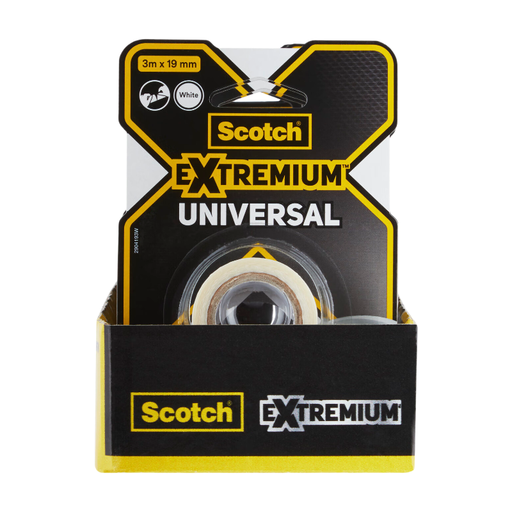
Why this choice suits this profile: A width of 19 mm and a length of 3 m are enough for small repairs, bundling cables or general protection around the house.
Its versatility means you don't need to choose a masking tape or floor adhesive for a one-off repair. The surface must still be clean and dry.
A multi-purpose tape, tearable by hand, suitable for everyday domestic and professional tasks.
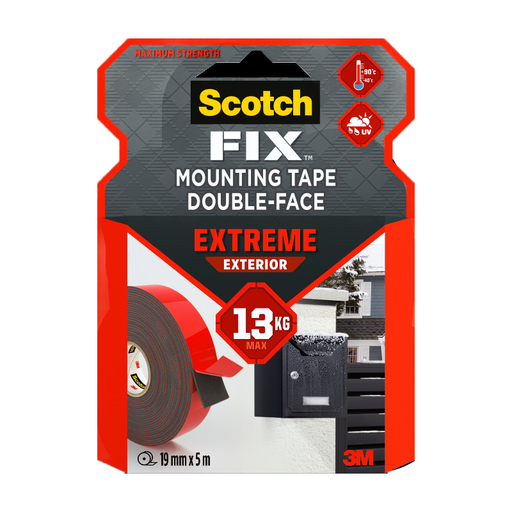
Why this choice suits this profile: Its 5 m length and outdoor design make it ideal for decorative fixing projects that need a permanent hold.
The product sheet details its stated resistance to rain, sun and UV, rather than just using the vague term 'strong tape'.
A permanent double-sided adhesive, capable of holding up to 13 kg depending on conditions, without drilling.
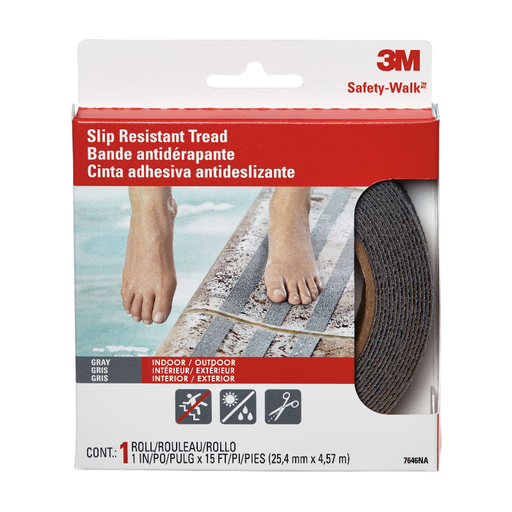
Why this choice suits this profile: Stairs, changing rooms, pool surrounds, boats and sports areas need a textured surface and an application suited to moisture.
It is presented for both indoor and outdoor environments, dry and wet. However, it should not be applied to an unstable, greasy or dusty surface.
A 4.5 m × 25 mm roll, with a self-adhesive backing and a surface designed to increase friction.
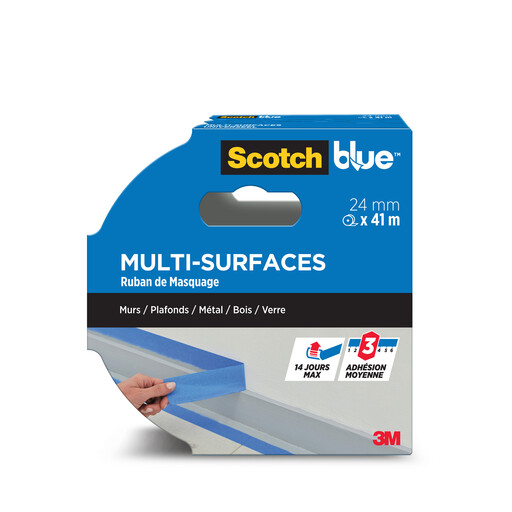
Why this choice suits this profile: Its 24 mm width and medium adhesion are suitable for walls, wood and metal for painting or decorating jobs.
The product sheet specifies medium adhesion and UV resistance, with removal stated as residue-free for up to 14 days under certain conditions.
A 41 m roll, usable indoors and outdoors, with stated compatibility with walls, wood and metal.
We have compiled a complete, real-time updated list of products that fully meet these strict selection criteria and European safety regulations.
It all depends on the product, the surface and its exposure. A masking tape is generally temporary, while an outdoor adhesive or anti-slip tape is designed to stay in place for longer. Inspect the edges regularly: if they lift, if the adhesive dries out or if the surface becomes unstable, replace the tape.
Pull slowly, preferably keeping a low angle to the surface. For a masking tape, follow the stated time and do a test first in an inconspicuous area. Residue can sometimes be removed with a product compatible with the surface, after checking its instructions.
A medical tape must never be replaced by a DIY adhesive. Mercurochrome Waterproof Microperforated Adhesive Bandage is presented for holding a dressing or plaster on the skin, while Mercurochrome Blister Prevention Tape is intended to prevent friction. These products are for external use only; do not apply them to an open wound or an already formed blister, and stop using them if irritation occurs.