
Livraison le jour même ou le lendemain

Qualité garantie

Débloquez vos offres de bienvenue: Livraison GRATUITE | Jusqu'à -80 % | 30 jours d'essai gratuits à JoyPlus
Téléchargez l'application
Fixing a skirting board, protecting a surface before painting, insulating a cable or repairing an object doesn't always call for the same product. Yet the adhesive tape and fixing glue aisle is packed with very different options: double-sided tape, masking tape, electrical insulation tape, acrylic sealant or no-nails fixing glue.
The most common mistake is to rely on the words "extra-strong" or "multi-purpose" without checking the surface, the environment or the weight it needs to bear. Here are the criteria to consider before you buy, along with a selection of products suited to several everyday uses.
A tape can stick immediately without being able to withstand long-term stress. A fixing exposed to vibration, moisture, temperature changes or UV rays needs a specially formulated product.
An extra-strong outdoor adhesive must be designed to withstand the elements. Conversely, a double-sided tape intended for a carpet or vinyl flooring is primarily meant for application on a clean, dry floor.
Dust, grease, moisture or freshly painted surfaces all significantly reduce adhesion. Some glues are also unsuitable for polyethylene, polypropylene, PTFE, silicone or flexible PVC.
Before applying a no-nails fixing glue, check that at least one of the two materials is porous, if the formula requires it. For an acrylic sealant, also check compatibility with glass, plastics and surfaces that will be permanently submerged.
A masking tape can be removed cleanly only within a limited time window, while a glue or sealant usually needs to reach its full strength before being put under load. Leaving a standard masking tape on for too long risks leaving residue or pulling off a delicate finish.
Start by deciding what you need to do:
The finish also matters. A clear tape is ideal for packaging, labels and small repairs where the adhesive needs to stay discreet.
The length and width determine the area you can cover, but also how easy it is to apply. A 20-metre roll that is 50 mm wide, for example, is enough for several flooring jobs. For a one-off repair, a shorter roll saves you from spending unnecessarily.
For sealants supplied in 280 g or 290 g cartridges, make sure you have a compatible gun and estimate the length of the joint based on its thickness. A wider tape makes masking large areas easier, but is less practical in tight corners.
Only rely on a load capacity if the conditions stated on the product page match your actual job: type of surface, temperature, setting time and application method. For outdoor fixing, look specifically for resistance to rain, sun and UV.
For any electrical work, always switch off the power. Some products mention compliance with IEC 60454-3-1 or carry a CE mark; these indications do not replace electrical safety rules or the need for a professional if the installation poses a risk.
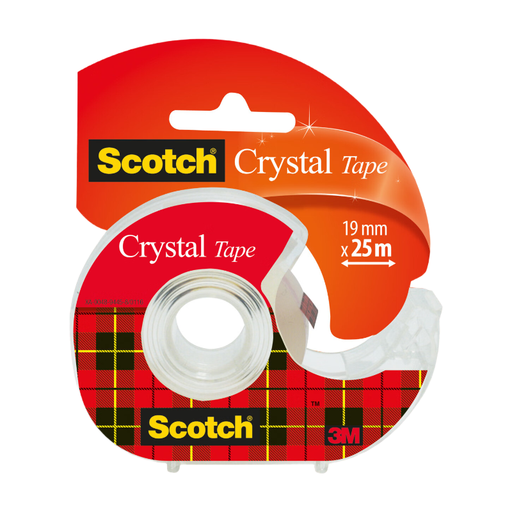
Why this choice suits this profile: Its hand-held dispenser and 25-metre roll are ideal for small packaging jobs, protecting labels and everyday repairs.
Clear, this tape is intended for everyday uses, rather than heavy-duty or outdoor fixing.
Clear finish, stated permanent adhesion and easy unwinding, no tool required.
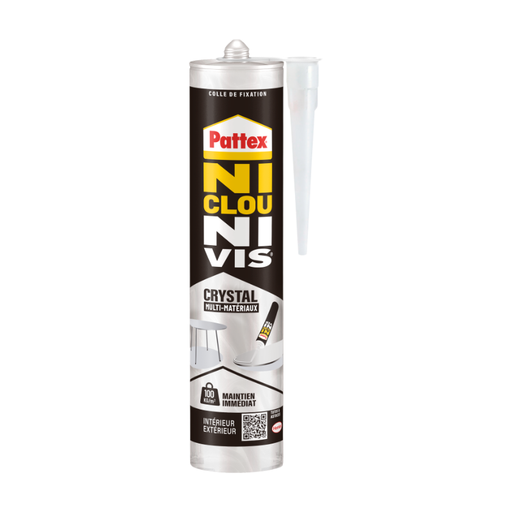
Why this choice suits this profile: Its clear finish lends itself to decorative projects on glass, mirrors, metal and some plastics, indoors and in sheltered outdoor areas.
The product page specifies incompatible surfaces and excludes total immersion, reducing the risk of misuse.
Hybrid polymer, gun application, repositionable for up to 15 minutes and stated resistance from −30 °C to +80 °C.
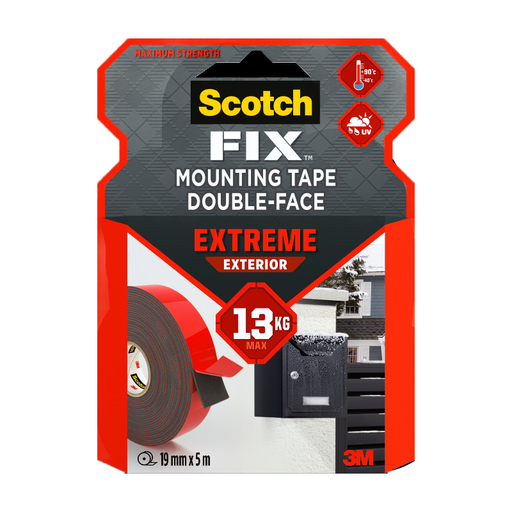
Why this choice suits this profile: This product is designed for outdoor fixing without drilling, for installing a decoration, a sign or an item on a wall or fence.
The product page mentions resistance to rain, sun and UV, unlike a standard indoor adhesive.
5-metre roll, 19 mm width and stated capacity of up to 13 kg depending on application conditions.
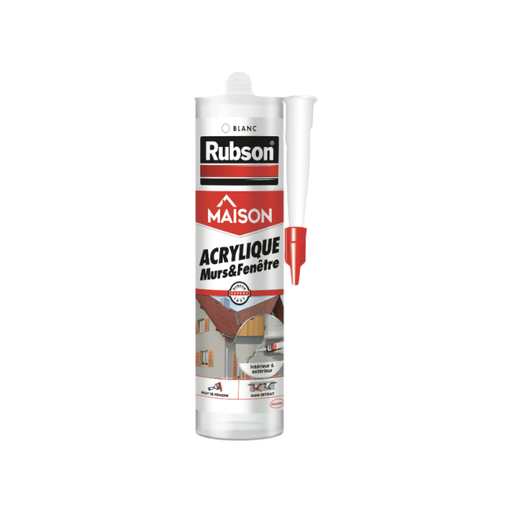
Why this choice suits this profile: Its cartridge is ideal for joints, cracks and seals around doors, windows, walls and ceilings during renovation work.
The product page clearly states incompatible materials, including glass, PE, PP and PTFE.
White acrylic sealant, usable indoors and outdoors, and paintable after drying.
We've put together a full, real-time selection of products that meet these demanding criteria as well as European safety standards.
Choose an extra-strong outdoor adhesive whose product page states resistance to weather and UV. Also check the stated load capacity, the type of surface and the time to wait before putting the fixing under stress. A clean, dry and stable surface is still essential.
It depends entirely on the type of tape, the surface, the temperature, the humidity and the load. Masking tape is designed to be removed relatively quickly, whereas a permanent adhesive is intended for long-term application. Always follow the manufacturer's recommendations and check the edges regularly.
No. Some glues require at least one of the materials to be porous, while hybrid polymers accept a wider range of surfaces. PE, PP, PTFE, silicone, acrylic glass or flexible PVC may still be excluded depending on the formula. Check compatibility before you buy and test on a small area.