
Livraison le jour même ou le lendemain

Qualité garantie

Débloquez vos offres de bienvenue: Livraison GRATUITE | Jusqu'à -80 % | 30 jours d'essai gratuits à JoyPlus
Téléchargez l'application
A chilly draft seeping through a window, a stubborn little leak under the sink, or simply the desire to modernise a wall without starting a major project… The adhesive seal seems like a miracle solution: fast, affordable, and accessible to everyone. Yet, disappointment is often just around the corner, with a seal that peels off after a few weeks or, quite simply, solves nothing at all.
This guide is here to help you see things more clearly, whether you're looking for an insulating foam seal for your windows, a waterproof butyl tape for your camper van, or an adhesive backsplash to give your kitchen a makeover. Together, let's break down the right products and the rookie mistakes to avoid.
Before we even talk about products, you need to understand why so many adhesive seals end up in the trash. Most of the time, the fault lies with three classic errors.
The Myth of "Universal" Adhesion An adhesive that peels off? That's problem number one. The cause is almost always the same: an incompatibility between the glue and the surface, or sloppy preparation. Dust, moisture, or grease residue are the sworn enemies of any adhesion. A product marketed as "all-purpose" will often prove useless on a porous surface or one subject to significant temperature fluctuations.
Premature Material Degradation A seal that yellows, cracks, or loses its flexibility in a few months is no longer useful. The culprit? A low-grade raw material, unable to withstand UV rays, moisture, or mechanical stress. For thermal insulation that lasts or a durable anti-leak solution, the composition of the seal is just as crucial as its adhesive.
Exaggerated Waterproofing Claims Be careful not to confuse "water-resistant" with "waterproof." A seal designed to block drafts will not survive prolonged immersion or water pressure. For critical applications (roofing, plumbing, boat hulls), it is imperative to turn to solutions specifically formulated for total waterproofing.
For an easy renovation and a result that lasts, three technical parameters should guide your choice.
To each need, its own material. Confusing them would be a mistake.
The success of an adhesive seal is 50% the product and 50% the application. For maximum adhesion, the golden rule is a clean, dry, and degreased surface. A simple wipe with isopropyl alcohol can make all the difference. Also, remember to check the manufacturer's recommendations for compatible materials (wood, metal, PVC, glass, etc.).
For use on a vehicle, a boat, or outdoors, the seal's ability to withstand vibrations and temperature swings is non-negotiable. A material that hardens in the cold or softens in the heat will lose all its sealing properties. Butyl and high-quality EPDM foams are generally the top performers in these extreme conditions.
Here are our recommendations, designed for specific projects and needs.
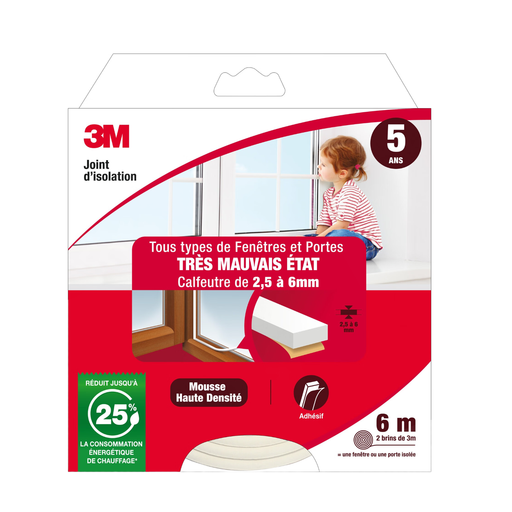
User Profile: The DIYer who wants to quickly improve their home's comfort. This foam seal is specifically designed to weatherstrip poorly fitted windows and doors, a simple solution for better thermal insulation.
Its high-density foam is designed not to compress and to retain its shape, thus preventing premature degradation. The powerful adhesive is optimised for common joinery surfaces (wood, PVC, aluminium).
Very simple installation without stretching. According to 3M, it helps reduce heating-related energy consumption and offers a lifespan of over 5 years in normal use.
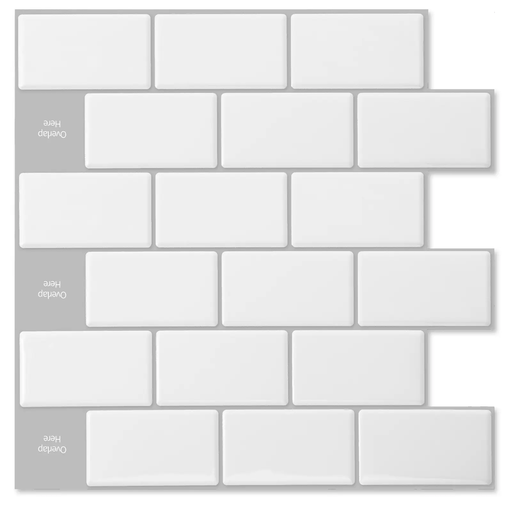
User Profile: Perfect for renters or homeowners who want to modernise a kitchen or bathroom without the dust or a big budget. This adhesive backsplash offers a 3D visual effect that mimics real tile.
Its thick material and raised gel texture resist yellowing. The industrial-grade adhesive ensures a strong, durable bond, even in a hot, humid environment like behind a hob.
Very simple "peel and stick" installation, can be cut with a utility knife to fit around outlets. The 3D effect is much more realistic than that of standard flat stickers.
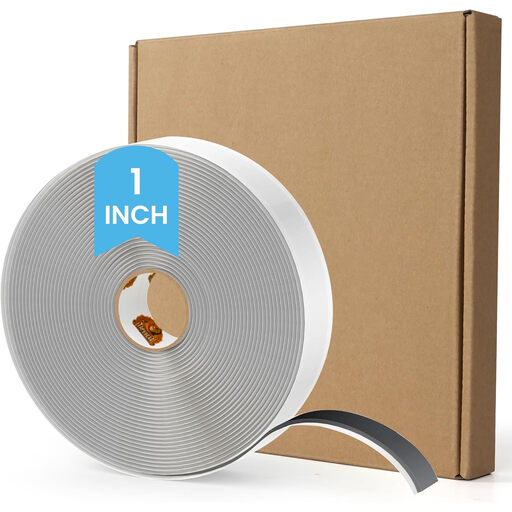
User Profile: For demanding users facing serious waterproofing issues on a camper van, boat, roof, or for plumbing repairs. This is a true professional-grade anti-leak solution.
This isn't just a "water-resistant" tape. The butyl rubber creates a 100% waterproof barrier and remains permanently flexible, which prevents it from cracking under the effect of vibrations or temperature changes.
Superior adhesion on a multitude of surfaces (metal, glass, plastic, wood). Its high flexibility allows it to perfectly conform to irregular shapes and difficult angles.
Discover our complete selection of products that meet our quality criteria and current safety standards.
It all depends on three factors: the quality of the material, the exposure conditions (indoor/outdoor, UV, moisture), and the quality of the application. A good quality insulating foam seal can last more than 5 years indoors. A well-applied waterproof butyl tape can last for decades because the material does not harden.
It depends on the material. Foam seals can sometimes be painted, but the paint may crack over time with movement. On the other hand, butyl or silicone seals are generally not paintable, as paint does not adhere to their flexible surface. It's better to choose a seal in the right colour from the start.
Patience is your best friend. Start by gently heating the seal with a hairdryer to soften the adhesive. Then use a plastic scraper (never a metal one, to avoid scratches!) to peel it off bit by bit. For stubborn adhesive residue, a mild solvent like isopropyl alcohol or an adhesive remover will do the trick. Always remember to test on a small, inconspicuous area before you begin.