
Livraison le jour même ou le lendemain

Qualité garantie

Débloquez vos offres de bienvenue: Livraison GRATUITE | Jusqu'à -80 % | 30 jours d'essai gratuits à JoyPlus
Téléchargez l'application
Want to give your kitchen a makeover without starting a major renovation or emptying your bank account? It's an appealing project. The adhesive splashback has emerged as a miracle solution, both practical and stylish. The only catch: the market is flooded with products of wildly uneven quality. The gap between the promise of an "easy makeover" and reality can sometimes be immense. The risk? Ending up with an adhesive that peels off at the first puff of steam, colours that fade, or a surface that's impossible to clean.
To avoid disappointment, here are the 3 most common pitfalls that could ruin your budget-friendly kitchen remodel project:
To make the right choice, you need to look beyond the pattern and focus on concrete technical criteria.
To ensure the longevity and aesthetic appeal of your installation, three parameters must be closely inspected. They will help you distinguish a product built to last from a simple, short-lived gimmick.
The manufacturing material is the heart of the matter: it determines the durability, appearance, and ease of cleaning of your splashback.
This is the non-negotiable criterion, whether for the kitchen or the bathroom.
The format influences both the ease of installation and the final aesthetic result.
To help you see more clearly, here are a few options that exemplify these criteria, suited for different needs and projects.
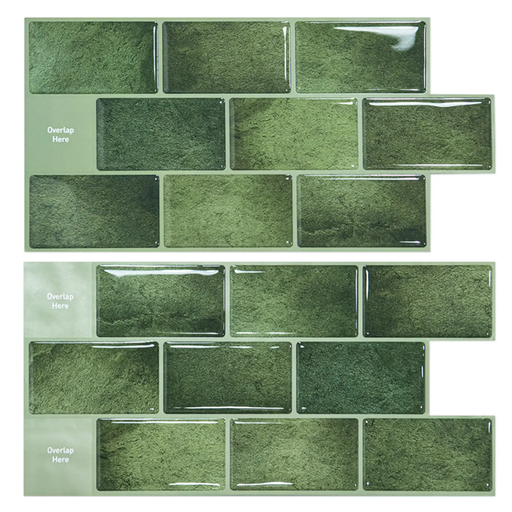
Why we love it: Perfect for effortlessly embracing the adhesive subway tile trend. Its forest green colour adds an instant touch of modern freshness to the kitchen.
The surface layer of 3D epoxy resin creates a real texture, both visually and to the touch, setting it apart from the flat, "cheap" look of simple printed stickers.
The 30x30 cm panel format allows for quick coverage and minimises the number of joints, which greatly simplifies both installation and cleaning.
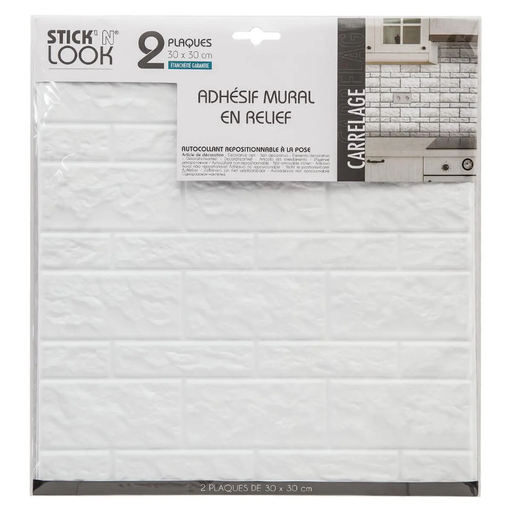
Why we love it: Perfect for those seeking a more classic or rustic style with a white stone effect. Its robust PVC material makes it perfectly suitable for use as a splashback.
Its durable PVC composition ensures a smooth, non-porous surface. The result: easy cleaning and good resistance to grease stains, a far cry from low-end stickers that soak up everything.
The faux stone design adds subtle texture and elegance, transforming a simple wall into a decorative feature in its own right.
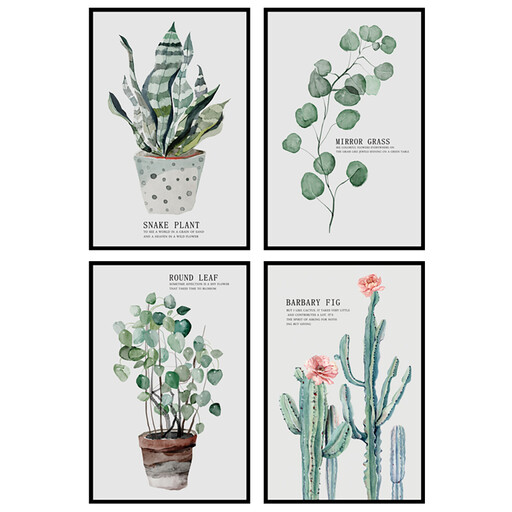
Why we love it: For those who don't want to cover an entire wall but rather add an artistic touch. This type of sticker is perfect for decorating a section of a wall, a door, or a piece of furniture.
This product is purely decorative. By limiting it to this use, you avoid the trap of using it in an unsuitable area like **behind a hob**, where its heat resistance would be clearly insufficient.
Its purely decorative purpose offers immense creative freedom at a minimal cost. It's a great way to personalise a space without committing to a full renovation.
Explore our full, up-to-date selection of products that meet our quality criteria and safety standards.
Yes, but under one crucial condition: you must choose a model specifically designed to withstand heat. Always check the manufacturer's technical sheet. In general, a PVC or aluminium adhesive wall panel will be much more suitable than a simple vinyl sticker. It is also crucial to respect a safety distance of at least 15 cm between the heat source (especially for gas hobs) and the splashback.
Its longevity depends on the product's quality, the preparation of the surface, and the conditions of use. A high-quality adhesive kitchen tile, applied to a clean, dry, and smooth wall, can last for several years without peeling or fading. Conversely, low-end models can show signs of wear within the first few months.
Yes, most quality adhesive splashbacks are designed to be removed without leaving residue. The trick? Gently heat the surface with a hairdryer to soften the glue. The adhesive will then peel off much more easily, minimising the risk to the original surface (tiles, smooth paint, etc.). Be careful, however: on a wallpapered or fragile painted wall, damage is still possible.