
Livraison le jour même ou le lendemain

Qualité garantie

Débloquez vos offres de bienvenue: Livraison GRATUITE | Jusqu'à -80 % | 30 jours d'essai gratuits à JoyPlus
Téléchargez l'application
Hanging a picture, towel or storage accessory without getting the drill out is very handy, especially in rented accommodation or a student room. But not all adhesive hooks without drilling are created equal, and they’re not all suited to the same uses. Misjudging the weight, using an incompatible surface or rushing the installation can lead to a fall, sticky marks or a product that needs replacing sooner than expected.
Here are the criteria to check before choosing an adhesive wall hook, mounting strip or double-sided tape.
The capacity shown on the packaging usually assumes specific conditions: a smooth, clean and dry surface, the recommended installation time and a properly distributed load. It doesn’t guarantee the same result on a textured wall, flaking paint or a damp surface.
To hang wall décor without unpleasant surprises, always allow a safety margin. An item weighing 1 kg shouldn’t be hung from a fix rated for exactly 1 kg, especially if it will be handled regularly.
Adhesive products generally work best on glass, metal, tiles, varnished wood or smooth, stable paintwork. Wallpaper, textured plaster, crumbly walls, unfinished wood and greasy surfaces are much riskier.
Even a wall hook advertised as ‘damage-free’ can leave a mark if the paint comes away when you remove it. Check the manufacturer’s list of compatible surfaces and, if possible, test it somewhere discreet.
Sticking on a fix and immediately hanging a heavy item from it is a classic mistake. The surface needs to be dust-free, degreased and completely dry. Depending on the product, you may also need to press firmly for several seconds, then wait before loading the fix.
Removal needs just as much care: pulling it sharply towards you could strip the paint. If there’s a pull tab, it’s generally best to pull it slowly in the direction shown.
Start by weighing the item, especially if it’s a framed picture with glass, a mirror or a metal accessory. Then check the maximum weight limit per hook or pair of mounting strips. When hanging a picture without drilling, weight distribution is crucial: two fixing points can reduce movement, as long as the fix and strips are positioned correctly.
The width and thickness of the fix matter too. A strip that’s too narrow offers less surface contact. On the other hand, a very thick strip may leave a visible gap between the wall and the item.
In a bathroom or kitchen, choose a fix designed for damp environments. For a door, cupboard or item you remove often, opt for a repositionable hook or a model with a replaceable strip.
Reusable products also need to be maintained in accordance with the instructions. Washable gel tape may regain some of its adhesion after rinsing and air-drying, but its lifespan will depend on dust, temperature and the surface.
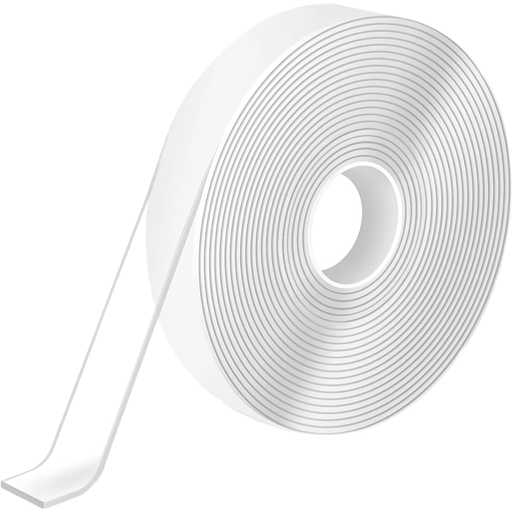
Why it suits this profile : This tape is ideal for small storage projects and fixing cables, decorations or accessories to smooth surfaces. The roll format lets you cut just the length you need.
At 3 metres long and 1.3 cm wide, it lets you use the right amount of tape for each item, rather than buying a different hook for every job. The surface must still be clean, dry and smooth.
Clear acrylic gel, washable and reusable tape when used as directed by the manufacturer, with removal designed to minimise residue.
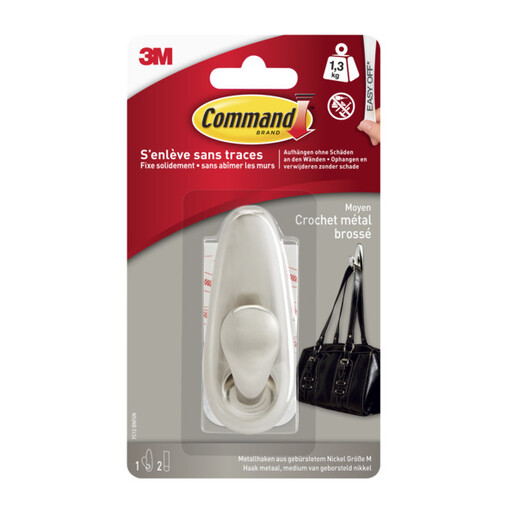
Why it suits this profile : Its brushed nickel finish fits easily into a hallway, bathroom or bedroom where the hook will be on show. It has a stated weight limit of 1.3 kg.
The weight limit is clearly stated. The system also calls for a new adhesive strip when reinstalling the hook, rather than reusing a strip that’s already worn.
Brushed nickel finish, tool-free installation on several smooth surfaces and removal designed to leave no holes or residue when used as directed.
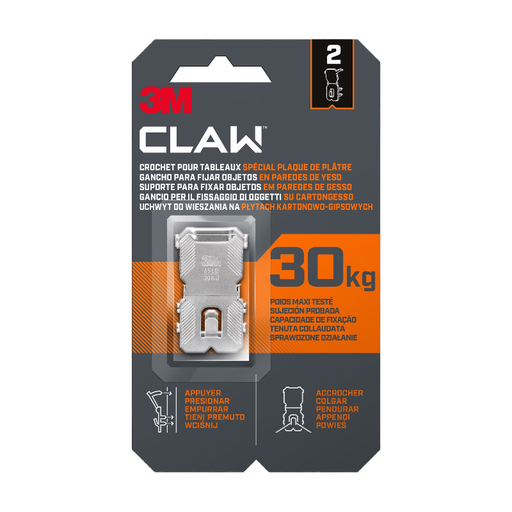
Why it suits this profile : This system is designed for hanging pictures, mirrors and heavy decorations on plasterboard. With two hooks, its stated weight limit can reach 30 kg when used as directed by the manufacturer.
Don’t mistake it for an adhesive wall hook: its steel claws fit into the plasterboard. This means it can’t be used on tiles, concrete or solid walls.
Tool-free installation, designed for plasterboard, with a stated capacity of up to 30 kg using two hooks.
We’ve put together a comprehensive, regularly updated list of products that meet these strict selection criteria, as well as European safety requirements.
Avoid areas exposed to high temperatures, splashes of water or vibrations, unless the manufacturer says the product is designed for these conditions. For a valuable item, or one that could injure someone if it fell, a mechanical fixing is still the better choice.
How long they hold depends on the weight, surface, humidity, temperature and quality of the installation. A hook fitted correctly to a smooth surface can stay in place for a long time, but check it regularly and replace any strip that’s become misshapen or covered in dust.
Most models aren’t recommended for wallpaper, textured walls or crumbly surfaces. The adhesive may catch on the covering and tear it when removed. Always check which surfaces are suitable and, where possible, test it in a discreet spot.
On a smooth surface, mounting strips rated for the picture’s weight may be suitable. On plasterboard, a claw hook such as the 3M CLAW is another option, but it leaves small holes in the surface. In every case, weigh the picture, follow the stated weight limit and allow a safety margin before installation.