
Livraison le jour même ou le lendemain

Qualité garantie

Débloquez vos offres de bienvenue: Livraison GRATUITE | Jusqu'à -80 % | 30 jours d'essai gratuits à JoyPlus
Téléchargez l'application
Hanging a picture frame, organising kitchen utensils, or putting up a towel shouldn't have to mean drills, dust, and irreversible holes in your walls. The adhesive hook is a game-changing solution, especially for renters or decor enthusiasts who love to change things up on a whim. The problem?: the market is flooded with broken promises that often end in disaster. A frame crashing to the floor, a chunk of paint torn away, an adhesive that never really stuck… sound familiar??
To avoid throwing your money away, here are the most common pitfalls to watch out for.
A few simple checks are all it takes to avoid these disappointments. A smart choice will guarantee a drill-free wall mounting solution that is both secure and reversible.
The load capacity indicated on the packaging is the number one criterion, but you need to know how to interpret it. This weight is valid for a perfectly smooth, clean, and dry surface.
Not all walls are created equal when it comes to adhesives. Before buying, identify the type of surface where you want to install your adhesive wall hook.
A hook intended for a bedroom doesn't face the same challenges as a bathroom hook or an outdoor model.
To help you make an informed decision, we've matched common use cases with suitable solutions, taking into account the reliability criteria we've discussed.
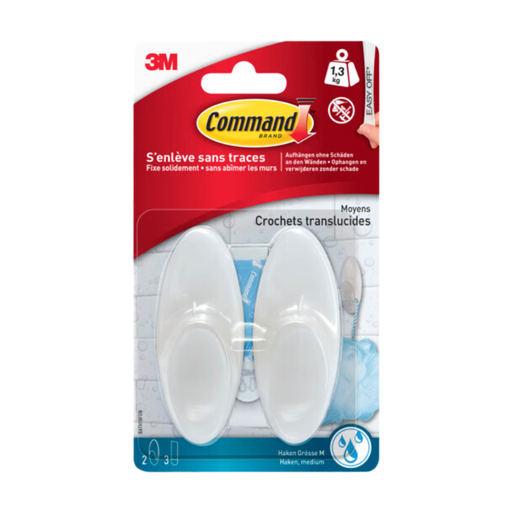
The user profile : Ideal for those seeking a discreet, all-purpose solution to organise an entryway, kitchen, or office. Perfect for keys, tea towels, or small everyday accessories.
Its 1.3 kg capacity is realistic for lightweight items. Most importantly, its pull-to-release strip system has a proven track record : it won't damage compatible surfaces (painted walls, wood, tile).
Its frosted translucent design makes it nearly invisible on many surfaces. The clean removal allows you to reorganise your space endlessly, completely worry-free.
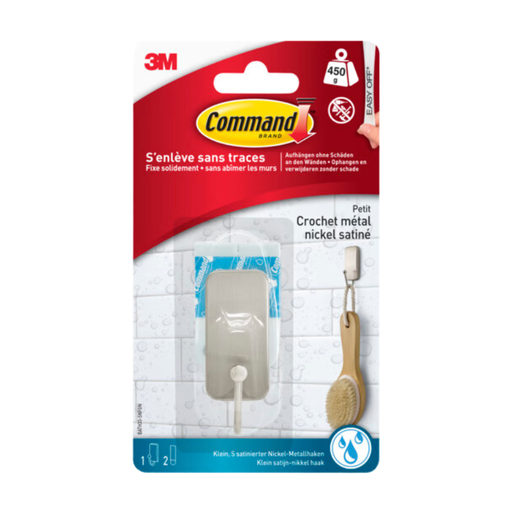
The user profile : Designed for those who need a mount that truly holds up in the bathroom or shower, where classic adhesives fail. Ideal for washcloths, small towels, or shower squeegees.
It includes adhesive strips specially formulated to resist water and humidity, preventing premature detachment caused by steam and splashes.
Its satin nickel metal finish combines elegance with durability. It's the perfect alternative to suction cups that always end up falling off.
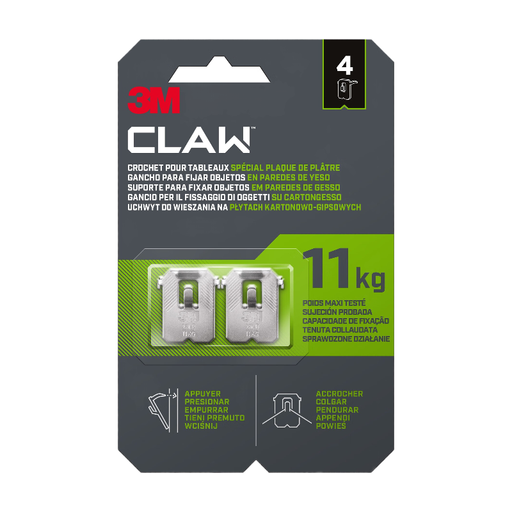
The user profile : For those who want to hang heavy items (mirrors, large frames, decorative shelves) without pulling out the drill and without having to find studs in the walls.
This system doesn't rely on a simple adhesive. Its hardened steel claws anchor directly into drywall, providing a real and impressive load capacity that is light-years ahead of a standard adhesive mount.
It supports up to 11 kg and installs with just your thumb—no tools required. It's the most robust solution for a drill-free picture hanger when you want to hang a statement piece.
We have curated a full range of products that meet our selection criteria and safety standards.
For hooks with a stretch-release tab (like those from the Command brand), the secret is to pull the tab veeery slowly, straight down and parallel to the wall. Never pull the hook towards you?: that's the surest way to rip off the paint. For other types of adhesives, you can gently heat the area with a hairdryer (on a warm setting) to soften the glue before carefully peeling the hook off.
In most cases, the plastic or metal hook itself is reusable. The adhesive strip, however, is single-use. To reuse it, you'll need to buy compatible replacement strips, making sure to choose the right format (size and water resistance, if necessary).
The lifespan depends on several factors?: the quality of the initial installation, adherence to the maximum load, and the environment. A well-placed hook on a suitable surface in a stable environment (without major temperature or humidity changes) can last for several years. In a bathroom or outdoors, its lifespan may be shorter due to the more demanding conditions. We recommend checking its hold from time to time, especially if it's supporting a valuable or fragile object.