
Livraison le jour même ou le lendemain

Qualité garantie

Débloquez vos offres de bienvenue: Livraison GRATUITE | Jusqu'à -80 % | 30 jours d'essai gratuits à JoyPlus
Téléchargez l'application
Want to hang a towel, a bag, a lightweight plant or a decoration without getting the drill out? Adhesive hooks that require no drilling are a practical solution, especially if you’re renting or making temporary changes to your home. But not every design is suitable for every surface or load.
Before ordering wall hooks, there are three things to watch out for.
Nail-free hooks generally adhere best to a smooth, clean, dry and grease-free surface. Glass, metal, tiles, stainless steel and some sound painted surfaces are among the materials they’re commonly recommended for.
Avoid wallpaper, rough walls, textured render, brick, unfinished wood, flaking paint, fabric and damp surfaces. In a bathroom, wipe the area clean and let it dry completely before fitting the hook. For an adhesive towel hook, you should also take steam and water splashes into account.
Compare the weight of your item with the capacity stated by the manufacturer, and leave yourself a safety margin. A dry towel and a wet towel don’t place the same strain on a hook. Likewise, placing a bag on it gradually puts less strain on the hook than hanging an object on it suddenly.
The product listings featured here include stated capacities of 450 g, 1.3 kg, 2.2 kg or up to 5 kg per hook, depending on the model. These figures aren’t a universal guarantee: always follow the manufacturer’s instructions, and don’t hang anything heavy, fragile or likely to cause injury if it falls.
Removable adhesive is generally taken off by slowly pulling the tab in the direction indicated, often downwards. Don’t pull the hook straight towards you: this could tear or damage the paint.
Fitting also takes a little patience. Some models recommend waiting several hours, or even 24 hours, before hanging anything heavy. This is especially helpful for marks-free wall hooks fitted in a hallway, kitchen or bathroom.
The following models cover a range of uses, from everyday storage and decoration to damp rooms and heavier loads. Capacity and compatibility information is based on the available product listings.
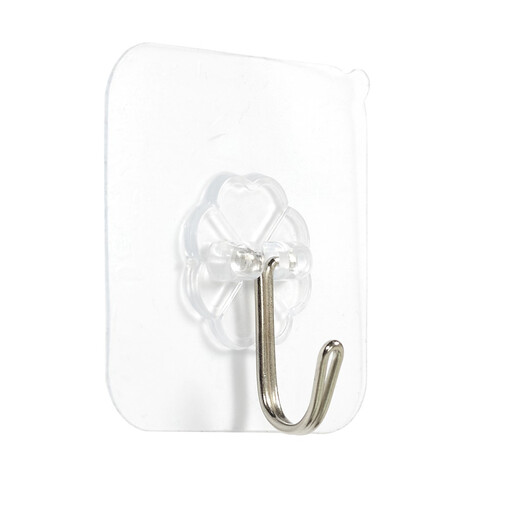
Why it’s a good fit for this profile: This pack of 10 hooks is ideal when you’re setting up a flat for the first time, with handy places for them in the hallway, kitchen, bedroom or bathroom.
The product listing recommends fitting it to a clean, dry surface, removing it using the tab and waiting 24 hours before hanging anything heavy.
Pack of 10 repositionable hooks, with a stated capacity of up to 5 kg per hook, depending on the conditions of use.
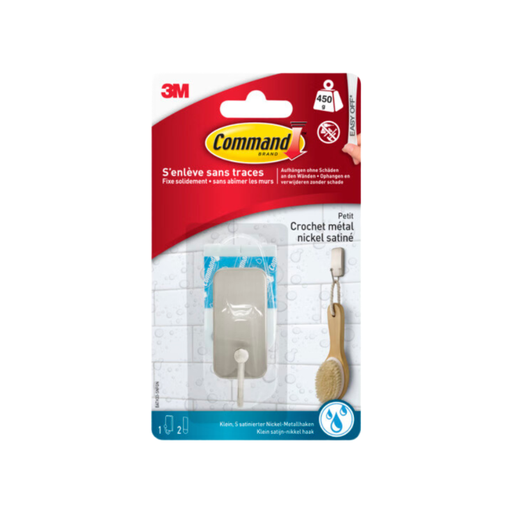
Why it’s a good fit for this profile: Its satin finish and double hook look right at home in a bathroom or kitchen where style matters just as much as storage.
The product listing specifies water-resistant strips and highlights surfaces to avoid, such as wallpaper and textured materials.
Double hook, satin nickel finish, water-resistant adhesive strips and tool-free removal.
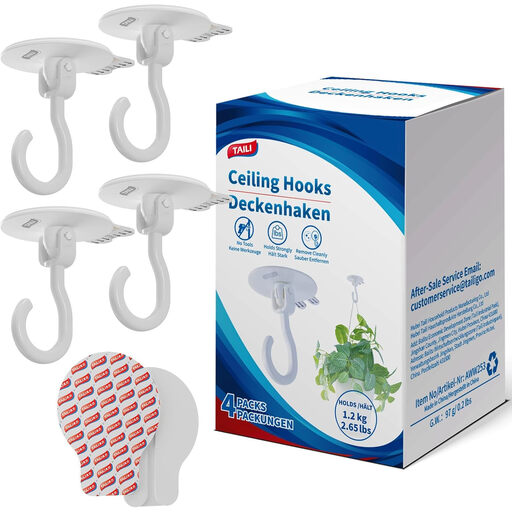
Why it’s a good fit for this profile: The adjustable design is ideal for lightweight decorations, fairy lights, small plants or a no-drill ceiling installation.
The product listing limits use to smooth surfaces and states a maximum load of 2.6 lb per hook, or around 1.18 kg.
180° vertical adjustment, 360° rotation, four hooks and five adhesive strips included.
We’ve put together a comprehensive, regularly updated selection of products that meet these exacting criteria and European safety standards.
Yes, some models are designed for damp environments, such as Command hooks with their water-resistant strips. However, they must be fitted to a smooth, dry and compatible surface. Unless the product listing says otherwise, avoid areas directly exposed to splashes or a stream of water.
It depends on the quality of the strip, the temperature, humidity, the weight being hung and the condition of the surface. Check the hook regularly, especially if it’s holding a wet towel, a bag or an item above a walkway.
Removal can be clean if you follow the instructions and use the hook on a suitable surface. This promise doesn’t automatically apply to wallpaper, delicate paintwork, textured walls or dusty surfaces. To reduce the risk, try an inconspicuous spot first and never exceed the stated weight limit.