
Livraison le jour même ou le lendemain

Qualité garantie

Débloquez vos offres de bienvenue: Livraison GRATUITE | Jusqu'à -80 % | 30 jours d'essai gratuits à JoyPlus
Téléchargez l'application
Whether you're a renter, a student, or just want to keep your walls pristine, finding a simple, reversible storage solution can be a real challenge. The adhesive hook promises effortless organization: goodbye to drills, holes, and dust. However, the market is flooded with options offering wildly inconsistent performance, and the wrong choice can quickly lead to frustration.
Before you buy, it's best to understand the common pitfalls that lead to buyer's remorse. By avoiding them, you can be sure to choose an adhesive wall mount that will actually live up to its promises.
To avoid these mishaps, a few key points deserve your attention. These are the true guarantees of a no-drill hook's performance and reliability.
Load capacity is the number one criterion, but it should be taken with a grain of salt. A heavy-duty adhesive hook will only live up to its promise if the adhesive is right for the surface.
The material affects both durability and aesthetics. An adhesive wall hook isn't just a functional item; it's also a part of your decor.
Rather than an endless list, we've selected products that meet specific use cases, based on performance and reliability criteria.
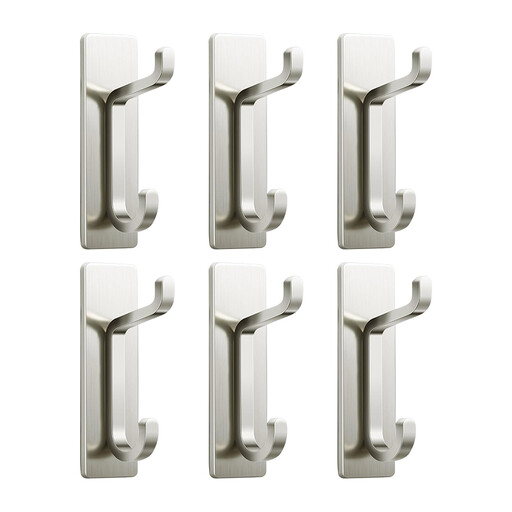
Why we chose it: Ideal for those looking for a versatile and cost-effective solution to organize multiple spaces (entryway, kitchen, office). The six-pack allows you to meet multiple needs with a single purchase.
The stainless steel design prevents rust and breakage, a common problem with low-quality plastic hooks. The adhesive is designed for a strong hold without being overly aggressive, limiting risks on non-fragile surfaces.
Its value for money is its strong suit. The stainless steel material ensures much better durability than plastic for everyday use (keys, small accessories, dish towels).
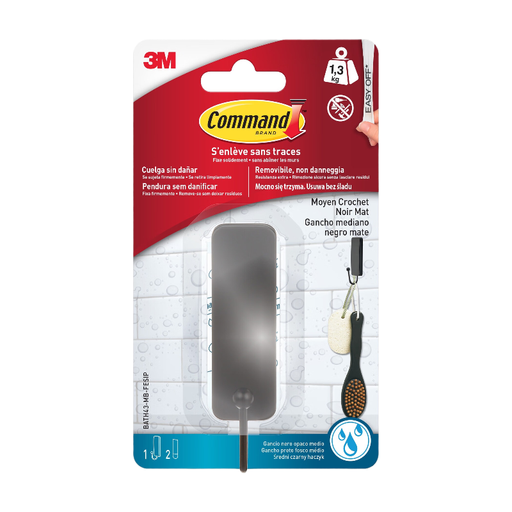
Why we chose it: Designed specifically for humid environments, it's perfect for hanging bathrobes or towels near the shower. Its modern matte black design fits elegantly into contemporary bathrooms.
It sidesteps the pitfall of humidity incompatibility. Its product details explicitly mention water-resistant strips and an adhesive technology (3M) designed for clean removal, thus preventing damage to tile or painted bathroom walls.
Its water resistance and 1.3 kg load capacity are realistic and suited for practical use in a humid environment. The damage-free removal technology provides peace of mind for renters.
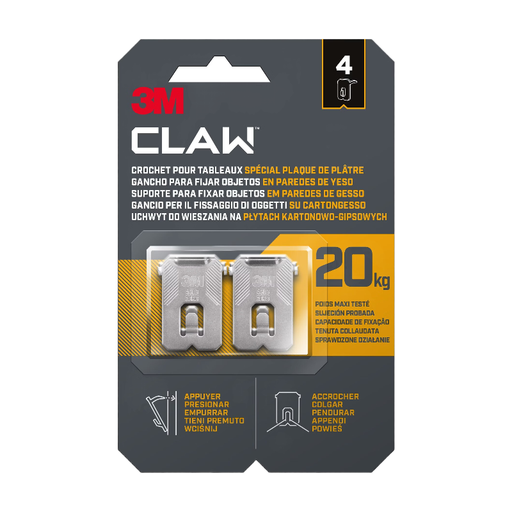
Why we chose it: For those who need to hang heavy objects (mirrors, frames, wall decor) and for whom a simple adhesive hook is not enough. It's a no-drill alternative that offers a very high load capacity on drywall.
It bypasses the maximum load pitfall, often overstated on adhesives, by relying on a different technology: steel claws that lock into the drywall. It provides a reliable solution where adhesives reach their limits, without needing anchors or screws.
Its load capacity of up to 20 kg is its key strength. Installation is tool-free, requiring only a push of the thumb, which places it in the category of simple and low-damage mounting solutions.
We have compiled a complete and up-to-date selection of products that meet our strict selection criteria and safety standards.
Most manufacturers recommend waiting at least one hour after application before hanging an object. This waiting period allows the adhesive to bond properly with the surface and reach its optimal load capacity. For adhesives intended for humid environments, this period can be extended to 24 hours. Always check the instructions provided with the product.
Yes, provided you choose the right model. A wet bath towel can weigh between 1 and 1.5 kg. Opt for an adhesive towel hook specifically designed for bathrooms, with a load capacity of at least 2?kg and water-resistant adhesive strips. A metal hook (stainless steel or aluminum) will be more durable than a plastic one.
The method depends on the type of adhesive. For hooks with a stretch-release tab (like those from the Command brand), simply hold the hook and slowly pull the tab straight down, parallel to the wall. For other adhesives, gently heating the base of the hook with a hairdryer can help soften the glue. Then, use dental floss or a thin plastic scraper to gently pry it off the wall. Avoid pulling it sharply towards you, as this is what usually causes damage.