
Livraison le jour même ou le lendemain

Qualité garantie

Débloquez vos offres de bienvenue: Livraison GRATUITE | Jusqu'à -80 % | 30 jours d'essai gratuits à JoyPlus
Téléchargez l'application
The adhesive hook: a promise of simple mounting, with no drills or wall plugs. However, this seemingly convenient solution can quickly turn into a nightmare: a damaged wall, a picture frame crashing to the floor, a security deposit at risk… Fortunately, these mishaps aren't inevitable. This guide is here to give you the keys to making a smart choice and help you avoid the most common marketing traps.
The 3 mistakes to avoid when choosing an adhesive hook:
To avoid these disappointments, it's better to rely on objective technical criteria than on advertising slogans. Here are the points to check before you head to the checkout.
The term “heavy-duty adhesive hook” should be taken with a grain of salt. The displayed weight almost always corresponds to a static load on an ideal, perfectly prepared surface.
Not all adhesive strips are created equal. The choice depends on the room where the hook will be installed.
Surface preparation is just as crucial: it must be clean (wiped with isopropyl alcohol, not a household cleaner that leaves a greasy film), dry, and smooth.
Beyond function, aesthetics matter. The adhesive wall hook is no longer just a utilitarian object; it's part of the decor.
Rather than a random list, here is a selection of models that meet specific needs, based on the reliability criteria we've just discussed.
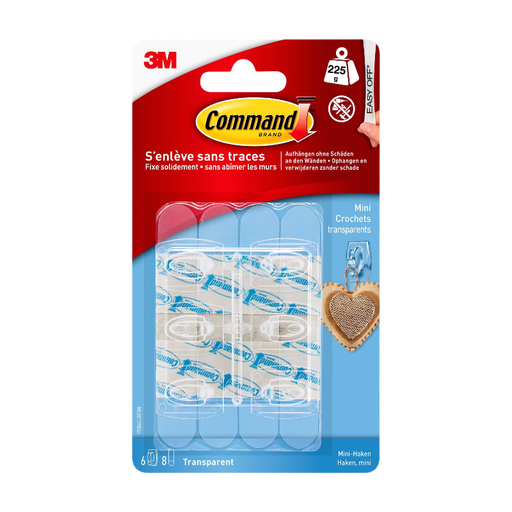
Our take: Perfect for seasonal decorations, string lights, or calendars. Its transparency makes it nearly invisible, preserving the aesthetic of your wall.
Its 225 g (? lb) capacity is clearly stated for lightweight objects, preventing any risk of overloading. Its adhesive system ensures a clean removal that won't damage paint.
Sold in multi-packs, it offers a cost-effective and versatile solution for organising a multitude of small items. Its discreet design is its greatest asset.
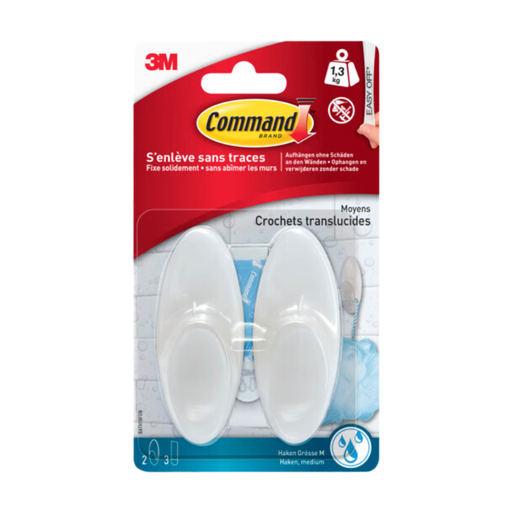
Our take: Specifically designed to hang a towel, robe, or accessories in damp environments where classic adhesives fail. It's the reliable solution for shower tile or bathroom backsplashes.
It uses specially formulated water-resistant adhesive strips. It won't detach due to steam or water splashes—a classic pitfall for non-specialised hooks.
It holds up to 1.3 kg (3 lbs), more than enough for a wet bath towel. Its frosted translucent design remains discreet on most bathroom surfaces.
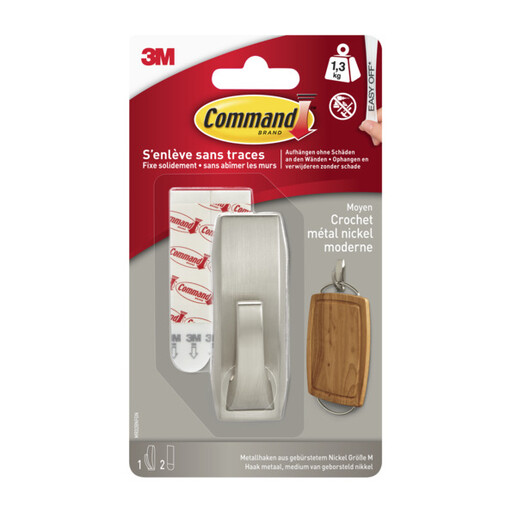
Our take: It combines the elegance of a designer metal hook with the simplicity of a drill-free mount. Perfect in an entryway, office, or bedroom for hanging a bag, jacket, or headphones.
It offers a chic and sturdy alternative to plastic hooks, which are often perceived as lower quality. Its adhesive technology ensures damage-free removal, protecting painted walls from unpleasant surprises.
Its brushed nickel finish integrates perfectly with contemporary interiors. It's endlessly reusable by simply replacing the adhesive strip.
We have gathered a complete selection of products that meet our selection criteria and safety standards. Discover solutions for all your needs, including more specialised models.
Most modern adhesive hooks, like those from the Command brand, use a stretch-release strip for removal. Crucially, do not pull the hook towards you. Hold the hook firmly and pull the adhesive tab very slowly straight down, parallel to the wall, until the hook releases on its own. This method allows the adhesive to detach without tearing off paint or wallpaper.
Yes, the hook itself is almost always reusable. The adhesive strip, however, is single-use. To move a hook, simply purchase refill strips of the correct size and type (standard or water-resistant).
If installed correctly on a suitable, clean surface, a quality adhesive hook can last for several years. Its lifespan can be reduced by significant temperature fluctuations, humidity it wasn't designed for, or weight exceeding the recommended load.