
Livraison le jour même ou le lendemain

Qualité garantie

Débloquez vos offres de bienvenue: Livraison GRATUITE | Jusqu'à -80 % | 30 jours d'essai gratuits à JoyPlus
Téléchargez l'application
In my role as a Product Recommendation Manager at Joybuy, I see countless storage solutions. Among them, the adhesive hook is a true staple. Its promise? To organise your space easily, with no drills and no holes. But this great idea can quickly turn into a nightmare: a picture frame crashing to the floor in the middle of the night, a chunk of paint ripped off during a move, or a hook that peels away pathetically in a steamy bathroom.
To help you make the right choice, we're going to break down the common pitfalls and the criteria that truly matter before you buy. The goal: to find the adhesive wall mount that will live up to its promises, with no nasty surprises.
Marketing claims are often idyllic. Here are three points to watch out for so you don't fall for promises that are too good to be true.
To hang without drilling with complete peace of mind, you need to read between the lines on the packaging. Here are the three technical points to scrutinise.
Rather than focusing on the maximum weight, look at the adhesive technology. Stretch-release strip systems (popularised by brands like Command) are designed for damage-free removal. You simply pull the tab to deactivate the glue and release the hook without damaging the wall. For a heavy-duty hook, always check the compatible surfaces and the curing time (often 1 to 24 hours) before hanging anything.
An adhesive wall mount is only as effective as the surface it's on. Smooth, non-porous surfaces are the ideal playground:
Be extremely cautious with textured surfaces, wallpaper (the hook sticks to the paper, not the wall!), brick, or matte and powdery paints. On these surfaces, the bond will always be precarious and unreliable.
For a bathroom or kitchen, a standard hook won't cut it. Look for the "water-resistant" label or products equipped with special adhesive strips. These are formulated to maintain their grip despite steam and condensation. A designer metal hook is an excellent option, provided its adhesive is engineered for wet rooms.
Because every situation requires a specific solution, here are a few models that meet precise needs, all evaluated according to our reliability criteria.
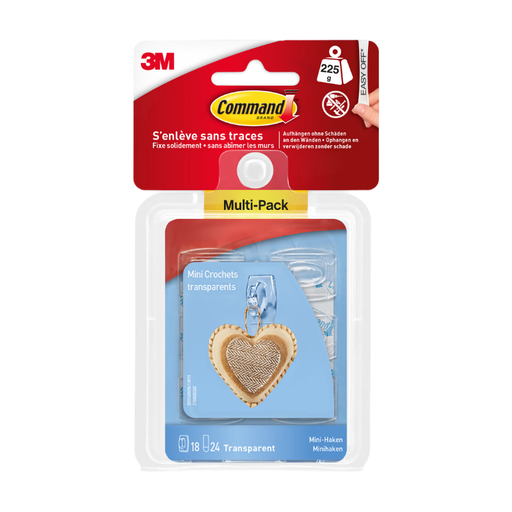
Why we chose it: Perfect for seasonal decorations or for hanging ultra-lightweight everyday items (keys, LED string lights, calendars). Its value pack size and transparency make it as practical as it is discreet.
Its adhesive technology is designed for damage-free removal, making it ideal for temporary use. This sidesteps the classic pitfall of a wall being damaged by an overly aggressive glue.
Its transparent design makes it nearly invisible, so it won't spoil your decor. The 18-pack ensures unbeatable value for money.
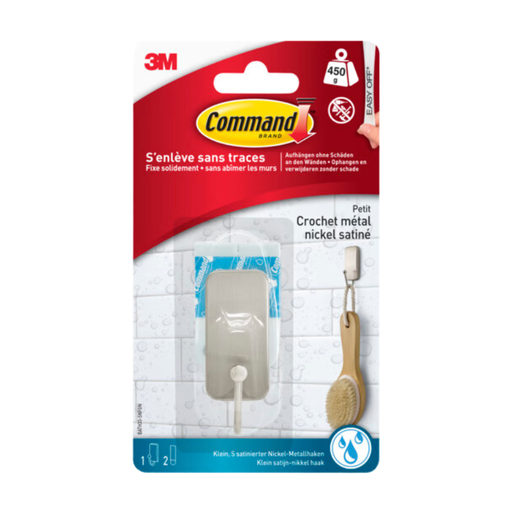
Why we chose it: The solution for anyone seeking a reliable hook for the bathroom or shower, capable of holding a towel, washcloth, or loofah without failing.
It comes with special moisture-resistant adhesive strips. This prevents premature peeling—the Achilles' heel of classic hooks in damp environments.
Its water resistance is its number one selling point. Furthermore, the satin nickel metal finish offers a much more polished look than a simple plastic hook.
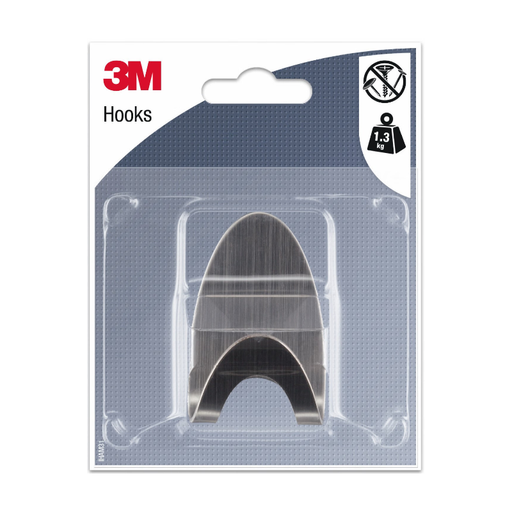
Why we chose it: Flawless in an entryway, office, or kitchen where looks are as important as function. It will easily hold keys, tea towels, and other daily accessories.
Its weight capacity is clearly stated at 1.3 kg, which puts an end to vague "heavy-duty" promises. This is a realistic value for everyday use, limiting the risk of overloading and detachment.
Its silver metal design, more elegant and durable than plastic, fits perfectly into interiors where every detail counts.
We have compiled a complete, up-to-date list of products that meet these strict selection criteria and safety standards.
For models with a stretch-release tab, simply pull the tab slowly downwards, keeping it parallel to the wall. Never pull it towards you. The tab will stretch and release the hook without leaving a trace. For other adhesives, gently heat the area with a hairdryer to soften the glue, then slide dental floss or an old loyalty card between the hook and the wall to gently pry it off.
It all depends on the quality of the adhesive, the environment, and whether the maximum weight limit is respected. A good hook, properly applied to a suitable surface and not overloaded, can last for several years. In harsher conditions (humidity, heat, vibrations), its lifespan will naturally be shorter.
This is a very bad idea. The adhesive will stick to the paper, not the wall. When you try to remove it, or if the load is too heavy, you risk tearing everything off. The same problem applies to vinyl coverings or highly textured surfaces, which should be avoided.