
Livraison le jour même ou le lendemain

Qualité garantie

Débloquez vos offres de bienvenue: Livraison GRATUITE | Jusqu'à -80 % | 30 jours d'essai gratuits à JoyPlus
Téléchargez l'application
Hanging a picture frame, optimising your kitchen, or mounting a towel rack without pulling out the drill: the promise is appealing. The adhesive hook has become the go-to solution for renters and homeowners alike who are keen to protect their walls. However, the market is flooded with products offering highly variable performance. The wrong choice can quickly turn into a nightmare: a frame crashing to the floor, a chunk of paint peeling off, or an adhesive that permanently bonds to the wall.
To avoid falling into these common traps, let's review the most frequent mistakes that lead to a purchase (and a wall) you'll regret.
To avoid these disappointments, a few technical points are all you need to sort the good from the bad. They will guide you to the drill-free hook that is truly suited to your project.
This is the number one criterion. Don't just choose a hook that supports the exact weight of your object. For a long-lasting hold, always include a safety margin.
The effectiveness of an adhesive is 90% dependent on the surface. Reputable manufacturers are always clear about compatible surfaces and those to avoid.
Beyond looks, the material and shape of the hook determine its sturdiness and use. A designer hook in brushed metal will look more stylish in an entryway than a simple white plastic model. For string lights or cables, transparent clips will be almost invisible. Think about the final use to choose the most appropriate shape.
To help you make an informed choice, we have selected reliable solutions for three distinct user profiles.
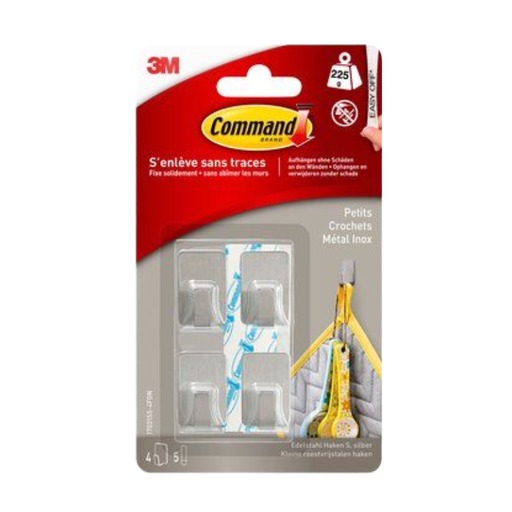
Why we chose it: Ideal for hanging small everyday items: keys, tea towels, small decorations... Its stainless steel design is minimalist and versatile.
It states a modest but realistic load capacity (225 g), which avoids the trap of exaggerated promises. Its clear purpose (smooth surfaces) limits the risk of installation error.
The Command adhesive technology is renowned for its clean removal, which minimises the risk of paint damage if you follow the instructions carefully.
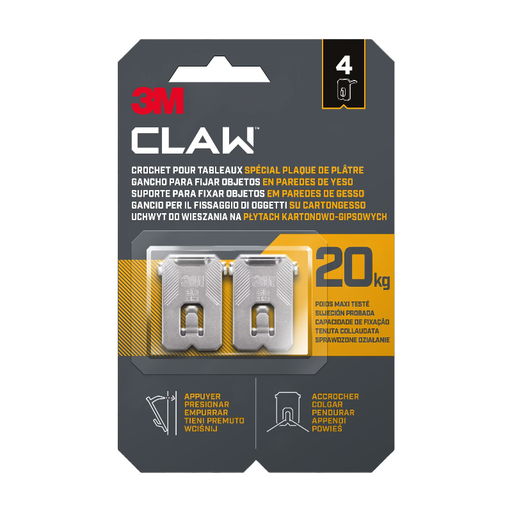
Why we chose it: The solution for those who want to hang a heavy object (mirror, large frame, etc.) on drywall but dread using a drill and wall anchors.
This is not an adhesive. It relies on hardened steel claws that anchor into the drywall with a simple push of your thumb. It therefore completely eliminates the risk of adhesive failure for heavy loads.
A very high and reliable load capacity (up to 20 kg) on the most common material in our homes, all without a single tool.
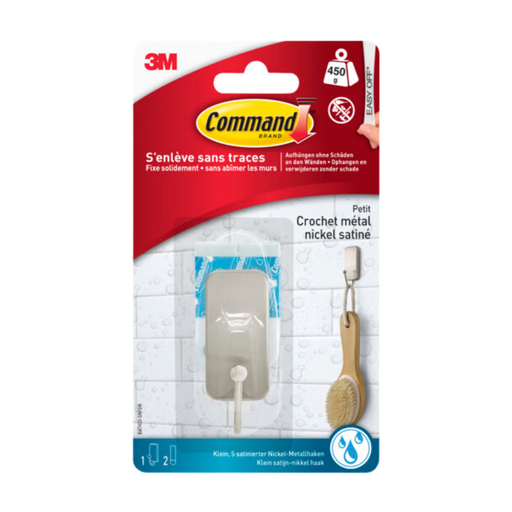
Why we chose it: Specially designed for wet rooms, it's perfect for hanging a towel, bathrobe, or shower accessories on tile, without fear of rust.
It comes with water-resistant adhesive strips, ensuring an impeccable hold where a standard hook would give up due to steam.
Its satin nickel finish is not only elegant but also treated against corrosion, ensuring an excellent lifespan in a bathroom.
Explore our complete selection of products that meet our criteria for reliability and safety, for a stress-free hanging experience.
The lifespan of an adhesive hook depends on its environment and installation. When installed correctly on a compatible surface and not overloaded, it can last for several years. However, significant variations in temperature or humidity can reduce its longevity. The advantage of systems like those from the Command brand is that you can simply replace the adhesive strip to reuse the hook.
This is a very bad idea. The adhesive will struggle to grip the texture of the paper and, more importantly, it will almost certainly tear it off upon removal. It's better to stick to smooth surfaces like paint, tile, or glass.
For models with a stretch-release tab (like Command), the trick is to pull the tab very slowly, straight down, parallel to the wall. Do not pull it towards you! This puts tension on the paint and increases the risk of tearing it off. For other adhesives, gently heating the glue with a hairdryer can help, but proceed with extreme caution to avoid damaging the wall covering.