
Livraison le jour même ou le lendemain

Qualité garantie

Débloquez vos offres de bienvenue: Livraison GRATUITE | Jusqu'à -80 % | 30 jours d'essai gratuits à JoyPlus
Téléchargez l'application
Organizing and decorating without pulling out the drill? It's a dream come true, especially if you're a renter or love to change your decor with the seasons. The adhesive hook has become an essential tool for hanging a tea towel, a hand towel, or even a picture frame without making a single hole. But be warned: not all hooks are created equal. Between an unfulfilled promise and the nightmare of ripped paint, the wrong choice can quickly turn into a disaster.
To help you avoid disappointment, our editors have analyzed the market. We'll explain how to sidestep the most common pitfalls and what criteria to look for to make a smart purchase.
To avoid falling into these traps, here are the technical specifications to check. These factors, not marketing claims, are what guarantee a hook's reliability.
Weight Capacity AND Surface Type: The maximum load is always advertised for a perfectly smooth, clean, and non-porous surface (like tile, glass, or metal). On even a slightly textured wall, performance drops significantly. Our advice: to be on the safe side, choose a hook with a weight capacity 50% higher than your object's weight. And be careful—using a no-hole hook on wallpaper is a no-go! You risk tearing it right off the wall.
Adhesive Technology and Ease of Removal: The most reliable systems, like those in the 3M Command hook range, use stretch-release strips. You simply pull the tab downwards, and the adhesive releases cleanly, leaving no trace behind. For other types, check that the manufacturer provides clear removal instructions (for example, by heating the base with a hairdryer).
Moisture Resistance: For a bathroom hook or a towel holder, a "water-resistant" or "for humid environments" label isn't an option—it's a requirement. These models use special adhesives that stand up to condensation and splashes, ensuring a long-lasting hold.
Enough theory—let's get to the products. Here is our selection of hooks that meet specific needs and have successfully passed our reliability tests.
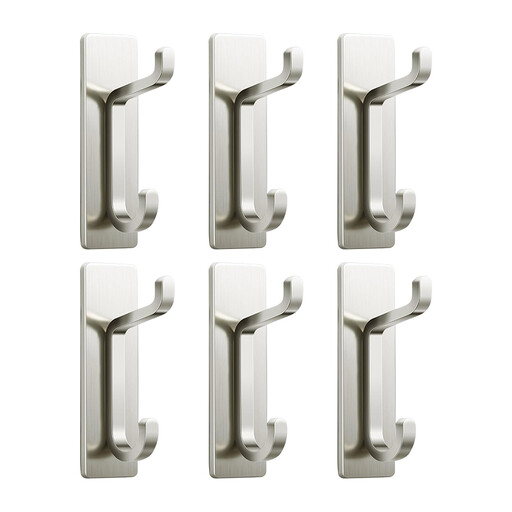
Why we chose it: Perfect for affordably outfitting multiple rooms (kitchen, entryway, office). This six-pack is ideal for hanging keys, tea towels, and other small everyday accessories.
Its wide adhesive base and stainless steel design ensure better weight distribution. This significantly reduces the risk of detachment for lightweight objects.
Unbeatable value for money. The stainless steel design is minimalist, modern, and durable.
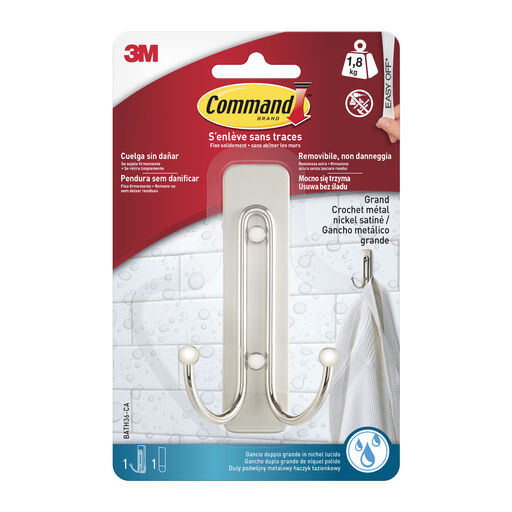
Why we chose it: This is THE gold standard for wet areas. It's designed to hang towels and bathrobes where other hooks throw in the towel: right in the bathroom.
Its secret weapon? Adhesive strips that resist water and steam. No more hooks falling in the middle of the night due to humidity.
Holds up to 1.8 kg in humid environments and removes without a trace, even after months of use. A reliable choice.
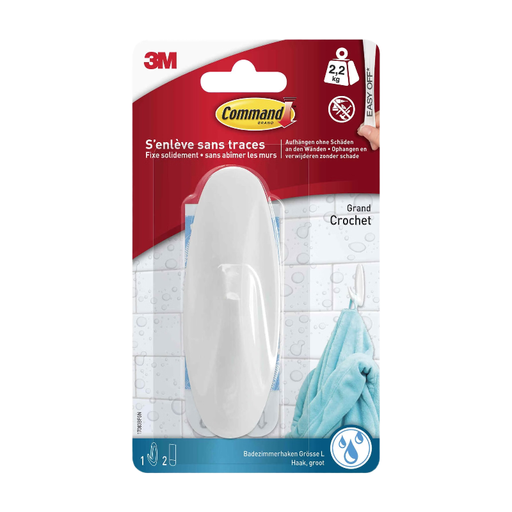
Why we chose it: The robust and reliable solution for heavier items: a full handbag, a set of kitchen utensils, or a coat in the entryway.
Its 2.2 kg capacity is tested and proven on smooth surfaces. The Command technology guarantees damage-free removal, as long as you follow the instructions carefully.
A payload of 2.2 kg and the famous stretch-release technology that keeps your walls intact. Peace of mind.
Discover our complete selection of adhesive hooks tested and approved by our editors.
It all depends on the technology. For models with a stretch-release tab (like Command), simply pull the tab straight down, parallel to the wall, until the hook releases. For others, try heating the base with a hairdryer to soften the adhesive, then slide dental floss behind it to gently "saw" it off. Above all, never pull the hook sharply towards you—that's the surest way to rip off the paint!
This is a very bad idea. A standard adhesive coat hook is almost always too aggressive for wallpaper and will likely tear it upon removal. Read the manufacturer's recommendations carefully, but when in doubt, don't do it. It's better to be safe than to have to re-wallpaper an entire wall.
It depends on the product's quality, humidity, temperature fluctuations, and whether the maximum weight capacity is respected. A good hook, properly installed in a stable environment and not overloaded, can last for several years without issue. However, it's a good idea to check its hold from time to time, especially if it's supporting a valuable object.