
Livraison le jour même ou le lendemain

Qualité garantie

Débloquez vos offres de bienvenue: Livraison GRATUITE | Jusqu'à -80 % | 30 jours d'essai gratuits à JoyPlus
Téléchargez l'application
Renovating a wall, giving a door a makeover or softening the light from a window doesn't necessarily mean getting out the paintbrushes, glue or drill. Adhesive home décor lets you change the atmosphere in a flash – a solution particularly popular with tenants and DIY enthusiasts alike. The trick is to choose a product that suits both the surface and the room in question.
Before you order, three common mistakes keep cropping up.
A self-adhesive wallpaper can stick perfectly to a smooth, clean, dry and degreased partition, but will peel straight off a rough, dusty or freshly painted wall. Corners, joints and textured surfaces also increase the risk of the edges lifting.
For furniture, a door or a wardrobe, make sure the surface is flat, sealed and thoroughly degreased. A test on a small, inconspicuous area will let you check compatibility before covering the whole front.
One roll of repositionable wall covering isn't always enough to cover an entire wall. You need to account for cutting around sockets, skirting boards, corners and windows. With a repeating pattern, matching the joins can also create more waste.
Measure the width and height of the area you want to cover, then add a margin for cutting. If you need several rolls, choose them from the same batch when that information is available. This will help minimise any slight colour differences.
Not all self-adhesive solutions can be removed without leaving marks. A static window film, for example, goes on without glue and can be repositioned during installation. A self-adhesive wall covering, on the other hand, relies on an adhesive layer that can be trickier to remove, depending on the paint and how long it's been up.
Read the labels carefully for terms like "repositionable", "residue-free" or "permanent adhesion". They are not at all suited to the same uses.
PVC vinyl is often used for self-adhesive wallpapers and some wall panels. Its surface can usually be cleaned with a damp cloth. That doesn't mean every product can be installed in an area constantly exposed to water.
In a kitchen or bathroom, make the distinction between a dry area and a splashback that's directly exposed to splashes. Adhesive tiles and decorative wall stickers should only be applied in the conditions recommended by the manufacturer. Also keep them away from strong heat sources and naked flames.
For a window, go for a static-cling window film if you want a water-based application, easy bubble correction and clean removal. This type of product is for decorating and preserving privacy, not for reinforcing or securing glazing.
The term "glue-free" is worth a closer look. It can refer to static cling, but also to a pre-glued sticker that doesn't require you to add separate glue.
Compare the dimensions in centimetres with the stated coverage area. For example, a roll of 60 × 305 cm covers roughly 1.83 m² before cutting. A 44 × 305 cm format, on the other hand, will be better suited to a small decorative area.
Most of the models shown can be cleaned with a soft, dry or slightly damp cloth. Avoid abrasive products, which can dull the print, texture or glossy finish. Small parts should be kept out of reach of young children due to the risk of choking.
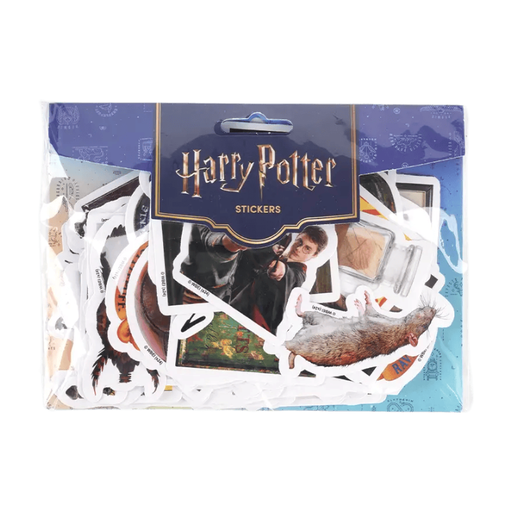
Why this choice suits this profile: This set lets you start with small surfaces – a notebook, laptop case or water bottle – without taking on a big project.
These stickers are designed for smooth surfaces and their removal is said to leave little to no residue. Still, do a test on a delicate surface first.
Coated paper, water-resistant, Hogwarts-inspired designs and no-assembly application. Suitable from age 3, under adult supervision.
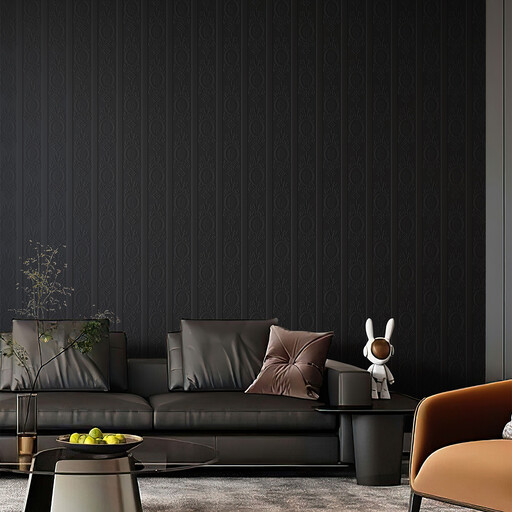
Why this choice suits this profile: Its raised black damask pattern is ideal for a feature wall strip, a headboard or a decorative corner where you want to add more texture.
With roughly 1.34 m² of coverage, this roll is suited to a targeted area rather than an oversized project. The guideline and precise joins help minimise visible flaws.
Washable PVC vinyl, textured relief and self-adhesive application on a flat, clean, dry surface.
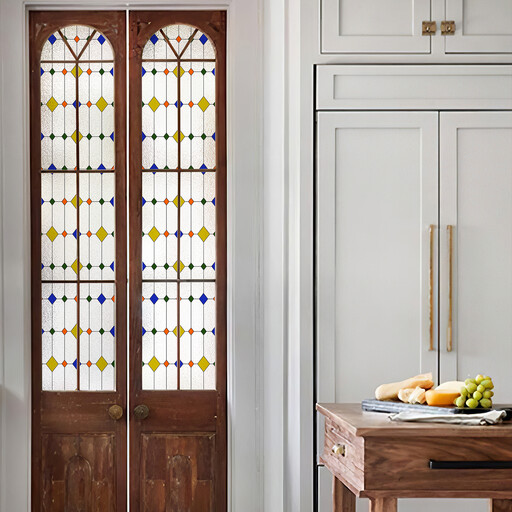
Why this choice suits this profile: This film goes on windows, glass doors or glass panels to combine decoration, natural light and privacy.
Its static cling, with no adhesive, lets you reposition it during installation and remove it without residue. Please note, this is not a security film.
Roll of 60 × 305 cm, prismatic pattern, diffused light and cleaning with a damp cloth.
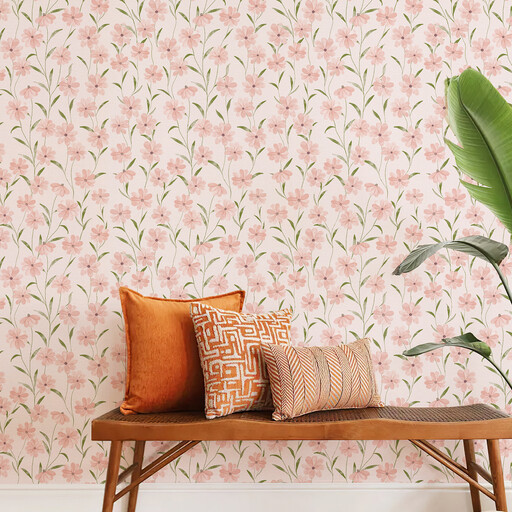
Why this choice suits this profile: Its delicate floral pattern lets you revamp a section of a bedroom, an entrance hall or a piece of furniture without undertaking a full renovation.
The grid printed on the back makes measuring and cutting easier. The glue-free, water-free application also reduces the equipment you need. However, the product is still for smooth surfaces and dry areas only.
Wipeable PVC vinyl, roughly 1.34 m² format and application on painted walls, interior doors or wardrobe fronts.
We've put together a comprehensive, real-time updated selection of products that meet these selection criteria as well as European safety regulations.
Yes, some solutions are designed to be removed more easily, particularly static-cling films and certain repositionable stickers. With self-adhesive wallpaper, the result depends on the paint, the wall preparation and how long it's been up. If your tenancy agreement or building regulations impose restrictions, ask your landlord's permission before you start.
It all depends on the material, exposure to heat, humidity, friction and surface preparation. A smooth, clean, dry surface will give the best hold. Regularly check the edges and avoid abrasive cleaners to preserve the covering's appearance.
Only in an area that's compatible with the product. Models intended for dry rooms must not be exposed to direct splashes or excessive humidity. For a bathroom window, a static-cling glass film can be a more suitable option, as long as you follow the application and care instructions.