
Livraison le jour même ou le lendemain

Qualité garantie

Débloquez vos offres de bienvenue: Livraison GRATUITE | Jusqu'à -80 % | 30 jours d'essai gratuits à JoyPlus
Téléchargez l'application
An adhesive glue can feel like it does it all. Yet each formula is designed for specific needs, depending on the materials you're joining and the conditions the repair will face. A multi-purpose glue on a damp wall, wood glue on plastic, or a glue stick for fixing a mechanical part – in all three cases, disappointment is likely to follow quickly.
Before you buy, take the time to identify the surface, the load it needs to hold, and the environment where the glue will be used. This simple check saves you unnecessary expense and helps you choose a glue that's genuinely suited to your project.
Labels like "universal glue" or "multi-purpose glue" don't guarantee effective adhesion on every surface. Certain materials, such as polyethylene (PE), polypropylene (PP), PTFE, Teflon, or some flexible PVCs, are often excluded.
Always check the list of compatible surfaces. A clear glue may work well on glass, metal, or wood, but it won't necessarily stick properly to all types of plastic.
A waterproof glue isn't necessarily designed for permanent immersion. Similarly, a fixing glue intended for indoor use can lose its effectiveness in a bathroom, near a sink, or close to a heat source.
Check the details on moisture resistance, UV resistance, and the temperature range it can handle. For wood, the D2 and D3 classes of the EN 204 standard provide a useful guide to moisture resistance.
A fast initial set doesn't mean the joint can bear a load straight away. Depending on the product, maximum strength is only reached after around 24 hours. So you'll often need to hold the pieces in place with a clamp or avoid moving them during this time.
Surfaces should generally be clean, dry, dust-free, and degreased. On metal and some plastics, a light sanding can improve adhesion. Oily wood needs degreasing, while poorly fitting parts may require a repair paste or a glue that can fill small gaps.
Choose the formula based on the job at hand:
A small tube is fine for everyday repairs and craft projects. For fixing a panel, a moulding, or an item to a wall, a cartridge of fixing glue used with a caulking gun gives you a more even application.
Also check whether the glue needs to be applied to one side or both. A contact glue, for example, is usually spread in a thin layer on each surface. You then need to wait a set time before bringing the pieces together.
For a repair that will be subject to vibrations, choose a formula that stays somewhat flexible. For a wood-to-wood joint, a PVA glue rated D2 or D3 is more suitable. To lock a nut or screw exposed to vibrations, go for a threadlocker rather than a universal glue.
Finally, always follow the precautions on the packaging: wear gloves if needed, ventilate the room, keep out of reach of children, and consult the safety data sheet for reactive products or those containing solvents.
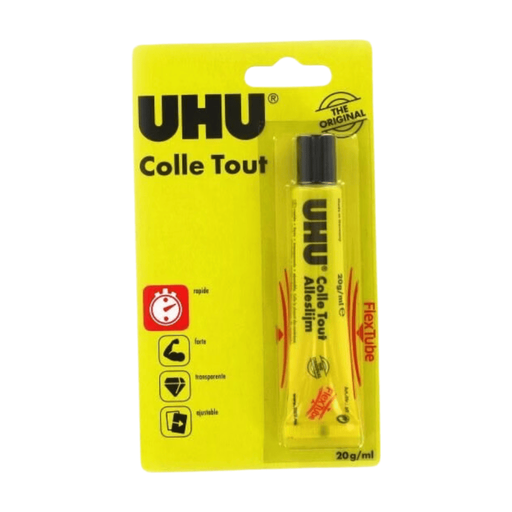
Why this choice suits this profile: Its small size is ideal for everyday repairs, craft projects, and occasional use around the house or office.
The flexible, drip-free tube makes dosing easy and prevents wasting glue on small repairs.
Solvent-free formula, dries clear, 20 g tube, and compatibility with wood, metal, glass, ceramic, leather, cardboard, and some plastics.
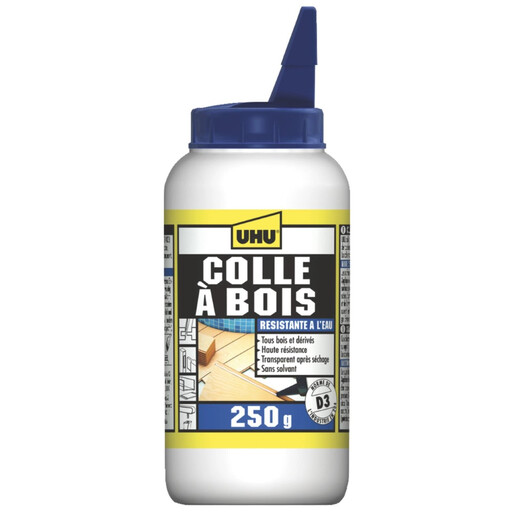
Why this choice suits this profile: This format is aimed at woodworking, assembly, and interior renovation projects where moisture resistance needs to be clearly documented.
The D3 rating gives you precise information about its intended use, rather than relying on a vague waterproof claim.
Solvent-free wood glue, initial set in 10 minutes, clear finish, and a temperature range of -20 °C to +60 °C.
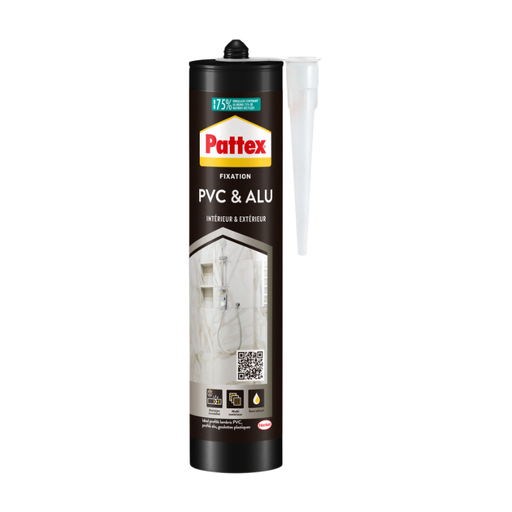
Why this choice suits this profile: The cartridge is ideal for renovation work, fitting PVC panels, conduits, or decorative elements, both indoors and outdoors.
The product sheet clearly lists excluded surfaces, including PE and PTFE, as well as the temperature range of -30 °C to +90 °C.
White Flextec formula, moisture resistant, and gun application on PVC, aluminium, tiles, metal, and compatible plastics.
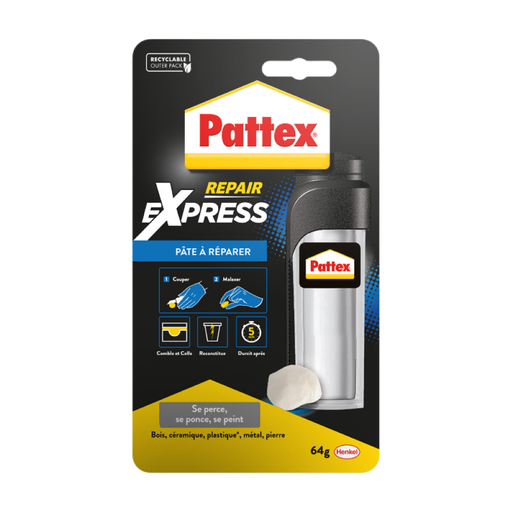
Why this choice suits this profile: Its mouldable texture is ideal for filling a hole, rebuilding a part, or sealing a crack on various materials.
This isn't just a liquid glue: the paste fills gaps and can be sanded or painted once hardened.
Two-component epoxy resin, sets in 5 minutes, final strength after 24 hours, and compatibility with wood, metal, glass, ceramic, stone, and cement.
We've put together a comprehensive list, updated in real time, of products that meet these demanding selection criteria and comply with European safety regulations.
A clear, solvent-free multi-purpose glue can work on wood, cardboard, metal, glass, ceramic, and some plastics. However, always check the excluded materials and the temperature range before applying it.
It depends entirely on the formula. A D3 wood glue offers better moisture resistance, while a water-resistant mounting glue may be suitable for outdoor use without being designed for permanent immersion. The technical data sheet should always take priority over a simple "waterproof" claim.
The shelf life depends on the formula, storage conditions, and how well the container is sealed. A tube that isn't closed properly will dry out much faster. Store it in a cool, dry place, and check its appearance, smell, and texture before each use.