
Livraison le jour même ou le lendemain

Qualité garantie

Débloquez vos offres de bienvenue: Livraison GRATUITE | Jusqu'à -80 % | 30 jours d'essai gratuits à JoyPlus
Téléchargez l'application
Moving a sofa, wardrobe or piano without scratching the floor sounds simple… until the sliders come unstuck, shift out of position or leave marks on the floorboards. Adhesive furniture sliders reduce the effort required, but not all of them are designed for the same loads or types of furniture leg.
Before buying Scotch furniture pads or adhesive sliders, there are three particularly easy mistakes to make.
Measure the part that is actually in contact with the floor, not just the visible leg. Small sizes, such as 24 × 24 mm self-adhesive pads or 25 mm diameter sliders, are mainly suitable for chairs, small bedside tables and everyday furniture.
For a chest of drawers, sofa or heavier piece of furniture, sizes of 40, 50 or 65 mm distribute pressure more effectively. 80 mm sliders are intended for heavier loads, provided the base of the furniture offers a sufficiently stable surface to accommodate them.
Always compare the stated load with the number of pieces supplied. The products listed below indicate, depending on their size and design, a capacity of 100 to 600 kg for four sliders.
Do not treat this figure as a limit to reach on a permanent basis. Leave a safety margin, particularly if the furniture is tall, heavily loaded or being moved across an uneven floor. Uneven weight distribution can also place excessive pressure on a single slider.
Honeycomb sliders use a honeycomb structure intended to reduce the contact area and friction. According to the product descriptions provided, this design could allow up to 50% more glide than furniture without sliders. This figure comes from the product descriptions and is not a guarantee applicable to every configuration.
On hard floors — tiles, varnished floorboards or laminate — make sure the sliding surface is clean and free from small pieces of debris. Articulated models are particularly useful when the floor has slight irregularities or tiled joints. For a piano or a billiard table mounted on castors, protective sliders designed for castor feet will often be more suitable than standard adhesive models.
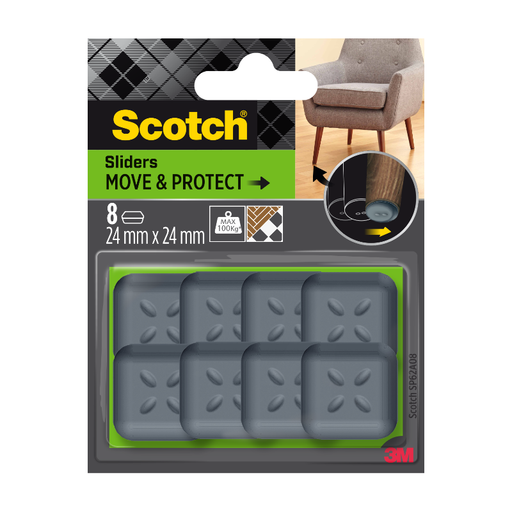
Why this choice suits this profile : Its compact size is suitable for small indoor furniture, while the pack of eight allows you to fit out several legs, depending on the configuration.
Its stated capacity of 100 kg for four sliders makes it clear that this model is intended for everyday furniture, not very heavy loads.
24 × 24 mm size, honeycomb structure, eight pieces and stated compatibility with all types of flooring.
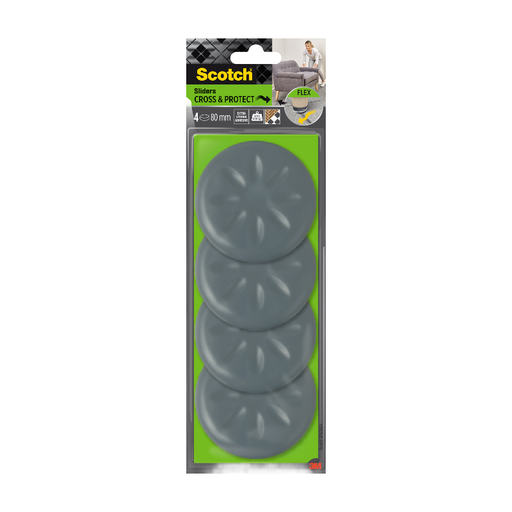
Why this choice suits this profile : Its large diameter and articulated design are intended for bulky furniture that needs to be repositioned with maximum control.
It combines an 80 mm diameter with a stated capacity of 600 kg for four sliders, rather than presenting a small model as a universal solution.
Honeycomb structure, articulated ball joint, cushioning foam and adhesive designed for long-lasting attachment.
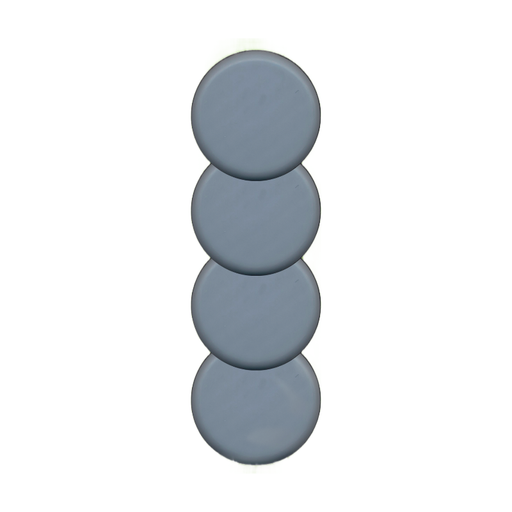
Why this choice suits this profile : Its design is specifically intended for the castor feet of pianos, billiard tables and heavy furniture.
Its dedicated purpose prevents you from choosing a standard self-adhesive slider for equipment that already rests on castors.
Smooth plastic, 65 mm diameter and a stated load capacity of up to 500 kg for four sliders.
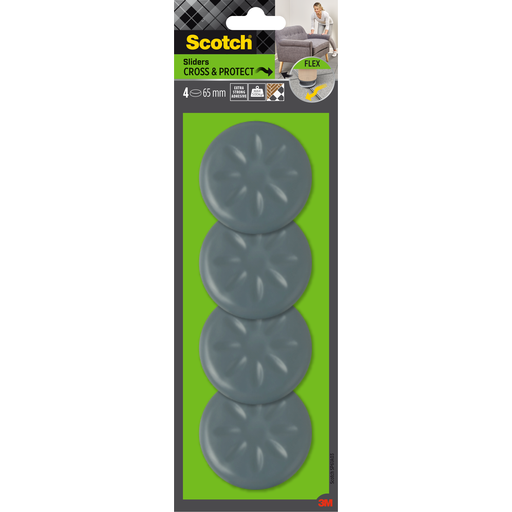
Why this choice suits this profile : It is suitable for sofas, wardrobes and heavy furniture that needs to pass over small joints or slight unevenness.
The articulated ball joint and cushioning foam adapt to uneven surfaces, while the stated capacity is clearly limited to 500 kg per pack.
65 mm diameter, design stated to be suitable for all surfaces, honeycomb structure and adhesive attachment.
We have put together a complete, real-time updated selection of products that meet these demanding criteria and European safety requirements.
Adhesive sliders are generally designed to remain securely attached for a long time. To remove them, work gradually, gently twisting them as you go. If any residue remains, use a product suitable for the floor covering, after testing it on an inconspicuous area. Avoid moving furniture across a wet or sandy surface: even scratch-resistant sliders can leave marks if particles get underneath the sliding area.
The products listed are described as compatible with several types of flooring, including floorboards, tiles and laminate. However, the result depends on how clean the floor is, the condition of the slider and the weight it supports. Regularly remove dust and check the condition of the sliding surface.
Wait 24 hours after fitting to give the adhesive enough time to bond properly. This is particularly important for a wardrobe, sofa or any other heavy piece of furniture. Moving it too soon may cause the slider to come unstuck.
For a piano or billiard table fitted with castors, choose a product designed for castor feet, such as the 65 mm smooth sliders. Before moving anything, check the total weight, the number of support points and the stability of the whole unit. For other very heavy equipment, choose a large-diameter model only if its capacity and attachment system are suitable for the support surface.